


- Introduction
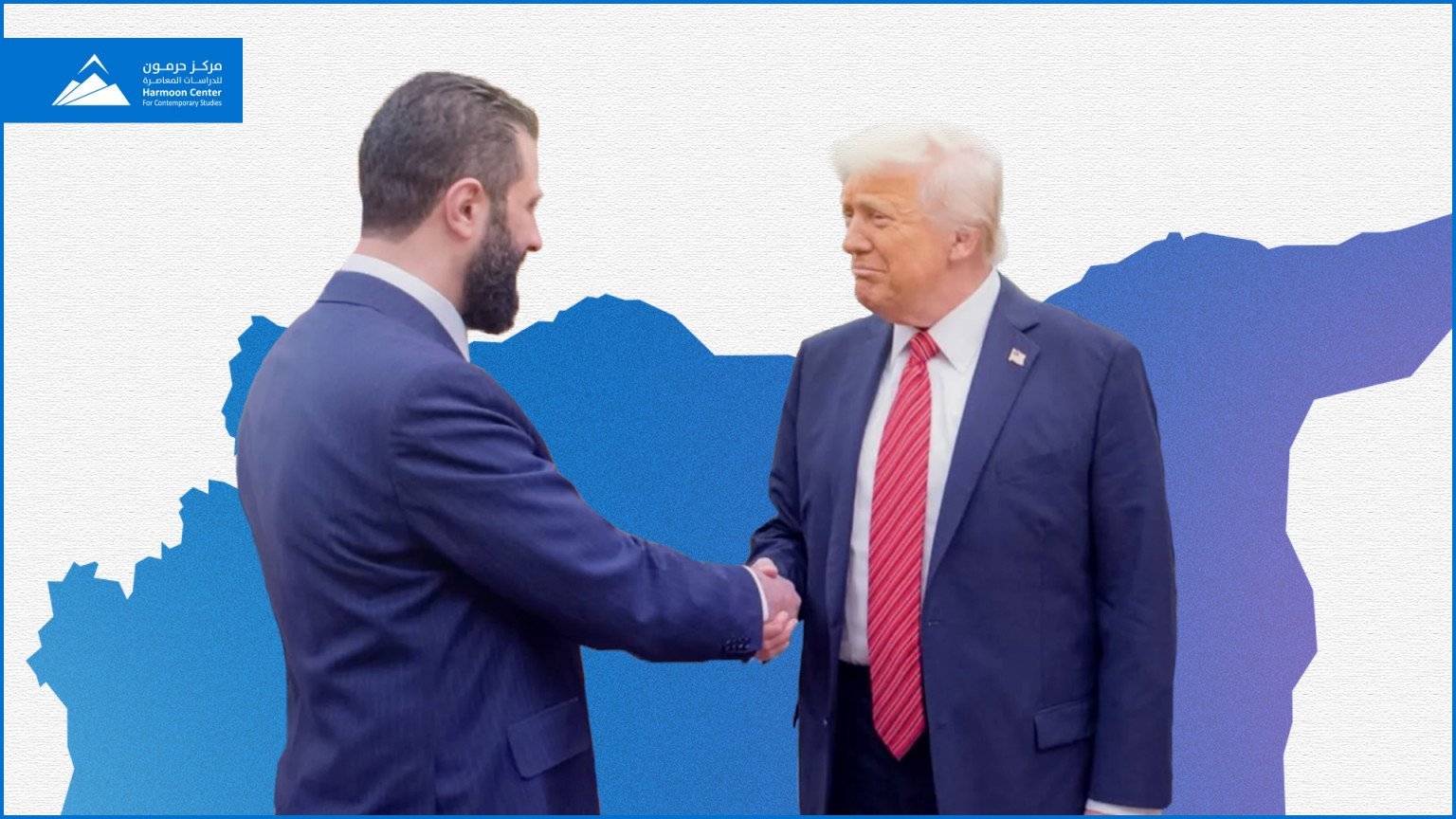
During his May visit to the region US President Donald Trump gave the surprise announcement that he would lift the sanctions imposed on Syria – at a moment of rapidly evolving regional and international dynamics. The decision was taken in response to direct appeals from Saudi Crown Prince Mohammed bin Salman and Turkish President Recep Tayyip Erdoğan, pressing the White House to reconsider the US sanctions policy. Qatar, the UAE, and Jordan also supported the move through intensive regional diplomatic efforts.
The decision was made public at the Saudi-US Investment Forum in Riyadh, where the US President described the sanctions as “brutal and crippling,” and no longer justified. “It is time for Syria to rise,” he declared in the speech, signalling America’s intention to support the reconstruction of the Syrian economy and promote its integration into regional and international frameworks of cooperation. This moment will offer the Syrian people a renewed opportunity for growth and development.
The announcement, however, was not entirely unexpected. It had been preceded by groundwork laid by the US administration in early 2025, including the cancellation of a sizeable bounty for information on President al-Sharaa (Abu Muhammad al-Julani) and the issuance of a temporary license allowing increased humanitarian and energy-related transactions. These were the early signs of a shift toward easing the sanctions regime. Britain and the European Union had also suspended or partially lifted some of their own sanctions.
- US sanctions on Syria
Syria has been confined by multilateral sanctions for decades. The sanctions have been imposed by international financial bodies, the United Nations, and individual states in response to a plethora of issues—from political alignment to accusations of supporting terrorism and committing war crimes. The first major sanctions were imposed in 1979, when the United States placed Syria on its list of state sponsors of terrorism. This led to severe restrictions on arms sales, foreign aid, and financial transactions at home and abroad.
In 2004, the sanctions were broadened to include economic, technical, and other sectors, curtailing trade and banning the export of several critical technologies to Syria. Following the outbreak of the Syrian revolution in 2011, US and Western sanctions intensified. The international community froze Syrian government assets, banned foreign investment, and halted imports of Syrian oil. Additional restrictions targeted the banking, aviation, energy, and defense sectors, further isolating Syria from global markets.
US sanctions have historically been the most comprehensive and complex, and they fell into two principal categories:
- Presidential Sanctions:
These sanctions were based on the US President’s authority under “national emergency” laws. Between 2004 and 2019, eight executive orders were issued, most notably Executive Orders 13582 and 13894, which targeted key sectors and prominent individuals. Since these measures fall under executive authority, the President can suspend or revoke them without congressional approval. President Trump is expected to use these powers to suspend several of these orders as part of a broader international realignment with Syria.
– Legislative Sanctions (Congress):
The Caesar Act of 2019 imposed sanctions on key sectors in Syria, including energy, defence, aviation, the Central Bank, and reconstruction. Unlike executive orders, these sanctions cannot be unilaterally lifted by the President and require congressional approval for full repeal. However, under Section 401 of the law, a “temporary suspension” of sanctions is permitted for six months, with the possibility of a 120-day extension, provided the US administration submits written justifications citing changes in political circumstances. The Caesar Act, like other US sanctions legislation, also grants the President authority to issue exceptions based on “national security requirements.” President Trump is expected to invoke this exact provision to suspend sanctions on specific sectors including construction and energy, arguing that supporting Syria’s reconstruction serves regional stability and advances Washington’s strategic interests in the country.
Some sanctions imposed under emergency laws are subject to annual renewal. If the President does not renew them, they are automatically suspended after six months. While the legal framework remains formally in place, the failure to activate enforcement mechanisms significantly reduces the sanctions’ practical effect.
Syria’s designation as a “state sponsor of terrorism” since 1979 has been a major barrier to normalising international relations. This label automatically restricts the provision of aid, financial cooperation, and arms transfers. Under US law, removing a country from this list requires the White House to notify Congress 45 days in advance and submit a report demonstrating that the country in question no longer supports terrorism. Evidence suggests that the US administration is preparing to activate this process, especially following the fall of the former regime, and is likely framing a distinction between the “new Syria” and the “old regime” in the official narrative.
The inclusion of Hay’at Tahrir al-Sham (HTS) as a military entity, along with some leaders of National Army factions, on US sanctions lists presents a significant challenge for the new Syrian government. Although HTS was officially disbanded in January 2025 and several of its former leaders have taken government positions, its designation remains legally valid, creating clear tension between law and policy for the US administration. To navigate this, the US Treasury Department has issued “special and general licenses” permitting engagement with the new Syrian government institutions, on the basis that HTS no longer exists as an independent group. It is expected that the US State Department will eventually remove HTS from the terrorist list, especially if the Syrian government provides security guarantees and cooperates in countering extremist groups.
There are two essential opposing views within the US administration over the lifting of sanctions. Ultimately, the decision to release Syria from its bind resulted from efforts by Saudi Arabia, Turkey, and Qatar to encourage positive behaviour by the transitional Syrian government. This development may open the door to amending certain legal provisions or adopting permanent exceptions in the future. The process will likely involve rescinding the executive orders that imposed presidential economic sanctions and issuing special licenses to facilitate financial transfers—while retaining restrictions on individuals and entities accused of crimes against humanity. Additionally, sanctions tied to the state of emergency will be automatically suspended if not renewed. At a later stage, negotiations with Congress are anticipated to lift the sanctions outlined in the Caesar Act, contingent upon tangible improvements in Syria’s political situation.
The decision comes as part of a broader regional-international realignment which attempts to restructure the relationship between the United States and its regional partners, based on the principle of lifting sanctions in exchange for deepening economic and security partnerships. It reflects an American attempt to reposition itself in the Syrian landscape, responding to on-the-ground developments and seeking to reshape the Syrian regime in the post–Assad era. America’s core goals remain focussed on eliminating Iranian influence, curbing Russian presence, and fostering a political environment that protects both Western and regional interests.
As such, the move cannot be viewed in isolation from the wider geopolitical shifts occurring across the region. It should be instead understood as part of a US effort to reconfigure the balance of power in Syria and its surroundings; through new alliances, revised terms, and a redistribution of roles and influence that will define the next phase of Syrian politics. Trump’s announcement should be read as a political promise, with the final decision expected upon his return to Washington. It remains unclear how extensive the sanctions relief will be or whether it will be implemented in stages, depending on actions taken by the new authorities in Damascus.
- Potential challenges to lifting sanctions on Syria in reality
Although the decision to lift sanctions on Syria marks a strategic shift in US policy, its implementation faces several challenges that could undermine its effectiveness or limit its long-term viability, including:
- Certain factions within US institutions, as well as within Israeli decision-making circles, have voiced serious concerns about specific individuals in the new transitional Syrian government. They suspect these appointments may serve as a political smokescreen for ill-disciplined ideological movements, and represent a rebranded extension of extremist groups operating within the framework of the new government. Such concerns present a significant obstacle to building political consensus in Washington over the lifting or continued suspension of sanctions.
- The behaviour of the transitional government also poses significant risks. Any negative signals—whether in managing the security situation or advancing the political process—could prompt a swift reimposition of sanctions. Key concerns include the failure to take concrete steps toward political reform, such as launching a comprehensive constitutional process or organising credible elections. Additionally, the recurrence of incidents like those previously witnessed on the coast or in areas such as Jaramana and Ashrafiyyat Sahnaya near Damascus would further erode confidence and jeopardise the continuation of sanctions relief.
- A failure to meaningfully engage key elements of Syrian society—particularly Kurds, Alawites, Christians, and Druze—could send a signal that the new authorities are not committed to inclusive governance. If exclusionary practices or authoritarian tendencies begin to surface, they would undermine the political legitimacy that formed the basis for lifting the sanctions. This, in turn, could prompt international actors to call for the reinstatement of punitive measures.
- The lifting of sanctions is necessary but insufficient on its own to overcome Syria’s deep-rooted economic and political challenges. More than a decade of economic collapse has left the country in need of massive resources, structural reforms, and a hitherto unseen level of national consensus. The decision to lift sanctions places a significant burden on both state and society, and bestows a historic responsibility to use this political opening to pave a genuine path toward recovery. Removing legal barriers to Syria’s reintegration into the global economy is like clearing obstacles from a road. The road itself must still be paved, both politically and institutionally, to ensure long-term stability. To fully realise the benefits of this transformation, Syria must forge a new political and social contract that redefines the state on representative and equitable foundations. Only then can Syria shift from the arena of conflict to active and constructive partnership in its regional and international environment.
- Anticipated effects of the decision to lift sanctions
The decision to lift sanctions marks a structural shift in Syria’s position within the regional and international order and carries both economic and political implications with interconnected effects. While some sanctions may remain in place—particularly those targeting specific institutions and individuals—lifting key restrictions is essential to enabling Syria’s recovery.
- Lifting sanctions on the financial and banking sector reconnects Syria to the global economy and allows for cash transactions, financial transfers, guarantees, loans, and other essential banking activities.
- Lifting sanctions on investments will primarily benefit Syrian investors, followed by Arab and Turkish investors, and then international investors. This impact will be especially significant in key sectors such as energy, electricity, construction, communications, and information technology. Foreign companies that withdrew from Syria during the sanctions are also expected to resume operations, boosting the labour market and increasing local production.
- Lifting sanctions on aid from the UN and governmental organisations will positively impact reconstruction efforts, economic recovery, job creation, and the improvement of services and living standards. It will also lay the foundation for internal economic growth and accumulation.
- Revitalising the national economy will enable the Syrian government to access frozen assets abroad, strengthening its capacity to finance infrastructure projects, essential services, and reconstruction efforts.
- Lifting sanctions is expected to gradually strengthen the value of the Syrian pound due to an influx of foreign currency and increased monetary supply. This improvement in the exchange rate should boost citizens’ purchasing power and help reduce inflation.
- Revitalizing Syria’s geographic role: Syria is expected to reclaim its position as a key regional transit hub by reopening its border crossings and seaports. This comes amid growing trade between the Gulf states, Turkey, and Europe, as well as the introduction of new airline routes.
- Normalising relations with the international community: Lifting sanctions signals implicit US recognition of the legitimacy of the new transitional government, granting it the legal capacity to negotiate economic, trade, and financial agreements without constant fear of being frozen out or revoked due to prior sanctions. It also paves the way for engagement with international financial institutions including the International Monetary Fund and the World Bank, opening the door to long-term development support.
- Reorienting Syria’s geopolitical position: The decision to lift sanctions aligns with a shared vision to shift Syria closer to US alliances with Arab states in the Gulf. Key countries such as Saudi Arabia, Qatar, Turkey, and the UAE have played a pivotal role in this shift, committing to support the reform process and help maintain a stable political environment.
- Integration into the regional system: Lifting sanctions is part of a broader effort to rebuild a stable regional order in which the new Syria becomes an active partner rather than a source of instability. The decision redefines the regional landscape, strengthening the role of regional actors in shaping Syria’s future.
- The decision to lift sanctions on Syria marks a pivotal moment in the region’s ongoing geopolitical transformation and reflects broader efforts to reshape the regional order following the fall of the former regime. While the success of this process depends on the new government’s conduct—its ability to embrace societal diversity and implement meaningful reforms—the current regional political climate appears conducive to Syria’s reintegration, guided by a new framework of balance and shared interests.
- Expected scenarios:
The lifting of US sanctions on Syria paves the way for a range of potential scenarios, from gradual progress toward recovery to a possible regression into failure if the conditions for political and institutional transformation are not met. These scenarios can be assessed across three interrelated dimensions: political reform, economic openness, and the sustainability of international resolutions.
Scenario one: A disciplined transition to comprehensive recovery
This scenario assumes that the Syrian transitional government will honour its commitments to political reformation by taking gradual, concrete steps toward good governance and political openness. These steps include launching a constitutional process that reflects Syria’s diverse social fabric, organizing credible elections, establishing transparency and accountability mechanisms, and ensuring the inclusion of all Syrian communities in governance and public administration.
Under this scenario, the Syrian government is expected to benefit from increased international engagement, with the temporary suspension of sanctions evolving into a permanent lifting. Major international financial institutions would resume funding, and regional capital—especially from the Gulf—would gradually flow into reconstruction and infrastructure projects. This is the most optimistic outcome, and depends on a high level of political commitment and institutional competence from the transitional government.
Scenario two: economic openness hamstrung by limited political reform
In this scenario, the Syrian government takes swift economic measures to attract investment and achieve partial recovery, without making parallel progress on political and institutional reform. These steps may include liberalising the financial and banking sectors, offering incentives to companies and investors, and resuming trade relations with neighbouring countries.
However, the absence of political will to engage all segments of the Syrian population, or the continuation of exclusionary and marginalizing practices, may sustain international hesitation and result in the partial retention of sanctions. In this scenario, Syria risks becoming a zone of unstable economic openness, lacking the foundation of genuine political reform.
Scenario 3: Reform stalls and international pressure returns
This scenario assumes that the transitional Syrian government fails to meet Western conditions due to internal divisions, the dominance of factions opposed to democratic transition, or the resurgence of influential figures resisting reform. Such failure could trigger the reactivation of suspended sanctions, returning Syria to international isolation and undermining recent gains. Security tensions could escalate, while political and economic pressures would intensify. Without a supportive regional framework, reconstruction prospects would shrink, and the crisis would revert to its chronic, complex state.
The US administration and Congress plan to closely monitor the Syrian government’s performance during the upcoming period, viewing it as a “test phase” to assess the government’s commitment to its promises. Any failure during this time could trigger the reactivation of certain sanctions, while legal amendments may be introduced to enable their permanent removal if tangible progress is made. Meanwhile, UN sanctions will remain in place, as lifting them requires a separate diplomatic process within the Security Council, complicating their removal in the short term.
- Conclusion
The decision to lift US sanctions marks a critical turning point in the international approach to the trajectory of post-revolution Syria. It reflects a shift in the geopolitical vision of the United States and its partners, after years of Syria’s isolation and marginalisation. This decision is not simply a legal or economic measure but a broader strategic step towards reintegrating Syria into the regional and international system under new conditions and pathways.
However, the value of this transformation is far from guaranteed. It hinges on the Syrian transitional government’s ability to demonstrate genuine commitment to its internal obligations—especially by initiating a comprehensive political process, drafting a new constitution grounded in pluralism and rights, and holding credible elections that include all national groups without exception. Building trust between the state and society will require core institutional reforms that ensure transparency and accountability, and break away from the security-driven governance and political isolation that helped spark the conflict. These steps are essential to strengthening the West’s confidence in the government.
Economically, lifting sanctions is a necessary step to stimulate recovery but not a complete solution on its own. Syria’s challenges go far beyond the effects of the blockade, involving deep structural problems accumulated over more than a decade. Syria is suffering from a collapsed infrastructure, high unemployment and poverty rates, and depleted public services. Embarking on the country’s reconstruction and development requires mobilising substantial resources, developing long-term strategies, and establishing a political and institutional environment that supports investment.
In this context, the Syrian government’s responsibility is twofold. It must seize this political moment to rebuild the nation-state on new foundations, rather than merely opportunistically managing the consequences of lifting sanctions. Achieving this requires a genuine partnership with society, transparent cooperation with regional and international actors, and the provision of political and security guarantees that foster stability and encourage international engagement.
The success of the next phase depends on the new leadership’s ability to leverage this potentially transformative opportunity to initiate a serious, long-term internal reconstruction process. This should be the moment to restore the prestige of the state and its institutions, re-establishing Syria’s role as a responsible actor within regional and international systems, rather than a chronic security concern in the post-war balance of power.