

مركز حرمون للدراسات المعاصرةمركز حرمون للدراسات المعاصرة
  • About Us
    • About Us
    • Research team
    • Center’s brochure
  • Publications
    • Research
    • Reports
    • Policy Analysis
    • Situation Assessment
    • Case Analysis
    • Articles
  • Activities
    • Conferences
    • Center News
  • Media
    • Analytical Maps
    • Infograph
    • Videos
×
مركز حرمون للدراسات المعاصرةمركز حرمون للدراسات المعاصرة
بحث
  • About Us
    • About Us
    • Research team
    • Center’s brochure
  • Publications
    • Research
    • Reports
    • Policy Analysis
    • Situation Assessment
    • Case Analysis
    • Articles
  • Activities
    • Conferences
    • Center News
  • Media
    • Analytical Maps
    • Infograph
    • Videos
Follow US
جميع الحقوق محفوظة لمركز حرمون للدراسات © 2023

Should there be different standards on how UN sanctions are imposed depending on whether the sanctions are intended to enforce human rights or to maintain peace and security?

Fadel Abdulghany

Fadel Abdulghany

Published 2 December ,2022
  Download Article
Share
SHARE

Introduction:

Sanctions of kinds imposed through every type of method are considered a means to help attain political, legal, and humanitarian accountability, seeking to achieve a variety of objectives.

Nations have resorted to sanctions for centuries, whether as individual states or as coalitions of states, with the subject of this paper being the sanctions imposed by the United Nations, after the United Nations’ Charter first emerged in 1945[1], classifying sanctions in a legal form.

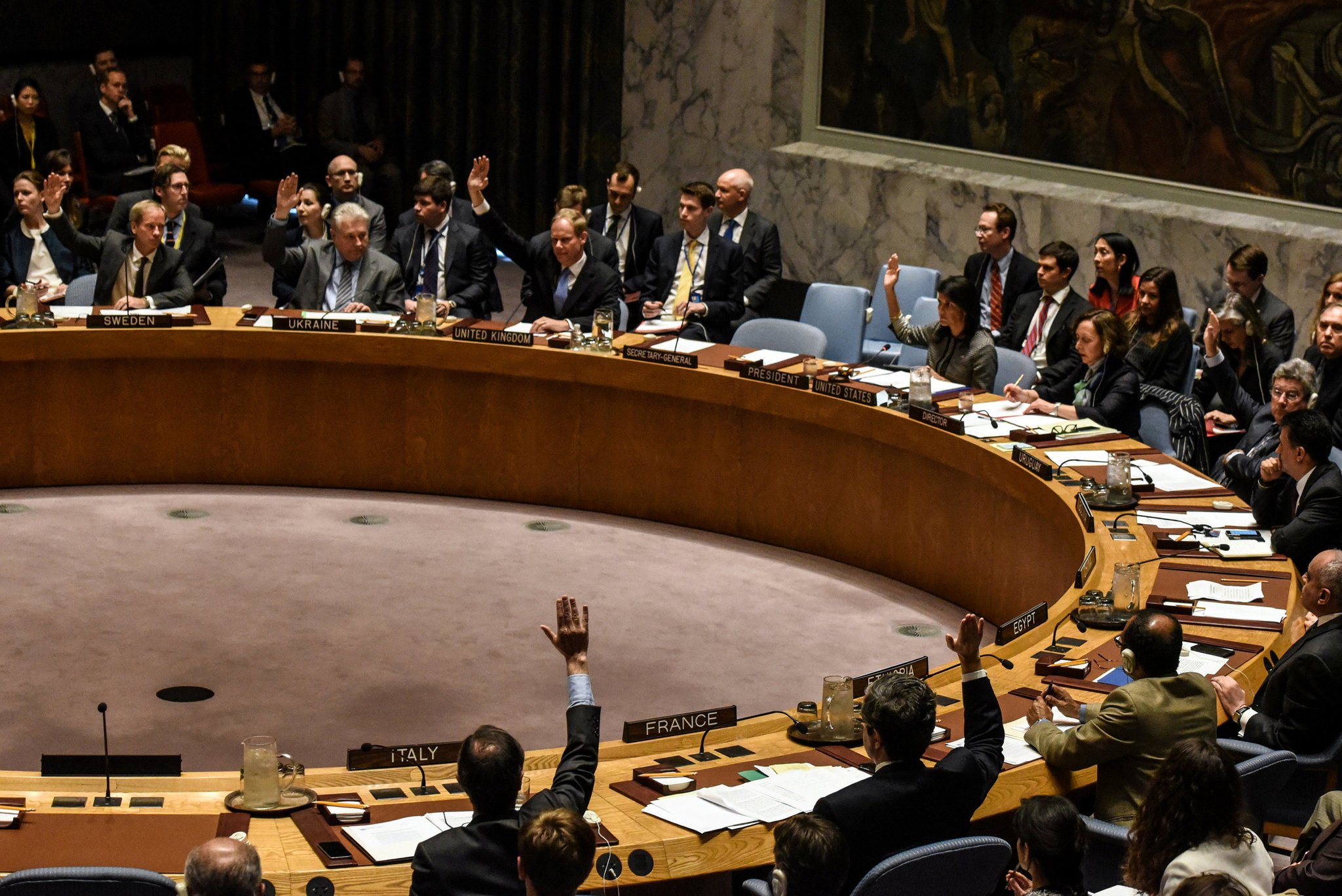
Non-military sanctions were first legalized by article 41[2] of the UN Charter, and military sanctions by article 42[3], following the Security Council’s decision in accordance with article 39[4], which states that the Security Council “shall determine the existence of any threat to the peace, breach of the peace, or act of aggression and shall make recommendations, or decide what measures shall be taken in accordance with Articles 41 and 42, to maintain or restore international peace and security.” This means the Security Council –according to International Law- can impose sanctions on any state where the aforementioned elements apply; usually the party imposing the sanctions is referred to as “the sender”, while the party on whom the sanctions are imposed is referred to “the target”.

First, we must acknowledge that imposing sanctions is firstly a political decision taken in a legal manner, meaning that in this context the two concepts are largely intertwined. For example, if economic sanctions are imposed, the three concepts – political, economic, and legal considerations – are intertwined.  This being the case, it is difficult to isolate these elements when carrying out any analysis. 

This paper attempts to resolve the issue of which the United Nations when imposing any form of sanctions in order to achieve honorable goals such as should follow criteria; ensuring states’ commitment to human rights or protecting international peace and security. Through adopting an analytical approach by studying and analyzing most of the legal rules that will be presented and discussed, I have studied the Syrian conflict since 2011 until now as a factual case study.

You can read the entire study by clicking on the “Download” tab.


[1] United Nations, Charter of the United Nations, 24 October 1945

[2] United Nations, Charter of the United Nations, Article 41, 24 October 1945

[3] United Nations, Charter of the United Nations, Article 42, 24 October 1945

[4] United Nations, Charter of the United Nations, Article 39, 24 October 1945

  Download Article

TAGGED: Syria ، Idlib ، US ، the United Nations ، human rights
Share this Article
Facebook Twitter Copy Link Print
Share

Author's articles

Should there be different standards on how UN sanctions are imposed depending on whether the sanctions are intended to enforce human rights or to maintain peace and security?

The Security Council has failed in the primary mission for which it was established

Leave a comment

Leave a Reply Cancel reply

Your email address will not be published. Required fields are marked *

Previous Article Attitudes of Turkish Political Parties Towards Syrians Living in Turkey
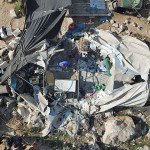
Next Article Anadolu Agency captures footage of attacked Idlib camp Russian False Flag Preceded Cluster Bomb Attack On IDP Camps in Idlib — Allegations about ‘Dirty Bomb’ in Ukraine follow the Syrian Disinformation Playbook

You Might Also Like

Harmoon Centre Monitoring Report, May 2025

The reality on the ground for governance and administration has continued to improve throughout May. The Transitional Justice Council has been created, and was initially directed to prepare internal governing principles and general working policies....

1 July ,2025

Geopolitics of Aid in Northwest Syria: How Donor Politics Shaped the Aid Landscape Before Assad’s Fall

The Syrian conflict created a devastating humanitarian crisis, with Northwest Syria (NWS) emerging as a critical arena for international aid....

Fateh Shaban

Fateh Shaban

30 June ,2025

Syria’s Energy Challenge: Security and Reconstruction

The end of international sanctions has removed a significant burden weighing on the shoulders of Syria - a burden that has long thwarted the country’s path to economic recovery, and the revitalisation of its social and economic sectors. And yet, numerous challenges continue to hamper Syria’s path to reconstruction and lasting stability.

25 June ,2025

Subscribe to the Newsletter


  • Harmoon Center
  • Vision & Mission
  • Careers
  • Center’s brochure
  • Contact Us
  • Staff Members
All rights reserved to Harmoon © 2024
certifiedISO27001 certifiedISO9001

Removed from reading list

Undo
Welcome Back!

Sign in to your account

Lost your password?