


1. What are the factors that shaped Turkey policy towards Syria?
Turkey’s approach to the first phase of the crisis: Policy of engagement
In the period between 2000 and 2011, Turkey had developed a strategic level of cooperation with Syria. Therefore, when popular movements emerged in Syria, Turkey thought that it could convince the Damascus regime to overcome the crisis through political means. Accordingly, since the very first day of the crisis, Turkey has made a number of demands from the Assad regime, such as ending the clashes, not using force against civilian demonstrators and initiating a political reform process to meet the legitimate democratic demands of the Syrian people. Turkey also acted as a kind of shield between the West and Damascus during the first phase of the crisis. Turkish decision-makers, who preferred to pursue a softer policy compared to the West’s harsh stance, believed that Syria could resolve the crisis peacefully based on its political influence over Damascus and maintained diplomatic communication with Assad for a while. Therefore, Turkey did not rush to sever relations with the Assad regime in this first phase of the crisis and invited the regime to take concrete steps towards structural political and economic reforms and democratization. During this process, which lasted for about 6 months, Turkish officials practiced shuttle diplomacy and held regular and frequent meetings with their Syrian counterparts in an attempt to bring about a change in Damascus’ attitude. During this period, the main objective of Turkey’s Syria policy was to resolve the Syrian crisis in a political framework without further escalation and thus to protect Syria’s stability and territorial integrity.
Increasing acts of violence by the Syrian army against peaceful protesters and the harsh steps taken by Western countries against the Assad regime began to limit Turkey’s policy alternatives on Syria. Such developments led Turkey to gradually distance itself from the Assad regime and gradually move closer to the anti-Assad front. However, Turkey continued to keep its channels of communication open with Assad for some time, despite the increasingly harsh sanctions against Syria by Western countries and the statements that the Assad regime had lost its legitimacy. Turkey’s last attempt at dialog with the Assad regime took place in August 2011. Then Foreign Minister Ahmet Davutoglu held talks with Syrian leader Bashar al-Assad on concrete steps towards structural political reforms and the non-use of force against demonstrators. However, it soon became clear that the Assad regime would not act in line with this road map, and Davutoglu declared that “there is nothing left to talk about with Syria” and announced the end of dialogue efforts with the Assad regime. Therefore, Turkey’s “policy of persuasion” in the first months of the crisis was not successful.
The second stage in Turkey’s approach to the crisis: Policy of pressure and isolation
Turkey pursued a “policy of pressure and isolation” towards the Syrian crisis starting in August 2011 and continuing until approximately 2015. The essence of this policy was not regime change but rather forcing the government to hand over power. Above all, Ankara aimed to establish a central authority in Damascus that would protect Syria’s territorial integrity, ensure political and social stability throughout Syria, and maintain good relations with Turkey. As witnessed in the case of Iraq, Turkey was aware that a vacuum of authority in its southern neighbor, with which it shares a 911-kilometer land border, would pose deep and multidimensional risks for Turkey. Therefore, Turkey has taken steps to topple the Assad regime and replace it with a democratic government that will restore political stability in Syria and better represent Syrian society. In this framework, Turkey has used political, diplomatic and economic pressure tools to force the Assad regime to leave power. Turkey has tried to implement this policy in coordination with international actors, particularly Gulf and Western countries.
The first examples of Turkey’s “pressure and isolation” policy, which started to be implemented in the second half of 2011, first manifested itself in the government’s support for the anti-Assad Syrian opposition. In addition to its policy of actively supporting Syrian opposition groups, Turkey tried to put pressure on the Syrian government through political, diplomatic and economic steps. Since the end of 2011, Turkey started to impose comprehensive and severe sanctions packages against Syria in the political, economic, diplomatic and military fields. Since the end of 2011, Turkey has been working hard to increase international pressure on Syria and has made several attempts to mobilize the international community against the Assad regime. In this regard, Turkey’s goal was to isolate the Baath regime from the international community, to ensure that regional and international actors implement policies against the regime, and thus to accelerate the process of removing the Assad regime from power. Turkey first supported the steps taken by the Arab League against the Assad regime. Turkey also supported the diplomatic steps taken against the Syrian regime at the UN.
The issue of Syrian refugees has been one of the important dynamics of Turkey’s Syria policy. Following the outbreak of protests in Syria in March 2011, Syrians fleeing the conflict entered Turkey for the first time through Cilvegozu border gate in Hatay on April 29, 2011. In May 2011, the first refugee camp for Syrian refugees was established in Turkey. In October 2011, Turkey adopted an “open door policy” for civilians fleeing the war. In this context, the government announced the introduction of the “temporary protection regime”, which includes a number of principles such as not sending Syrians back unless they request it, sheltering them in camps and providing basic services. As the civil war in Syria intensified, the number of refugees seeking asylum in Turkey reached millions in a short period of time. In addition to the refugee problem, increasing security threats emanating from Syria led Turkey to reshape its Syria policy in line with the changing dynamics of the crisis. The PKK terrorist organization increased its activities in northeastern Syria and threatened the territorial integrity of Syria together with radical organizations such as DAESH, heralding a new era in Syria policy.
Turkey’s crisis policy within the framework of changing dynamics in Syria
The nature of the Syrian civil war has undergone a critical transformation over time. The first transformation of the Syrian crisis took place with the transition from civilian popular movement to armed resistance. As a result of the prolonged conflict, the Syrian central authority was unable to establish its sovereignty and authority in a significant part of the country, especially on the borders. Over time, regional and international powers first indirectly and then directly intervened in the crisis. The most critical transformation from Turkey’s point of view has been that people from various countries around the world who embrace radical ideologies started to fight in the Syrian arena with different motivations and under different organizations. Due to the authority vacuum and the influx of foreign fighters, terrorist organizations claiming unilateral sovereignty started to gain power across the country. The last topic to be emphasized in the context of the changing nature of the crisis is the mass migration of Syrians in and out of the country. In search of security, stability and better living conditions, Syrians have started to leave the regions they live in and migrate to safer areas within the country or outside the country, especially to neighboring countries. Turkey has been the country most exposed to the mass migration of Syrians. Therefore, the Syrian crisis started to have a spillover effect in terms of both security and mass migration over time. As a result of these changing dynamics of the crisis since 2014, Turkey has endeavored to adapt its Syria policy to the new realities on the ground. In this process, Turkey’s priorities on Syria have also changed.
Turkey’s priorities in its Syria policy can be listed as follows:
a. Combating terrorism and radicalism
b. Protecting Syria’s territorial integrity and political unity
c. Ensuring border security
d. Preventing mass migration and ensuring the voluntary return of Syrians
e. Finding a political solution to the Syrian crisis within the framework of UN Resolution 2254
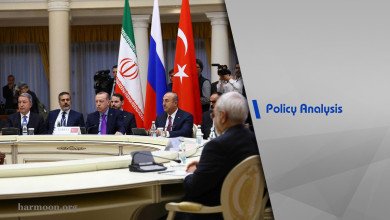
These priorities are the determinants of Turkey’s Syria policy today. As can be understood from these priorities, the security issue has become increasingly prominent in Turkey’s Syria policy. In line with the changing dynamics of the conflict, Turkey has started to use military means more in addressing the crisis in Syria since 2014. The second point that needs to be emphasized in Turkey’s Syria policy during this period is that Turkish decision-makers engaged in a close engagement with Russia, a rival in Syria, to combat the security threats posed by the Syrian crisis.
The most critical priority of Turkey’s Syria policy today is the fight against terrorism. For Turkey, the terrorist risk in Syria first emerged when the PYD, the Syrian branch of the PKK, and its armed wing, the YPG, took control of the Kurdish-populated Syrian cities of Afrin, Qamishli and Hasakah in July 2012. By paving the way for the PKK’s Syrian offshoots to gain strength in the northeast of the country, the Damascus administration aimed to ensure that Turkey focuses all its attention and energy on combating these organizations. Therefore, the Baathist regime started to play the PKK card against Turkey again, just like in the 1980s and 90s. However, in the process, the PYD/YPG developed close cooperation with Western countries, especially the US, in the fight against DAESH. Despite the end of DAESH’s rule over Syrian territory in March 2019, the US-led International Coalition forces continued to support the YPG, which significantly strengthened the organization’s military, political and economic autonomy in northeastern Syria. Turkey, which follows all these developments east of the Euphrates with attention and concern, strongly opposes the formation of a YPG-led autonomous structure in the region similar to Northern Iraq. Turkey sees the PYD/YPG not only as a security problem but also as a vital strategic threat. This is because for the first time, the PKK terrorist organization, which aims to establish an independent state within Turkish territory, has gained control over a large area, dominated large resources, established an army with US support, and most importantly, started a micro-level state-building process with the political and civilian structures created in the areas under its control. In Turkey’s perception, this is seen as the establishment of a terrorist state on its southern borders. What makes this situation more dangerous for Turkey is the fact that the West, particularly the US, is providing military and economic support to the PYD/YPG organization. This situation shows that the relationship between the parties may evolve from a tactical to a strategic dimension, from military cooperation to a political and diplomatic partnership. Combating the PYD/YPG threat is by far Turkey’s top priority in Syria, and this factor is considered in every step taken.
Another development that can be considered within the scope of Turkey’s counterterrorism priority has been the rise of the Islamic State of Iraq and the Levant (ISIL) terrorist organization in Syria. The organization’s declaration of a so-called caliphate in a significant part of Iraq and Syria under the leadership of Abu Bakr al-Baghdadi in June 2014 significantly increased Turkey’s threat perceptions stemming from Syria and Iraq. As DAESH’s terrorist activities reached a level that threatened regional and international peace and the organization carried out terrorist acts within Turkey’s borders, the Turkish army was forced to take military measures against DAESH to ensure border security. Therefore, on August 24, 2016, Turkey launched Operation Euphrates Shield to clear its border with Syria of DAESH presence. Within the scope of this operation, the Turkish Armed Forces and the Free Syrian Army forces cleared many settlements in northern Syria, particularly Jarabulus and al-Bab, from DAESH. With Operation Euphrates Shield, Turkey dealt a major blow not only to DAESH but also to the YPG terrorist organization. With this cross-border military operation, the Turkish army prevented the YPG from penetrating west of the Euphrates and prevented the creation of a PKK corridor along Turkey’s southern border. Therefore, this operation was carried out to fight against the YPG as much as against DAESH. The Turkish army’s operations against the YPG continued in the following period. On January 20, 2018, Operation Olive Branch was launched to clear the city of Afrin in northwestern Syria and the surrounding area of YPG elements. On October 9, 2019, Operation Peace Spring put an end to the YPG presence in the 20-kilometer-deep area between the cities of Tal Abyad and Ras al-Ayn on the Turkish-Syrian border.
The Syrian regime launched a new military operation against the opposition in Idlib province with the support of Russia and Iran in December 2019, which prompted the Turkish army to take action to stop the advance of the regime forces. Therefore, the Turkish Armed Forces launched Operation Spring Shield in Idlib on February 27, 2020 to prevent the regime’s advance, to prevent a new wave of migration to Turkey’s borders due to regime attacks, and to ensure border security. In this cross-border military operation, which lasted for about a week, regime forces and Iranian-backed militias suffered heavy casualties and their advance towards Idlib was blocked. By absolutely preventing the Assad regime and Shiite militias from moving towards Idlib, the Turkish army demonstrated that Idlib constitutes a red line for Turkey and that it will respond to an all-out regime attack targeting Idlib with a counter-attack. Moreover, this operation has once again confirmed that preventing new mass migration movements towards Turkey is among the key priorities of Turkey’s Syria policy.
Although Turkey started to implement an open-door policy towards Syrian civilians fleeing the war in October 2011, it had to follow a more cautious policy towards Syrians in the following period as the Syrian population in Turkey approached 4 million. The Syrian regime’s escalating military crackdown on the Syrian opposition and forcing opposition forces and anti-Assad civilians to migrate to cities bordering Turkey, particularly Idlib, pushed Turkey to take more stringent measures against a possible new influx of refugees. The safe zones that Turkey established in northern Syria through cross-border military operations were mainly implemented in the context of the fight against the YPG. However, another purpose of the safe zones was to accommodate new waves of migration from Syria to Turkey within Syrian territory. It was also expected that at least some of the Syrians in Turkey would return to these safe zones. Therefore, the construction of safe zones has been one of the main objectives of Turkey’s Syria policy. Turkey’s ultimate goal is to establish a terrorist-free safe corridor along the entire border until order and stability are restored in Syria.
In light of all these, security concerns are at the forefront of Turkey’s policy towards the Syrian crisis. Nevertheless, Turkey still pursues the goal of reaching a fair political solution in Syria within the framework of UN Resolution 2254. Considering Turkey’s long-standing cooperation with the Syrian opposition and the millions of Syrians it has hosted in Syria, it is imperative to find a balance between combating security threats and reaching a political solution. In this context, Turkey will maintain its position as the guarantor of the Syrian opposition in the political negotiations with Russia and Iran.
2. What are the determents of this policy for the next decade (2033)?
Turkey’s current priorities in its Syria policy will largely remain the same in the next 10 years. However, some new priorities may be added depending on the achievement of a political solution and the establishment of order and stability in Syria. In this context, Turkey’s priorities in Syria in the next 10 years may be as follows:
– Ending the PYD/YPG’s territorial control in Syria and eliminating the civil, administrative and military structures built by the organization. If this cannot be achieved, purifying the PYD/YPG from the PKK.
– Ensuring the safe and voluntary return of Syrians.
– Preserving Syria’s territorial integrity and unitary structure.
– Reaching a political solution between the Syrian regime and the opposition.
– Initiating the reconstruction process in Syria and Turkey playing an active role in this process.
– Reaching a political solution in Syria, establishing order and stability, and activating the Turkey-Syria strategic cooperation that was initiated before the Arab Spring.
It is unclear which countries Turkey will ally with and which foreign policy instruments it will use to realize these priorities in the next 10 years. This is because Turkey will position itself according to the course of developments in Syria. The course of developments in Syria is uncertain due to the multidimensional and layered nature of the crisis. The Syrian crisis has gained a regional and global dimension rather than being a local issue. Therefore, critical developments outside Syria with global and regional implications and the changes that may occur in the relations among the external actors influential in the Syrian crisis will determine the course of the Syrian crisis. In this framework, the factors that will determine the position Turkey will take in Syria and the foreign policy instruments it will use in the next decade are as follows:
– The future of the US withdrawal from the Middle East
– The course of developments in Ukraine and the situation in Russia
– US-Russia tensions
– US-Iran relations
– Possible developments in the Turkey-Russia-Iran relationship triangle
– The future of regional normalization in the Middle East
Depending on the developments in these dynamics, it is possible to mention two basic scenarios regarding Turkey’s policy in Syria in the next decade.
1. Ankara-Damascus normalization in Syria within the framework of Turkey-Russia cooperation
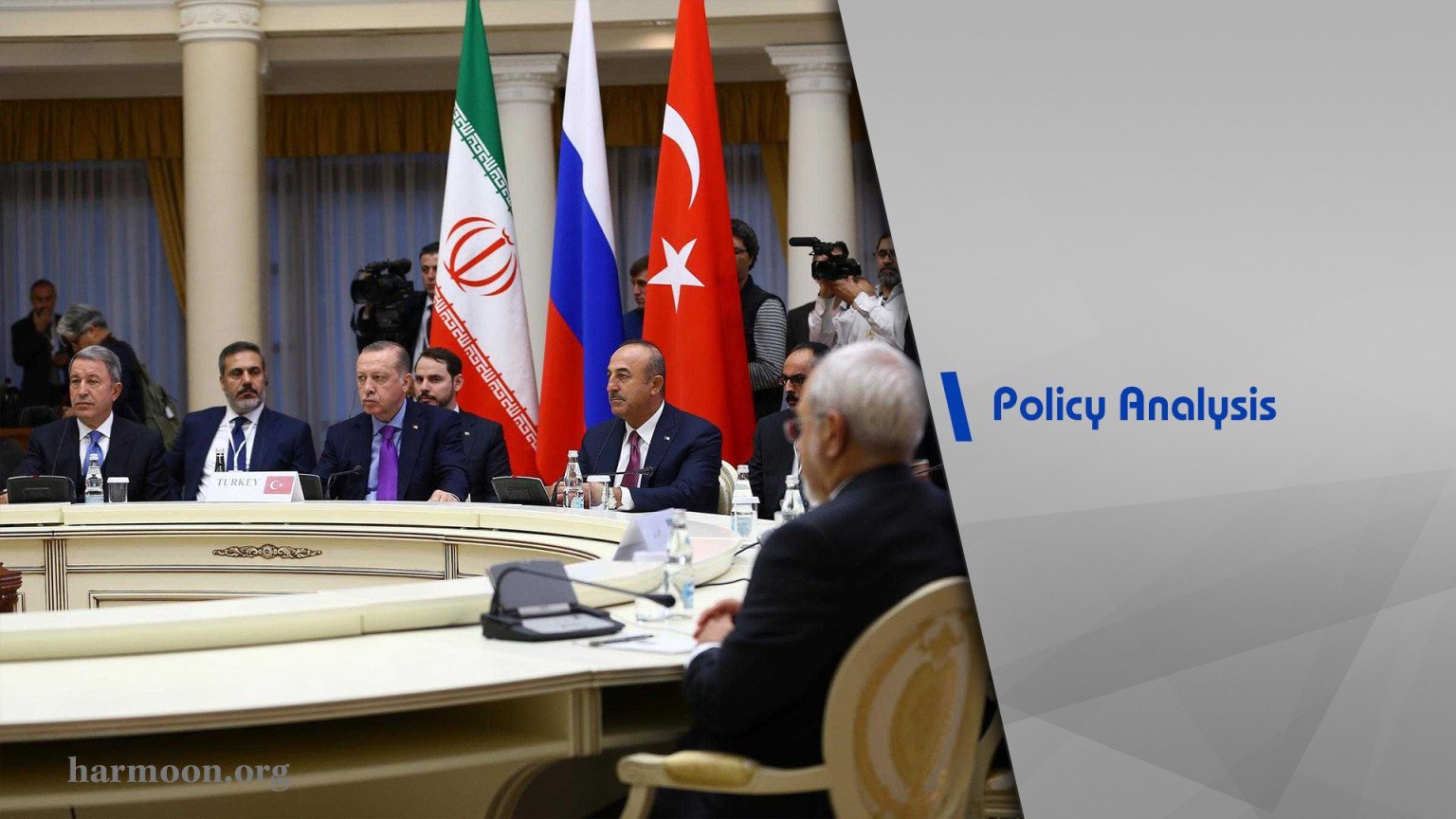
As mentioned in the first section, Turkey has been coordinating its Syria policy with Russia, its rival in Syria, since 2015. The Astana Process, initiated under the guarantorship of Turkey, Russia and Iran, has produced tangible results in Syria. Turkey has coordinated all of its cross-border military operations against the PYD/YPG and ISIS terrorist organizations in Syria with Russia. This coordination has minimized the risks on the ground for Turkey.
The main reason for Turkey’s engagement with Russia in Syria is Russia’s military intervention in Syria in 2015 and the steps it has taken since then, making it the most influential external actor in Syria. This has forced Turkey to engage with Russia in order to deal with security threats emanating from Syria. In addition, the US alliance with the YPG has pushed Turkey to work with Russia. Finally, Europe’s indifference and ineffectiveness on the Syrian crisis pushed Turkey to seek alternatives for a solution.
The latest outcome of Turkey’s coordination with Russia in Syria has been the Ankara-Damascus dialogue. With Russia’s mediation and Turkey’s acceptance, Ankara and Damascus held talks between intelligence agencies, followed by Defense Ministers and finally Foreign Ministers. Turkey continues to follow the dialogue process with Syria, with Moscow’s initiatives, on its top three priorities in Syria. The most likely scenario is that this normalization trend in Turkey’s Syria policy will continue to strengthen in the next 10 years. By engaging with the Damascus administration in Syria;
1. Cooperation against the YPG
2. Ensure the safe return of Syrians to their homes
3. A political settlement between the Syrian opposition and the Syrian regime
on Syria’s territorial integrity and political unity. Ankara believes that it has common interests with Damascus in fighting the YPG and preserving Syria’s territorial integrity and political unity. While this is true, for Damascus, the YPG is a secondary threat and even a trump card that can be used against Turkey’s support for the opposition. Therefore, even though Ankara and Damascus share common interests, the Ankara-Damascus dialogue has not been able to make rapid progress due to differences in priorities and the deep mistrust that has persisted for 12 years. However, Turkey will continue to follow the dialog process with Damascus within the framework of engagement with Russia unless there is a serious change in the distribution of power in Syria in the short and medium term. However, this process can be expected to have ups and downs and at times escalate the crisis.
Factors that increase the likelihood of Ankara pursuing a dialog with Damascus could be the following:
– Russia’s continued defense of its position in Syria despite all the difficulties it is facing in Ukraine.
– The US remains in Syria and continues to cooperate with the YPG.
– Continued strengthening of the regional normalization process in the Middle East.
– Continuation of partnerships and energy cooperation between Turkey and Russia in the Middle East-Caucasus-Central Asia-Africa.
The risk factors that could lead to the end of the Ankara-Damascus dialog are as follows:
– The US changing its Syria policy and weakening or ending the alliance with the YPG
– Russia’s position in Syria weakened or forced to withdraw as a result of its protracted war of attrition in Ukraine.
– The Syrian regime continues to make maximalist demands that cannot be met in negotiations with Turkey.
– Iran gaining too much power in Syria, and tending to drive Turkey out of Syria through its support to Damascus.
– Crises/ruptures in Turkey-Russia relations due to non-Syrian issues, especially the Ukraine issue.
If Turkey pursues normalization with Damascus and engagement with Russia in the next decade, it will be possible to achieve significant gains in the fight against the YPG, preserving Syria’s territorial integrity and political unity, and ensuring the return of Syrians to their homes. On the other hand, Turkey would ultimately have to end its presence in Syria and make significant concessions on finding a political solution to the Syrian crisis.
2. Turkey-US cooperation in Syria
Turkey’s second option for protecting its interests in Syria in the next decade is to cooperate with the United States. In fact, Turkey has been in partnership with the US for a significant part of the Syrian crisis. Turkey and the US have long partnered in forcing the Syrian regime to leave power and supporting the Syrian opposition. With the emergence of the ISIS threat in Syria, the US priorities in Syria started to change. During this period, Turkey made offers to the US to partner in the fight against ISIS. However, the US preferred to ally with the YPG in the fight against ISIS for different reasons. This preference of the US eliminated the possibilities of cooperation between Turkey and the US in Syria and turned the US into a threat to Turkey. In this process, Turkey has made intensive efforts to dissuade the US from allying with the YPG, but has not been successful in this regard.
There have been no critical changes in Syria since 2020. It is seen that there is a blockage in the military field and in the political solution process. This blockage is no longer sustainable, especially for extra-regional actors such as the US. In addition, one of the main topics of debate in US public opinion and politics is the withdrawal from the Middle East. During his presidency, Trump attempted to withdraw the US from Syria, but a partial withdrawal took place due to the influence of the US security bureaucracy. However, as developments in Afghanistan have shown, the future of the US presence in Syria is uncertain. In fact, if Trump wins the next presidential election in the US, this process can be expected to accelerate. This makes it necessary for the US to guarantee its interests in Syria before withdrawing from the country.
Thanks to its alliance with the YPG, the US has achieved the desired results in the fight against ISIS. However, the alliance with the YPG does not benefit the longer-term and strategic interests of the US. One of the top priorities of the US in Syria is to limit Iranian influence. In contrast, the YPG is an ineffective actor in the fight against Iran and, moreover, it refuses to accept the fight against Iran. In addition, it is becoming increasingly impossible for the US to achieve its goal of granting political status and autonomy to the regions it controls in Syria. In this situation, the US is in a crisis with Turkey and has to deal with Turkey’s constant military pressure. In addition, the US alliance with the YPG makes it difficult for the US to fight against the Turkey-Russia-Iran alliance. In addition, this situation carries the possibility of a reconciliation between Ankara and Damascus, which could result in a further weakening of the US position in Syria. Depending on these risks, there may be a change in the US policy towards Syria and the US and Turkey may become closer in Syria in the coming period.
In fact, there is a favorable ground for Turkey and the US to partner in Syria. The only major problem is the US alliance with the YPG. However, apart from this problem, the US and Turkey share common views on the political solution in Syria, suppression of the Assad regime, the role of the Syrian opposition in the future of Syria, limiting Iranian influence, the fight against ISIS and al-Qaeda, and the reconstruction of Syria. Therefore, the steps to be taken by the US regarding the alliance with the YPG may create favorable conditions for Turkey-US cooperation in Syria.
If Turkey cooperates with the US in Syria, it will gain advantages in terms of suppressing the Assad regime and forcing a political solution, limiting Iranian influence, Syrian opposition’s role in the future of Syria, and taking the lion’s share in the reconstruction of Syria. On the other hand, Turkey will have to make political concessions and soften its position on issues such as Syria’s territorial integrity and political unity, and the granting of an autonomous region to Syrian Kurds. In this case, the US will have to hand over control to Arab tribes in settlements such as Raqqa and Deyz ez Zor, and end PKK influence in Kurdish areas and purge the PYD/YPG from the PKK.
The developments that would make Turkey’s cooperation with the US in Syria possible could be as follows:
– A softening/improvement in Turkey-US relations.
– Due to the deepening of the Ukraine crisis, Turkey’s balance policy in Ukraine in favor of NATO.
– The emergence of the need for an alliance with Turkey in the context of the US withdrawal from Syria.
– Iran’s growing influence in Syria, which has become a growing common threat for Turkey and the US.
– Iran’s increasing pressure on the US in Iraq and Syria.
If Turkey cooperates with the US in Syria, it will gain advantages in terms of pressuring the Assad regime and forcing a political solution, limiting Iranian influence, allowing the Syrian opposition to play a role in the future of Syria, and taking the lion’s share in the reconstruction of Syria. On the other hand, Turkey will have to make political concessions and soften its position on issues such as Syria’s territorial integrity and political unity, and the granting of an autonomous region to Syrian Kurds. In this case, the US will have to hand over control to Arab tribes in settlements such as Raqqa and Deyz ez Zor, and end PKK influence in Kurdish areas and purge the PYD/YPG from the PKK.
The developments that would make Turkey’s cooperation with the US in Syria possible could be as follows:
– A softening/improvement in Turkey-US relations.
– Due to the deepening of the Ukraine crisis, Turkey’s balance policy in Ukraine in favor of NATO.
– The emergence of the need for an alliance with Turkey in the context of the US withdrawal from Syria.
– Iran’s growing influence in Syria, which has become a growing common threat for Turkey and the US.
– Iran’s increasing pressure on the US in Iraq and Syria.