



In 2024, the Syrian regime implemented several security, military, and partisan level changes. These changes occur within a shifting political landscape influenced by internal transformations in Syria and developments at regional and global levels.
This assessment aims to evaluate these changes, understand their motives and effects on the Syrian regime, and examine the regime’s relations with its allies and the Arab countries that have worked to normalize relations with it. It seeks to answer a fundamental question regarding the Syrian regime’s motives: Were these changes a response to internal needs to ensure the regime’s continuity and for Bashar al-Assad to remain in power despite exhausting the presidential terms allowed by the current constitution? Or were they driven by external factors and actors compelling the regime to act to meet their demands?
First: Changes at the security and military levels
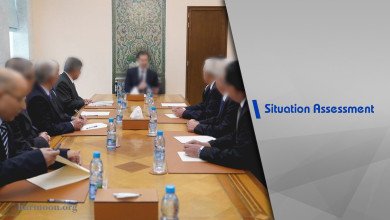
At the beginning of this year, the Syrian regime announced a new “security road map,” which included restructuring and new appointments at the security level. A decision was made to transform the National Security Bureau from a coordinating body affiliated with the Presidential Palace into a higher security institution that supervises the main security branches and departments. The amendments included appointing Major General Kifah Al-Mulhim as director of the Syrian National Security Bureau, succeeding Major General Ali Mamlouk, who was appointed Vice President for Security Affairs. Other appointments included Major General Kamal al-Hassan as head of the Military Intelligence Division, Major General Nasser al-Ali as head of the Political Security Directorate, and Major General Qahtan Khalil as director of the Syrian Air Force Intelligence, succeeding Major General Ghassan Jawdat Ismail.
On the military level, the regime accelerated efforts to reorganize and restructure the armed forces in late 2023. Major General Ahmad Suleiman, Director of the General Administration of the Ministry of Defense, announced the plan to “form a professional army”[1] to official media. The regime laid the groundwork for this with several laws, decisions, and measures, including grants and incentives for those wishing to join the army as volunteers, and the integration of several specialized departments into the military.[2]
Major General Suhayl al-Hassan (nicknamed the Tiger) was appointed commander of the Syrian Army’s Special Forces, succeeding Brigadier General Mudar Muhammad Haider as part of the new military appointments. Major General Saleh al-Abdullah succeeded him in commanding the 25th Division, which Russia established from fighters of the “Tiger Forces” militia and has supported since 2019 when he was the commander of the 30th Division in the Republican Guard.
This new security strategy, along with the appointments and military changes, indicates that the Syrian regime is moving towards achieving a set of strategic goals likely to include the following:
- Centralizing the National Security Office, making it responsible for implementing the strategy of control, oversight, and coordination between the main security services, to ensure maximum benefit from their joint efforts under a unified central command that receives directives from the head of the regime.
- Reducing the influence and ability of the regime’s allies to affect the security services by selecting the most loyal and reliable figures to the head of the regime, capable of controlling the services through the National Security Office.
- Demonstrating the regime’s control over the state’s key institutions, its ability to ensure continuity, and its adaptability to military and security changes in the country.
- Showing flexibility – even if only formal – in response to the demands of states and the Arab League, which leads efforts to reestablish the Syrian regime’s standing, by changing leadership and introducing modifications in the security services and military formations to control the internal situation and follow up on security coordination with regional countries, especially the requirements of the Arab “step for step” approach.
Second: Changes at the party level
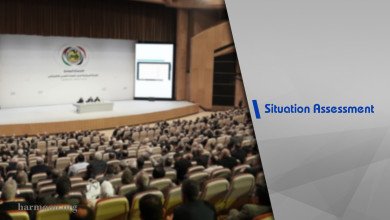
The Arab Socialist Ba’ath Party held its latest conference on May 2, 2024, where it announced the “election” of Bashar al-Assad as Secretary-General of the party and elected a central leadership comprising 14 new members, with all previously known figures from the Syrian Ba’ath Party leadership absent.
In a speech before the enlarged Central Committee, Bashar al-Assad spoke of a new phase in the history of the Ba’ath Party, describing it as a “repositioning.” He mentioned distancing the party from “the problems of the daily procedural work carried out by the government, thereby placing unnecessary responsibilities on the party.”[3] This statement is seen as an announcement of the Ba’ath Party’s exclusion from state institutions, raising doubts about the regime’s commitment to implementing this step.
The changes in the Ba’ath Party leadership and its repositioning may reflect a shift in the Syrian regime’s vision of the party’s future role, suggesting several goals the regime aims to achieve, including:
- Improving the efficiency of party formations. During the years of conflict, the party struggled to provide ideological support and mobilize in favor of the regime’s policies in the face of the protest movement, which involved groups that had constituted the party’s popular base for decades. This necessitated leadership changes from old figures to more dynamic and efficient individuals capable of adapting to internal developments resulting from the conflict, involving new elements from groups that have proven their absolute loyalty during the years of conflict.
- Redirecting the Ba’ath Party’s role to be part of a broader strategy by the regime to implement constitutional changes that grant Bashar al-Assad new presidential terms.
- Showing flexibility and a willingness to change, in an attempt to improve its image before the international community and Arab countries.
Third: Changes within the framework of Assad’s survival strategy
Although the changes brought about by the Syrian regime in its security, military, and party structures are considered partial, and the regime has often implemented similar changes in recent decades without undermining its authority and dominance; they remain largely superficial. Fundamental changes in the security approach are unlikely, as they remain the cornerstone of the Syrian regime’s policies. This approach has played a major role in suppressing protests and opposition from the beginning of the Syrian revolution until now, suggesting that the regime is likely to adopt a comprehensive strategy to manage the next phase, leveraging the tactics served by these changes.
It is unlikely that the demands of the Arab countries leading the campaign to rehabilitate the regime will constitute a decisive impetus for the regime to bring about serious and meaningful changes that lead to real transformation and open the way for change in Syria. Clear indications suggest the existence of a strategy for a new phase focusing on the 2028 elections, when Bashar al-Assad’s last presidential term under the 2012 Constitution ends. The regime is framing the recent series of changes as part of this strategy, providing a clearer understanding of the Syrian regime’s management dynamics at this stage.
We will likely witness broad changes in the next Parliament’s composition, members, and role. On May 11, 2024, Bashar al-Assad issued a decree setting July 15, 2024, as the date for the elections of the parliament members for the fourth legislative round.[4] This institution will be responsible for passing the constitutional amendments required to ensure a “legitimate” way to keep Bashar al-Assad in power after he has exhausted the two presidential terms allowed under the current constitution.
Results:
The recent changes introduced by the Syrian regime indicate a persistent effort and a multi-level approach to ensuring its continued survival through the following trends:
- Strengthening the regime’s control and centralizing its authority over security affairs by enhancing the effectiveness of the security services and key military units. This strategy aims to achieve sustainable security control, relying on the loyalty of security and military leadership to maintain the stability of the regime.
- Consolidating Bashar al-Assad’s control over the Ba’ath Party by ensuring its ongoing loyalty while renewing its central leadership. This renewal aims to adapt the party for a future role as a primary tool for mobilizing and controlling society.
- These recent changes reveal that the primary motive is an obsession with maintaining power and creating the appropriate conditions to implement a strategy that ensures a “legitimate” constitutional solution, allowing Bashar al-Assad to run for new presidential terms in the 2028 elections.
- The internal economic and social challenges facing the Syrian regime, the living crises that Syrian citizens are suffering in areas under its control, international pressure and sanctions, and external demands for change do not significantly influence the regime’s approach and policies for managing its crisis. Although the regime attempts to market these changes as a response to the demands of countries normalizing relations with it, it mainly seeks compensation to overcome the various difficulties it faces.
The developments and changes introduced by the Syrian regime require researchers to monitor, evaluate, and analyze the evolving conditions and place them in the context of the regime’s attempts to create the conditions for a constitutional amendment that would allow Bashar al-Assad to secure new presidential terms.
[1] A special interview with Major General Ahmad Suleiman, Director of the General Administration of the Ministry of Defense, discussing Legislative Decree No. 37 of 2023. Syria TV on YouTube, February 12, 2023. Viewed on May 19, 2024. Link: https://www.youtube.com/watch?v=MdlAdJQCBhA
[2] According to military sources, the Chemical Corps was dissolved and replaced by Chemical Protection Administration, the Military Construction Department was merged with the Military Housing Establishment, and the Transport Department was merged with the Vehicles Department. The Electronic Warfare Department was dissolved, with its specializations integrated into the Signals Department. For more information, see: “New Laws: ‘Incentives’ and a ‘Secret Plan’ to ‘Restructure’ the Regime’s Army,” Alsouria.net, published December 6, 2023, viewed May 19, 2024. Link: https://2u.pw/J2WDKSO8
[3] Speech by Bashar al-Assad, Secretary-General of the Arab Socialist Ba’ath Party, during the expanded meeting of the Central Committee. SANA (Syrian Arab News Agency) on YouTube, published on May 4, 2024, viewed on May 19, 2024. Link: https://www.youtube.com/watch?v=JA5rNc0et3E
[4] “Bashar al-Assad issues a decree setting July 15 as the date for elections for members of the People’s Assembly,” SANA (Syrian Arab News Agency), published on May 11, 2024, viewed on May 20, 2024. Link: https://sana.sy/?p=2084322