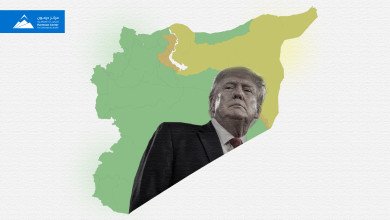



Every four years, from November to January, regional analysts assess how the incoming U.S. President might impact their regions. For instance, Politico analysed Trump’s potential return to the White House with a focus on Europe, covering topics from energy and the Ukraine war to climate and trade—predicting challenging years ahead.[1] Similarly, Lynn Song examined possible implications of Trump’s second term for China.[2] Analyses have also explored Trump’s re-election impacts on the Middle East, Ukraine, and Russia.[3]
Among the analyses regarding making sense of Trump’s re-election, war zones were even more critical given Trump’s self-proclaimed role as a peacemaker.[4] While Ukraine and Gaza dominated the initial focus, his anticipated approach to Syria also sparked significant interest.
Despite it is not a first term in the White House, analyses of Trump’s re-election remain cautious and open-ended. This reflects Trump’s unpredictable persona and his anti-establishment rhetoric. However, despite the expectation of unpredictability, there are some points that the majority, if not consensus, expect. These points include the desire to use the American military as little as possible. Parallel to taking his “American First” policies, not being obliged to follow the allies versus enemy dichotomy, which could mean negotiating with China, Russia, or North Koreans at the expense of US traditional allies in Europe and Asia.
Trump’s unconventional style is partly deriving from his “American First” policy and is based on the policy limited involvement as he consider the military involvement as expensive.[5] Indeed, when the Syrian opposition, headed by Ha’yat Tahrir Sham, Syrian National Army, and many other factions, conducted a surprise attack and overtook significant cities in 10 days, Trump stated “Opposition fighters in Syria, in an unprecedented move, have totally taken over numerous cities, in a highly coordinated offensive, and are now on the outskirts of Damascus, obviously preparing to make a very big move toward taking out Assad. … Syria is a mess, but is not our friend, & THE UNITED STATES SHOULD HAVE NOTHING TO DO WITH IT. THIS IS NOT OUR FIGHT. LET IT PLAY OUT. DO NOT GET INVOLVED!”[6] Soon after this message, the opposition took over the Damascus and the Assad regime fell, and Assad flee to Russia. Since the takeover of Syrian new administration by the opposition, Assad’s approach was questioned.
Trump ensured that he would deal similarly to Syrian case in the coming term. On December 16, Trump gave clearer image about what he thinks about Syria. On his press conference, Trump showed his pleasure with the fall of Assad and stated that “Turkey is going to hold the key to” referring to the continuation of disengagement with the region.[7] As it was his conversation with Turkey’s President that he decided to withdraw his army from Syria in the first term.
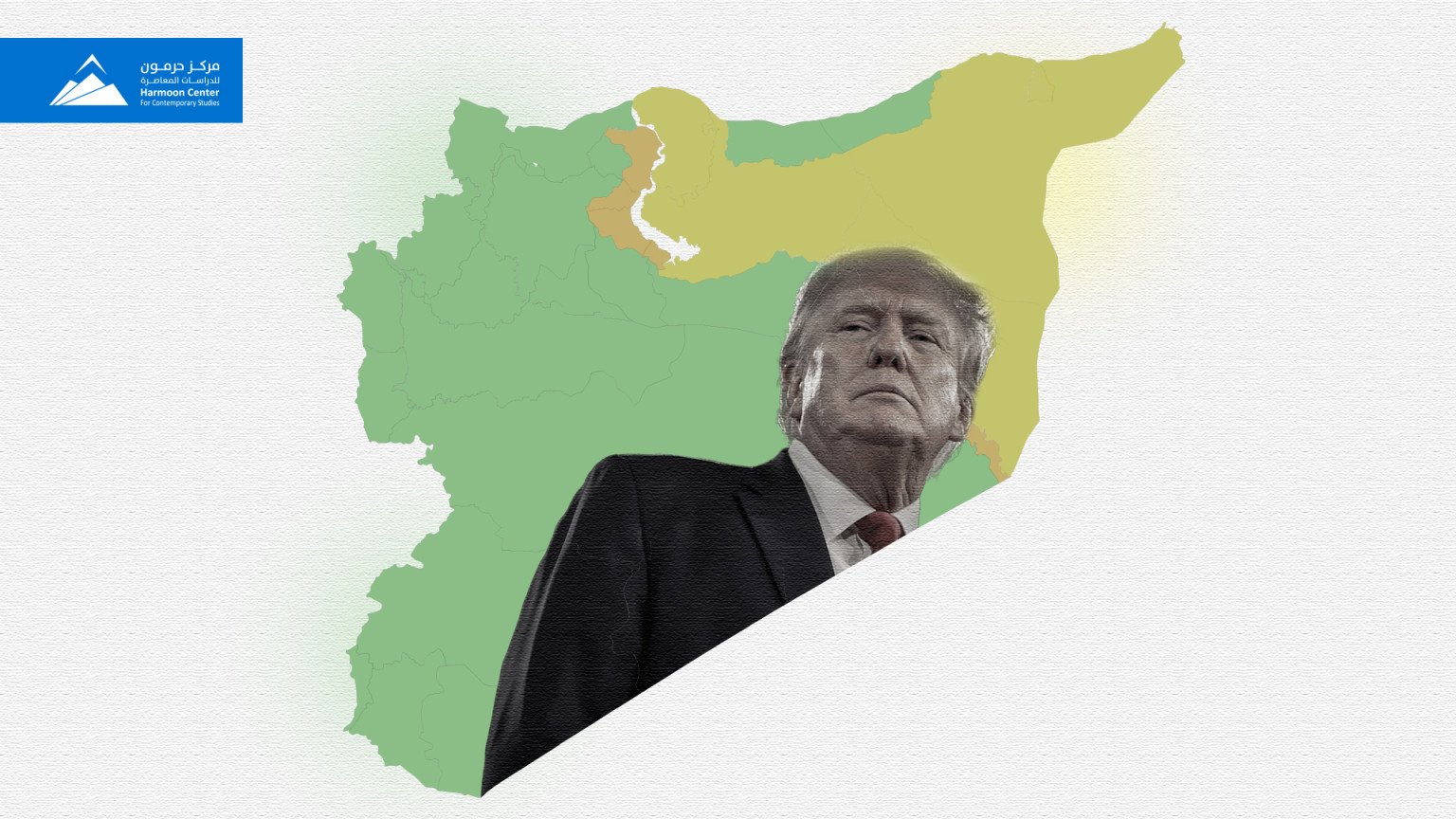
This policy paper examines the implications of Trump’s re-election for the Syria after the collapse of the regime. How will the new government work with once opposition, now the power. How will Trump respond to Israeli aggression to Syria especially which intensified after the collapse of regime by bombing naval and air forces of Syria and even invading new territories from Syria.
Is Trump’s first term a reliable indicator of what’s to come?
During Trump’s first term, his approach to Syria was marked by military disengagement and transactional diplomacy.[8] Moreover, economic sanctions were introduced against the regime, which greatly affected the regime’s ability.[9] Even though he wanted to end the US troop’s existence in Syria in 2019, he could not achieve it as there was internal pressure not to do so. Therefore, while the US decreased its number of troops in Syria from around 2000 to hundreds, its existence in Syria still has had a significant impact on the ground.[10]
Trump and his administration considered PYD as a US ally—and the existence of US troops, even if with hundreds, is partly to protect them as Turkey considers PYD as an extension of PKK, a terrorist organization recognized by Turkey, US, and EU. Indeed, PYD is one of the hot issues that the US and its NATO ally, Turkey, disagree on. While the US considers PYD as a valuable tool in fighting ISIS, Turkey promised to fight ISIS after the US withdrew from Syria.[11] The speech made on December 16 signals that he would not prioritize the PYD as he stated that it would be Turkey as a key factor in Syria, his administration and other US institutions might force him not to abandon the PYD.
Another key aspect of Trump’s first term was his hardline stance on Iran. His administration pursued a “maximum pressure” campaign, withdrawing from the Iran nuclear deal and imposing severe sanctions. Alongside Gulf states and Israel, Trump aimed to isolate Iran. Given Iran’s crucial support for the Syrian regime, these policies indirectly weakened Damascus. The fallout from the October 7 conflict could further embolden a hawkish approach toward Iran in a second term.
Taking Trump’s first term Syrian policies as a reference, disengagement from the region, pressuring Iran, securing Israel, and probably keeping PYD safe, Trump signals a similar approach for his second term as well. As he clearly stated that “this is not our fight, do not get involved” when the opposition was heading to Damascus, he might be pressured from other US institutions of not to abandon PYD. How would he react to Israeli invasion of Syrian lands and bombarding Syrian facilities remain unclear but considering his approach to Israel it seems he would not force Israel to stop.
How will Trump behave with once opposition now the power
Had the conflict in Syria remained stagnant, little change was expected for the opposition. However, recent developments which ended with the fall the Assad regime and gains by Hay’at Tahrir al-Sham and Syrian National Army could attract renewed U.S. engagement.
However, as the recent development might mean less powerful Iran and Iran proxies in the Middle East, the new US administration might also have a more profound and newer engagement with the new administration.
Turkey and Qatar, both critical supporters of the Syrian opposition, could face a more transactional US approach. Trump’s previous dealings with Turkey, particularly his bond with President Erdoğan, suggest that U.S.-Turkey relations could become more bilateral and interest-driven. However, its implication to Syrian cases would focus on whether Trump will continue to support YPG and also how he will react to recent developments.
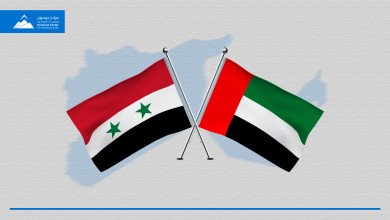
Recent normalization efforts between Arab states and the Assad regime, led by the UAE and Saudi Arabia, presented a new dynamic.[12] How will these two states react to new administration? Both were once supporting the opposition but have been normalized with the regime when they consider the regime as winner. Their normalization was not welcomed by the US, but it was not opposed dramatically. Now, the uncertainty remains whether these two states will establish relations with the new administration or not? Even if they recognize their relations with the new administration, will they attempt to legitimize Hay’at Tahrir Sham in international area as many including the US consider this as a terrorist organization. Moreover, considering Saudi Arabia and the UAE distance to Arab Spring revolutionaries, will they also keep distance with these or will they consider these as different cases.
Qatar, contrary to most of the Arab states, refused to normalize with the Syrian regime. With the fall of regime, Qatar might gain more saying in Syrian affairs. It might also play a mediation role between the Syrian new administration and US (and Western states) in bringing the Syrian new administration to the international recognition.
Navigating Uncertainty
Trump’s re-election would likely introduce a complex mix of continuity and unpredictability in Syria. While his “America First” doctrine emphasizes reduced military engagement and prioritizes US economic interests, the implications for Syria will depend on how he balances these principles with geopolitical realities. Key questions remain: Will the US continue economic sanctions on new administration? And what role will regional allies play in shaping Syria’s future? How will the new US administration view the new Syrian administration?
As Syria’s multifaceted conflict shaped differently in the last day, understanding Trump’s potential second-term policies requires a nuanced approach, balancing past actions with current regional shifts. Israel’s security concerns will remain a key factor in US policy toward Syria. Trump’s close alignment with Israeli interests during his first term—evident in decisions like recognizing Jerusalem as Israel’s capital and recognizing Golon Heights as Israeli territory—suggests that a second term would prioritize Israeli security.
[1] “Trump’s in. Here’s What It Means for Europe.,” POLITICO, November 6, 2024, https://www.politico.eu/article/donald-trump-washington-us-elections-win-2024-kamala-harris-europe-russia/.
[2] Lynn Song, “What Donald Trump’s Victory Means for China,” ING Think, accessed December 3, 2024, https://think.ing.com/articles/what-does-trump-mean-for-china-ot/.
[3] Hamdullah Baycar, “What Will Trump’s Second Term Mean for the Middle East?,” Informed Comment, November 24, 2024, https://www.juancole.com/2024/11/trumps-second-middle.html; Tom Bateman, “What Trump’s Win Means for Ukraine, Middle East and China,” BBC, June 11, 2024, https://www.bbc.com/news/articles/c2dl0e4l7lzo; “Trump’s Return and Implications for the Middle East,” Middle East Council on Global Affairs (blog), accessed December 3, 2024, https://mecouncil.org/blog_posts/trumps-return-and-implications-for-the-middle-east/.
[4] Tia Goldenberg, “Trump Promises to Bring Lasting Peace to a Tumultuous Middle East. But Fixing It Won’t Be Easy,” PBS News, November 6, 2024, https://www.pbs.org/newshour/world/trump-promises-to-bring-lasting-peace-to-a-tumultuous-middle-east-but-fixing-it-wont-be-easy.
[5] William Matthews, “Trump’s ‘America First’ Foreign Policy Will Accelerate China’s Push for Global Leadership,” Chatham House, November 14, 2024, https://www.chathamhouse.org/2024/11/trumps-america-first-foreign-policy-will-accelerate-chinas-push-global-leadership.
[6] Donald J. Trump, “Donald J. Trump (@realDonaldTrump),” Truth Social, accessed December 11, 2024, https://truthsocial.com/@realDonaldTrump/113612147757280297.
[7] “Trump Lauds Ouster of Syria’s al-Assad as ‘Unfriendly Takeover’ by Turkiye,” Al Jazeera, December 16, 2024, https://www.aljazeera.com/news/2024/12/16/trump-praises-toppling-of-syrias-assad-as-unfriendly-takeover-by-turkiye.
[8] Mona Alami, “After the Syria Withdrawal, It’s Time the US Rethinks the Use of Proxy Forces,” Atlantic Council (blog), November 18, 2019, https://www.atlanticcouncil.org/blogs/syriasource/after-the-syria-withdrawal-its-time-the-us-rethinks-the-use-of-proxy-forces/.
[9] Samer Bakkour and Rama Sahtout, “The Dimensions and Attributes of State Failure in Syria,” Journal of Balkan and Near Eastern Studies 25, no. 6 (November 2, 2023): 1020–36, https://doi.org/10.1080/19448953.2023.2167337.
[10] Sara Cook and Kathryn Watson, “Several Hundred Troops to Remain in Syria,” CBS News, February 22, 2019, https://www.cbsnews.com/news/us-troops-peacekeepers-to-remain-in-syria/.
[11] David Gauthier-Villars, “Erdogan Promised Trump Turkey Will Take Over ISIS Battle in Syria,” Wall Street Journal, December 21, 2018, https://www.wsj.com/articles/erdogan-promised-trump-turkey-will-take-over-isis-battle-in-syria-11545402380.
[12] Hamdullah Baycar, “Analyses of UAE-Syria Rapprochement: Emirati Perspective,” Harmmon Center For Contemporary Studies, November 20, 2024, https://www.harmoon.org/?p=39674