



The Baath Party’s role in Syria illustrates various connections between the party and state power. At times, this connection assumes the guise of ideological alignment, particularly evident in nationalist rhetoric and approaches to Arab issues like Palestine, pan-Arab unity, and national security concerns. Alternatively, the party may function as a direct instrument for bolstering the existing authority by investing in confrontational measures against dissenting factions. This was notably observed in the early 1980s during the violent clash with the Muslim Brotherhood, where the Baath Party transformed into auxiliary combat units alongside security forces and the military. These units, including paratroopers and shock troops, were tasked with safeguarding government installations and facilities, alongside monitoring citizens’ activities through security reports and surveillance—an integral part of the societal landscape.
This pattern resurfaced during Assad Jr.’s tenure, particularly with the onset of the Syrian revolution in March 2011. In response, the authorities established the “National Defense Militia,” comprising Baathist members and other organized paramilitary units, to counter the uprising across Syria. Additionally, armed Baathist battalions emerged within partisan divisions in regime-controlled areas, operating checkpoints, conducting surveillance, and occasionally engaging in local combat. However, unlike their predecessors in the 1980s, this new militia faced challenges due to the presence of competing armed factions across Syria. Notably, sectarian militias aligned with Iran enjoyed substantial military, financial, and logistical support, granting them greater influence and territorial control. Nevertheless, these varied forms of association between the Baath Party and state power underscore the party’s functional role, which adapts to the changing needs and crises of the ruling authority.
In the initial months of the Syrian revolution in 2012, the regime abolished Article 8 of the 1973 Constitution, which had enshrined the Baath Party’s leadership of the state and society. This was part of an attempt to address the demands of protesters and create an impression of genuine reform within the ruling regime’s structure. However, this maneuver proved ineffective and unconvincing to the public. It was widely understood that the root of the Syrian crisis did not solely lie within the constitution, despite its shortcomings. Instead, the core issue stemmed from an authoritarian executive authority that operated above constitutional boundaries and legislative principles. Indeed, the regime’s continued grip on power relied heavily on flouting constitutional norms and the laws derived from them. This has deepened the belief among many Syrians that merely drafting a new constitution would not lead to any meaningful easing of tensions, as long as the existing authority, built upon a foundation of corruption and criminality within its security apparatus, remains entrenched and hopelessly irredeemable.
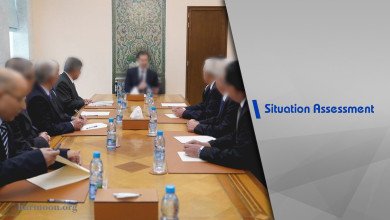
Despite the ruling regime’s constitutional measures regarding the Baath Party appearing futile, it persists in issuing a media narrative suggesting a commitment to organizational reforms within the party. This media campaign aims to convey the impression that serious efforts are underway to reform the party, which would purportedly impact public affairs in the country. For instance, there was extensive media coverage celebrating the upcoming Central Committee elections, preceded by a process of “inter-party consultations” where party leadership nominates candidates for election. Additionally, the regime’s leader met with members of the Elections Preparatory Committee, emphasizing transparency and inclusivity in the electoral process, alongside fostering a democratic atmosphere around the elections, as stated by Bashar al-Assad himself. Furthermore, official newspapers aligned with the regime advocate for the necessity of these elections to introduce new concepts such as openness, acceptance of diversity, and shared decision-making in politics. Despite these efforts, many Syrians remain skeptical about the regime’s motives. They recognize that these elections are unlikely to alter the authorities’ behavior or challenge the Baath Party’s monopoly on power, which extends beyond political parties to encompass Syrian society as a whole. So, what motivates the Assad regime to emphasize party elections, knowing full well that they are unlikely to alter the prevailing power dynamics or the party’s entrenched control over Syrian society?
In 2018, the Pan-Arab Command of the Baath Party was abolished. The Regional Command underwent a rebranding, now referred to as the Central Command, and the role of Assistant Regional Secretary was eliminated. However, the positions of Secretary General and Assistant Secretary General were retained.
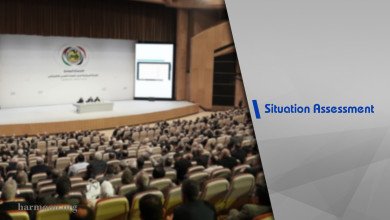
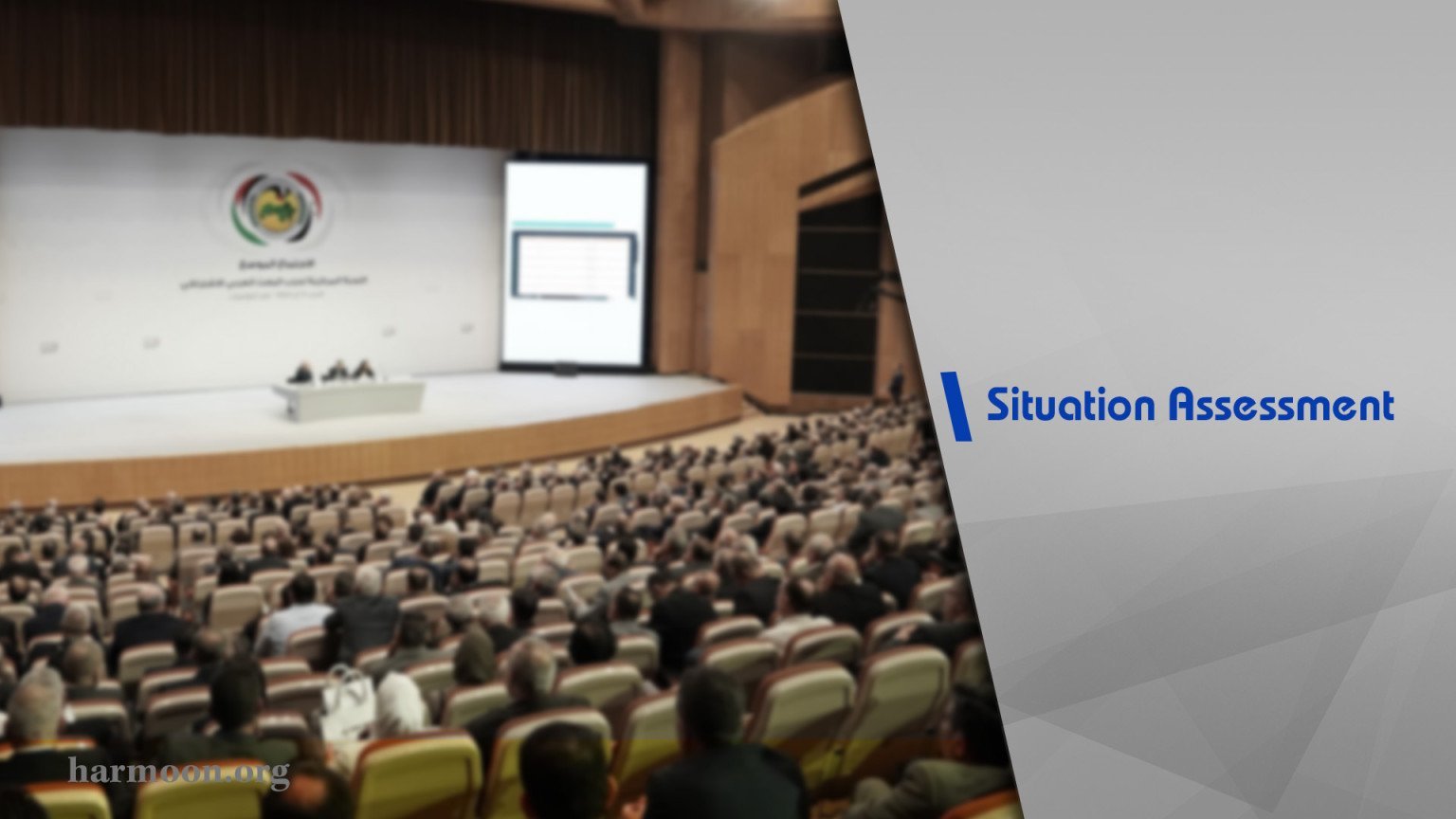
During his address to the party conference on May 2, 2024, Bashar al-Assad delved into various issues including the repositioning of the party, the government-party relationship, and the need to reformulate the party’s ideology and organizational structure. He also touched upon socialism, social justice, and other topics.[1] However, his approach to these subjects suggests a disconnect from the reality in Syria and the broader region. At the conclusion of the conference, it was announced that Bashar al-Assad had been unanimously re-elected, alongside the election of 80 members to the Central Committee. Additionally, 45 members proposed by Assad were elected, bringing the total number of committee members to 125.
Significantly, there was minimal public interest in these elections, particularly as the party no longer wields substantive power, which is now largely monopolized by security services, Iranian militias, and other external forces meddling in Syrian affairs. Additionally, the outcomes of this conference were hardly a surprise, being a mere change of names. Noteworthy figures such as Buthaina Shaaban and Luna Al-Shibl, both advisors to Assad, along with Ali Mamlouk, former head of the National Security Office, Hilal Hilal, a Baath Party leader, inter alia, were removed.[2] Assad proceeded to appoint key figures including the Prime Minister, the Chairman of the Supreme Judicial Council, the Minister of Defense, the Speaker of the People’s Assembly, and his brother Maher al-Assad as members of the Central Committee. Fourteen members were also elected to the Central Command from the Central Committee.
Branch leadership members in the governorates and the party’s Oversight and Inspection Committee were filled through elections, with some members being leaders of armed militias aligned with the regime. Additionally, branch members were selected in regions outside the regime’s control.
It’s essential to underscore a pattern that seems to have characterized the behavior of the ruling Assad regime over decades: it tends to be more responsive and adaptable to external pressures and demands, particularly when these pertain to the its security interests, than to the demands of the Syrian populace. Indeed, the regime’s security needs consistently take precedence within its hierarchy of priorities. In this context, the recent Arab trend towards normalization with the Assad regime is notable. This began with the Jordanian initiative in 2020, which followed a “step for step” plan with Russian backing. The normalization process continued in tandem with the strategy of the Biden administration, which emphasized the notion of altering the regime’s behavior rather than seeking outright regime change. Notably, the Biden administration refrained from endorsing efforts to “combat normalization with the regime.” Consequently, this paved the way for the Assad regime’s reentry into the Arab League and its participation in the Jeddah Summit in May 2023. This move was a direct outcome of Saudi-Iranian understandings reached in Beijing in March 2023.
The turn we’re discussing involves several obligations for the Assad regime. These include addressing the issue of refugee return, stemming the flow of Captagon, and actively participating in the political process. This involvement extends to implementing internal reforms, which the ruling authority must proactively pursue. While Bashar al-Assad no longer holds absolute control over national decisions, especially concerning the broader Syrian issue, due to increased Iranian and Russian influence, he must still navigate these complexities. With these foreign powers exerting significant control over key aspects of the Syrian state, Assad’s options are limited. He must resort to maneuvers that may appear as internal reforms to external observers. One such example is the recent security changes, like the dismissal of Ali Mamlouk from his position as head of the National Security Office and his appointment as advisor to the President of the Republic. Additionally, security apparatuses have been merged, and personnel reassigned based on loyalty or reliability to ensure continued allegiance to the regime.
Therefore, the regime’s focus on the partisan electoral process may serve a broader agenda: signaling to external parties the Assad regime’s commitment to a reform plan that addresses critical aspects of the power structure. Simultaneously, it underscores Damascus’s eagerness to pursue normalization efforts, aiming to alleviate the imposed isolation and regain regional and international standing. President Biden’s recent decision in late April not to sign the directive “to prevent normalization with the Assad regime,” potentially a direct response to Assad’s neutrality in the Gaza conflict, could be viewed as an incentive for Assad to persist in his strategy of maneuvering and circumventing essential aspects of the reform process.
Future of the Baath Party: Possible Scenarios
The intertwining of the party and state power in Syria means that the fate of the Baath Party is closely tied to the future of the Assad regime, which hinges on the evolving dynamics of the Syrian conflict. Based on current information, we can outline three possible scenarios:
The first scenario unfolds with the international community’s ongoing ineffective response to the Syrian crisis. The absence of practical legal mechanisms to enforce UN resolutions regarding Syria, coupled with the presence of multiple de facto authorities exerting international influence, allows the Syrian situation to persist. Gradual Arab and international engagement with the Assad regime may continue, driven by each country’s interests and needs. Despite the ongoing Syrian tragedy, external reactions will likely remain limited to expressions of concern. In such a scenario, the Baath Party could maintain its existence by fulfilling its functional role aligned with the basic requirements of power. This could involve a formal restructuring of the party and its societal role.
In the second scenario, the Astana process, backed by both Russia and Turkey, aims to break the negotiation deadlock and foster reconciliation between the ruling regime and the official opposition. This approach shies away from establishing a transitional governing body, focusing instead on creating a “safe environment” necessitating the drafting of a constitution followed by predetermined general elections favoring Assad. However, its success hinges on reconciliation between Turkey and the Assad regime, which demands Turkey’s withdrawal from Syrian territory as a precondition. Additionally, the American support for SDF, controlling the eastern Euphrates region, presents an obstacle. Even if this scenario materializes, with the opposition assuming secondary roles in power, the Baath Party retains its privileges due to its integral connection with power and control over substantial financial resources, positioning it as a dominant force in any political competition within Syria.
The third scenario envisions regime change in Syria and the implementation of a political transformation agenda. This entails removing the security and military apparatuses associated with the Baath Party, essentially dismantling its foundational structures that have sustained it for decades. Furthermore, any new governing authority must proactively revoke the ruling party’s privileges, access to resources, and control over public assets seized from the country. Such actions would inevitably result in the party’s swift or gradual demise. It’s crucial to note that the realization of this scenario hinges on the Syrian people’s capacity to effect change and commence the rebuilding of a new Syria.
The Baath Party’s prolonged governance since 1963, coupled with its complete alignment with executive authority, has gradually eroded its intellectual and ideological substance. Loyalty to authority has supplanted loyalty to ideology or party values among the majority of its members and supporters. Membership in the party has come to be valued more for its perks than for genuine belief in its ideas and principles. This dynamic underscores the party’s dependence on power, with any loss of power seen as a fundamental threat to its existence. Consequently, genuine reform within the party remains elusive, as the barriers to change are deeply ingrained within the power structure itself.
[1] “Address by Assad, Secretary-General of the Arab Socialist Baath Party, at the Expanded Meeting of the Central Committee.” Accessed on May 6, 2024: https://bit.ly/4b6wEIG
[2] “Bashar Assad Excludes Figures from the Baath Elections, Luna Al-Shibl among Them.” Syria TV website, May 5, 2024. Accessed on May 6, 2024: https://bit.ly/3WrpIBv