


Introduction
The security situation on the coast of Syria has imploded after armed groups led by officers of the former regime launched attacks on the new security services. The authorities responded by strengthening their apparatus on the ground to regain control, but the reaction has been rushed and disorganised. Several factions within the Syrian army known for their ill-disciplined measures took part, as well as large crowds of Syrian civilians who poured in from other cities carrying arms, answering the call to mobilise from certain religious clerics in mosques across the country and on social media.
Over the span of three days, from March 6-8, more than 100 security agents lost their lives, alongside 100 armed rebels. Nearly 1000 Syrian civilians were killed in revenge attacks and random reprisals, caught up in a sectarian frenzy that will cast a long shadow for Syria both at home and abroad.
Some officers from the former regime, known for taking part in prior crimes, have taken advantage of the chaotic three months since Assad fled Syria and recruited hundreds of men from the coast After institutions of the former security and military were dissolved, hundreds of thousands lost their jobs and income – mostly coming from these exact regions. Tens of thousands were also laid off from state and civilian bodies, without any alternative source of income or work. In addition, settlement procedures were forced on members of the dissolved army, police and security services, leading to a rise in resentment and anger among the ranks of those men.
New security forces also undertook operations as part of “pursuing the remnants” of the old regime. The operations did not publish a list of names accused as part of the general policy of transitional justice, but no transitional body was assigned to the operation. No specific procedures of accusation or arrest were agreed, and no courts were appointed to deal with legal proceedings. This gave armed groups free rein to act without the moral limits of normal government bodies and, in many cases, led to extrajudicial killings. This climate of fear and chaos helped to lay the groundwork for a group of Assad-era army officers to find a few hundred recruits, and undertake operations to try and destabilise Syria.
The Military Escalation on Syria’s Coastline: Events of the First Four Days
Day 1: March 6, 2025 – Surprise Attack
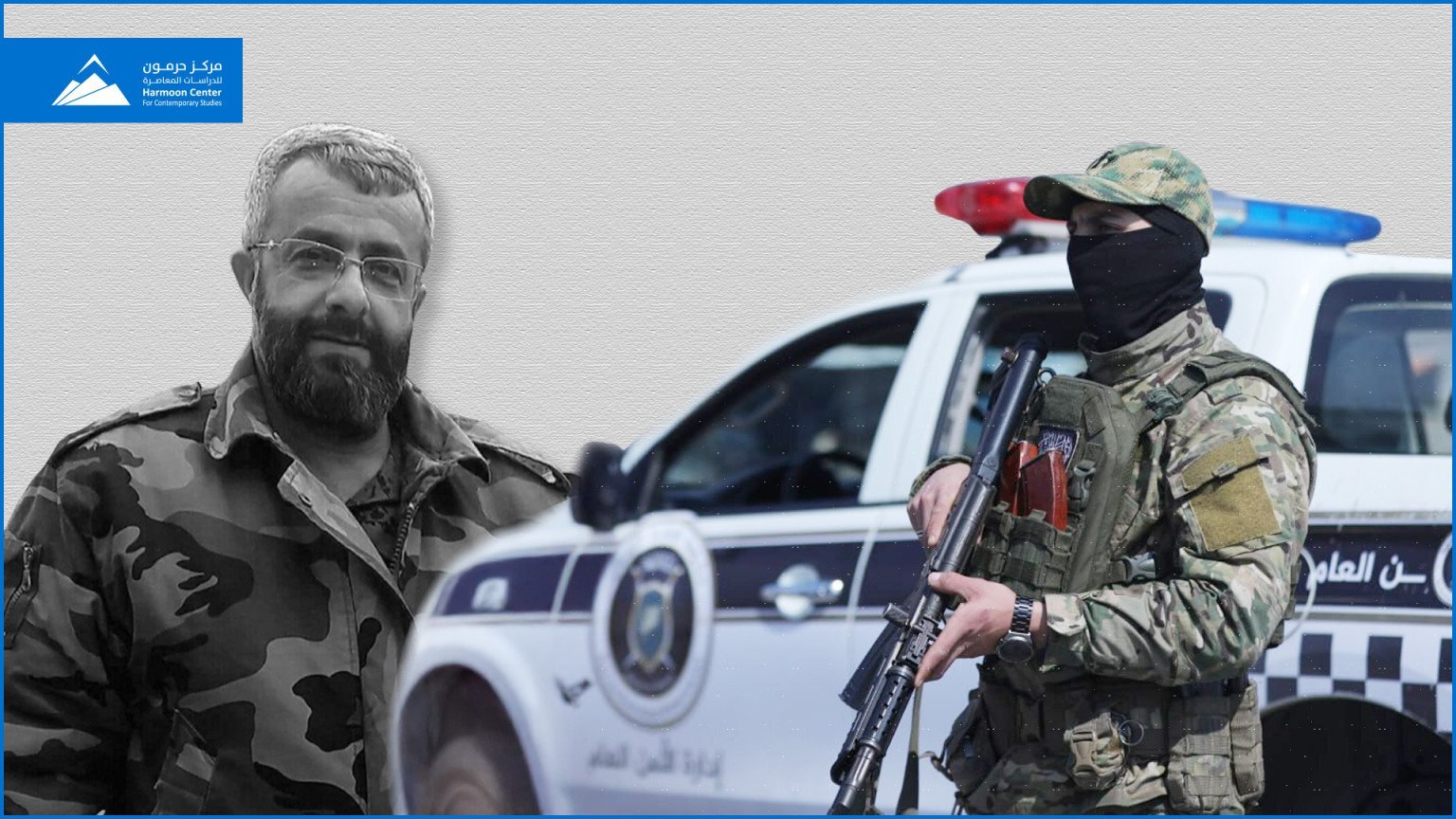
The ‘Coastal Shield Brigade’, under the leadership of Miqdad Fatiha, launched organised attacks on various military and security targets at the same time, in lockstep with a wide-ranging media campaign, and demonstrations in some coastal regions as Tartous. The surprise operations took place along the coast in places aimed to take control of key strategic sites. The Coastal Shield Brigade attacked security checkpoints and barracks across Baniyas, Jableh and Latakia, and killed 15 members of the General Security Command, taking control of checkpoints on main roads. The armed factions were able to seize control of some mountain villages in the countryside around Latakia for a period of time.
At the same time, news of violations against civilians spread on social media. Syrians across the country responded to calls for a general mobilisation to support the armed forces, and a combination of military groups and citizens headed to the coast in their thousands bearing arms. The campaign then took on a sectarian character, pouring oil on the fire. Instead of limiting the conflict to the actions of criminal gangs acting outside the law, the dispute began to morph into Sunni-Alawite sectarianism, chaotic operations, and a lack of military organisation from the Ministry of Defence – which ultimately led to violations and the killing of civilians at the hands of others.
Day 2: March 7
As the attacks spread and escalated, the new administration announced the launch of a new and wide-ranging security operation to retake control and impose order. military reinforcements were sent from Idlib, Hama, Homs and Aleppo into the coastal areas where the clashes were taking place. Security forces, along with the military backup, then launched intensive raids on villages in the Latakia countryside, Tartous and Hama. The stated aim of the raids was to pursue individuals involved in planning the attacks – and hundreds were arrested during the operations, including citizens with no clear link to the attacks. This chaotic process led to widespread popular discontent.
According to some accounts, some citizens were summarily executed, accused of having collaborated with attackers. According to reports by human rights monitors, as many as 779 people were killed, including 211 civilians, during these operations[1] – leading to widespread international criticism.
Day 3: March 8
In the morning of March 8, the Syrian Ministry of Defence announced that their forces had managed to regain control of most regions which had suffered attacks in the previous two days. Operations continued to isolate and surround the remaining fighters and prevent them from reorganising their ranks and launching fresh attacks. And yet, tit-for-tat attacks continued in the mountainous regions of the coast, suggesting that the situation was not as stable as the Ministry hoped to project.
Map 1: Places of Attack by Former-Regime Militia from March 6-9

- Although military operations targeted armed factions, human rights reports have confirmed that numerous violations took place against civilians. Witnesses have documented cases of arbitrary detention and extrajudicial killings. International criticism has been far-reaching, and investigations have begun to identify all those involved in these violations. Hundreds of families have fled the affected areas in search of safety, some to Lebanon, while thousands took refuge in the Hmeimim military base under Russian control. The movement of peoples has added yet more stress on the weakened infrastructure of towns and cities in neighbouring regions – where electricity and water provision is already in a critical state. The conflict has compounded the pain felt by residents and civilians who have found themselves in the middle of a conflict in which they have played no part.
- The clashes have led to a breakdown in networks of trade and transport in the affected areas, which has in turn caused price inflation for essential goods as local markets get disrupted. Ports along the coast – crucial economic hubs for Syria – have been affected by the fighting, and trading activity across the region has taken a sharp downward turn.
- The fighting has strengthened a sense of internal polarisation in Syria, and heightened fears of escalating conflict along sectarian lines. Social media has played a dangerous role in the escalation, as some parties exploited these events to spread disinformation and stir up tensions. Accounts connected to the remnants of the Assad regime have embarked on a concerted social media campaign to spread false news and disinformation, aiming to distort the truth and change public opinion. Such material profits from a lack of official media or government spokespeople, which leaves the door open for unconfirmed rumours to spread on the internet.
Forming a National Investigatory Council
On March 9, President Ahmed al-Sharaa announced the decision to form an independent national council to investigate the events and the violations that took place in the coastal regions in the previous days. Al-Sharaa formed a council of five judges, one military leader and one lawyer, and has been charged with discovering the causes and circumstances that led to these events, and identify those responsible for committing violations against Syrian civilians and members of the security forces. The Council is due to publish its findings after 30 days.
In Damascus, activists organised a silent protest in memory of the civilians and security officials who had lost their lives in the clashes. The crowds held placards reading “Syrian blood does not come cheap,” and were met by counter-protesters, after which the protests descended into violence. Local security forces were forced to intervene and fire shots in the air to disperse the crowds.
The President has since given two strongly-worded speeches addressing to the Syrian people addressing the recent developments, while putting forward the new government’s position. The speeches came at a critical moment, when the whole country was gripped by unprecedented tension. It was absolutely essential to provide a message to calm Syrians across the country, reassert the unity of the country and the rule of law.
Al-Sharaa explicitly condemned the acts of violence that had been committed on Syria’s coast. The president warned they threatened the core stability of the country in stirring up schisms between different groups of Syrians. He stressed that the new authorities will not tolerate any attempt to disrupt the civil peace in Syria. despite President Sharaa’s speech, the clashes continued to rage.
International Reactions
The United Nations expressed their espeech, then over reports that whole families were killed in the violence, including women and children, and called for an immediate halt to the violence and the transparent, objective investigations into the crimes themselves. Washington also condemned attacks on civilians, reaffirming their commitment to stand alongside Syria’s religious and ethnic minorities – and called on Syria’s transitional authorities to make sure the perpetrators of these massacres will be held accountable. Furthermore, the new agreement between the new government and the SDF seemed to confirm that the US felt able to support Syria’s new rulers.
UK authorities in London expressed their sorrow at the deaths of so many civilians, and pushed Damascus to provide protection for all Syrians alongside a clear path to peace and transitional justice. German diplomats stressed the necessity to stop any further transgressions, and spoke out against reports of mass killings on the Syrian Coast.
On March 10, the Security Council held a closed meeting to discuss Syria, which was preceded by a striking statement by the US representative to the Council. In her statement, the representative alleged that there was evidence of Iran’s malign influence in the conflict, and a clear attempt to re-establish a presence in Syria through groups receiving financial and logistical support. She pledged that the international community would stand behind the new Syrian government.
As for Arab countries, leaders in Cairo and Baghdad expressed their heightened fears over security developments on the Syrian coast, and their dismay at the targeting of civilians. Egypt and Iraq called for control and for people to find peaceful solutions instead of turning to military escalation. Saudi Arabia, Qatar, Kuwait, the UAE and Bahrain all condemned all crimes perpetrated by armed outlaw groups in Syria, and reaffirmed their support for the new authorities as they attempt to regain control over security and stability in the country. Jordan were vocal in their support for the government’s actions taken to protect the country’s stability, and spoke out against attempts to push Syria backwards into chaos.
The Turkish Foreign Ministry also commented on the developments, stressing the need to prevent such provocations from threatening the possibility of peace in Syria and across the region. The AKP described the events on the Syrian coast as a ‘terrorist attack targeting Syria’s unity and stability,’ rejecting any attempts to destabilise the region.
On 9 March 2025, Syria’s neighbours met in Amman, attended by foreign, defence and intelligence ministers. The group issued a statement affirming support for the Syrian government, concern for Syria’s security, prevention of foreign interference in its affairs, and joint action to fight terrorism.
Russia expressed its own concern over the deteriorating situation in Syria and called on all Syrian leaders to take urgent measures to stop the bloodshed and protect civilians. Russia stressed the importance of national harmony and respecting the rights of all citizens regardless of their personal affiliations. Since the fall of the Assad regime, Russia has sought to preserve its strategic interests in the Syrian coast, where the Hmeimim base and Tartus port are located. Moscow is trying to adapt to the new reality through negotiations with the new administration and make sure they can maintain their presence in the country.
Iran, however, issued direct and inflammatory statements against the new administration straight from the Supreme Leader Ali Khamenei, who labelled what is happening as a ‘conspiracy against the axis of resistance’. Iran has been trying to reposition its resources within Syria and may have exploited the state of tension among some Alawites to ignite the conflict.
It is clear through these statements that some Western countries are prepared to condemn the violence and call for investigations, but not to declare explicit support for the new government. Arab countries are divided between those who support the new authorities – and others who merely call for restraint. Turkey has been wholeheartedly vocal in supporting the new government in Damascus, and the Foreign Minister in Ankara has repeatedly warned Iran not to interfere further in Syria. Both Iran and Russia are still trying to protect their strategic interest, but in different ways; Russia are sticking to political negotiations, while Iran has resorted to inflammatory media escalations and movements on the ground.
The violations that have occurred in early March along the coast may intensify the international pressure on the new Syrian government. Some Western countries may use this moment to slow down the process of lifting sanctions on Syria, which would have a severe impact on the future of the Syrian economy. The Syrian government had been making concerted efforts to ease international sanctions, but recent events may throw sand in the gears of any progress, especially as criticism escalates on the international stage. Continued confrontations may even prompt the US and EU to extend or even tighten sanctions, mounting fresh economic woes on the new administration.
The international focus on these confrontations and the violations that were committed have put the government under the microscope as they balance imposing security with ensuring justice and accountability. At the very same time, this crisis has shown the danger of misinformation in fuelling conflict, which reflects the urgent need to develop more rigorous verification mechanisms and combat disinformation, which has become a key tool in modern conflicts.
These events have forced countries involved in Syria’s future to re-evaluate their positions. They are divided between those who support the transitional government and those who have called for accountability for all parties responsible for the escalation. This regional and international axis reflects the fact that Syria’s stability is built both internally and externally, on a number of geopolitical variables and regional relations.
Proposals:
The recent events are hugely important and have implications that demand the new government to take a clear-eyed look at the reality of Syria as whole, to prevent any repeat for what happened, and to draw the right lessons from the events of early March. The critical moment of Syria’s transition requires practical and decisive measures to ensure stability and build a new, just and stable country:
- Regaining communal trust is essential – as the people are always the first line of defence against chaos and crime. Clear measures must be placed to strengthen civic roles in rejecting armed movements that undermine Syria’s stability, so that community vigilance becomes party of the fabric of national security. This goal cannot be reached without effective community outreach programmes and initiatives to build a sense of civil responsibility and active participation.
- Syria must engage in full national dialogue, and form a national body that includes experienced figures from across Syria’s rich tapestry of regions, with bodies formed across all governorates. This should not just be a formal event, but a real, long-lasting process that gets to the heart of fundamental issues, from the streets of local neighbourhoods to Syria’s role on the world stage. Such a process will produce ideas that can be utilised by the authorities and contribute to building a lasting sense of trust throughout Syrian society.
- Specialized task forces should be formed to develop clear strategies across political, social and economic spheres. The new authorities must make good on their promises to address the situation of employees laid off from the former administration, and reinstate those who have not been found guilty of any crimes or corruption. This will achieve a level of justice for employees and enhance the states administrative capacities. Syria must make the most of skilled Syrians both in the country and those returning. Many experts are ready to help rebuild Syria, but they need a welcoming and stimulating work environment to do so.
- The urgent need of a body to handle transitional justice has become abundantly clear. Transparent procedures must be put in place to ensure that arrests are based on credible evidence, with senior leaders of the Assad regime targeted and their names published fairly. There are countless examples of countries emerging from civil wars that remain trapped in conflict through reprisal and revenge attacks, and no accountability. Detainees must be tried in fair, open courts to demonstrate justice to the Syrian people and ensure the system does not become weaponised as a tool for revenge. Transitional justice must also be applied to perpetrators from all sides of the conflict.
- Syria must move beyond the principle of ‘harmony’, which prioritises loyalty over competence – and has hamstrung the government’s performance in the past. Achieving justice and equality in government appointments must be based on clear criteria and and not political or familial affiliations. This is what President Ahmad al-Sharaa stated in his speech, when he pledged that “Syria belongs to all its people”. It is key that the government appliances this principle in real life, in the formation of the Legislative Council and any further governments – and reinstate parts of the population who have been sidelined.
- A constitutional declaration must be issued with all speed, and must meet the hopes of the Syrian people and their clear demands for freedom and democracy.
- A future government must combine representation and competencies, with the power to build alliances with friendly countries to contribute to Syria’s reconstruction and help provide basic services. Providing these economic cornerstones will help expand the local market, encourage production and investment, while creating new job opportunities and help Syria’s national economy blossom.
- Syria’s judiciary must be restructured as an independent institution capable of achieving justice, free from political interference – while championing real transparency and accountability, so that Syria does not repeat its past mistakes, and prevent any violations that could undermine citizens’ confidence in state institutions.
- Authorities must ensure that the committee responsible for investigating the recent violations acts with transparency, professionalism and all due speed, so that all perpetrators are brought to justice and the results of the investigation are clear fo rthe public to see. This will have several positive effects, both domestically and internationally.
- Official state media should be formed as soon as possible, and an official spokesperson who speaks on behalf of the authorities on a regular basis should be appointed.
- The dissolution of all armed factions and their integration into the new national army must be completed, and their members distributed among various military units to prevent continued factionalism and the corruption that accompanies certain groupings. This will work to end divisions with the military establishment and achieve a fresh level of discipline within the armed forces.
- Defecting officers who are willing and able to serve in the new army should be invited to join, as they may possess the military experience and discipline that could help rebuild the nation’s military in a more effective manner.
- Those who spread hate in society should be strenuously denounced and prosecuted; as we have seen, sectarian ethnic incitement only leads to fresh conflict and continued instability.
- Current settlement processes should be discontinued, as they frame all individuals as guilty until proven innocent – an approach which augments feelings of humiliation and injustice, only serving to deepen societal divisions. There must be a brand new approach to reintegrate individuals into the new Syrian society, processing the grave mistakes committed during Assad’s rule, without creating a sense of permanent collective punishment.
- The entire former police force cannot be completely disbanded, as its experience could be crucial for maintaining internal security. It cannot be replaced wholesale by other forces in such a short period of time, as attempted by the current authorities. Police personnel must be recalled to their jobs (allowing for any past violations to be addressed) to make sure the new force can become professional and effective.
- The new authorities should place all its available efforts in the campaign to lift international sanctions. Without an end to the sanctions, there will be no investment, no reconstruction, and no return of refugees to Syria.
The interests of Syria and its people today lie in working to build a country for all its citizens, to realise the human values that Syrians fought for in their revolution. The new Syria must allow its people the freedom to organise, the freedoms of expression and belief, and strengthen a sense of truly equal citizenship. It must have an efficient and responsible government administration that works to create a peaceful and secure environment for all Syrians, both as individuals and as groups within society, to blossom.
[1] Tweet by Syrian Human Rights Network Director Fadil Abdulghani on X, March 10 2024: https://bit.ly/4iEE8WD