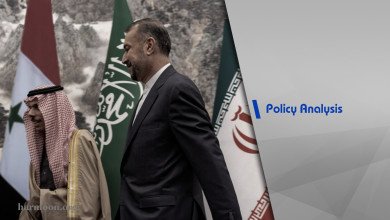




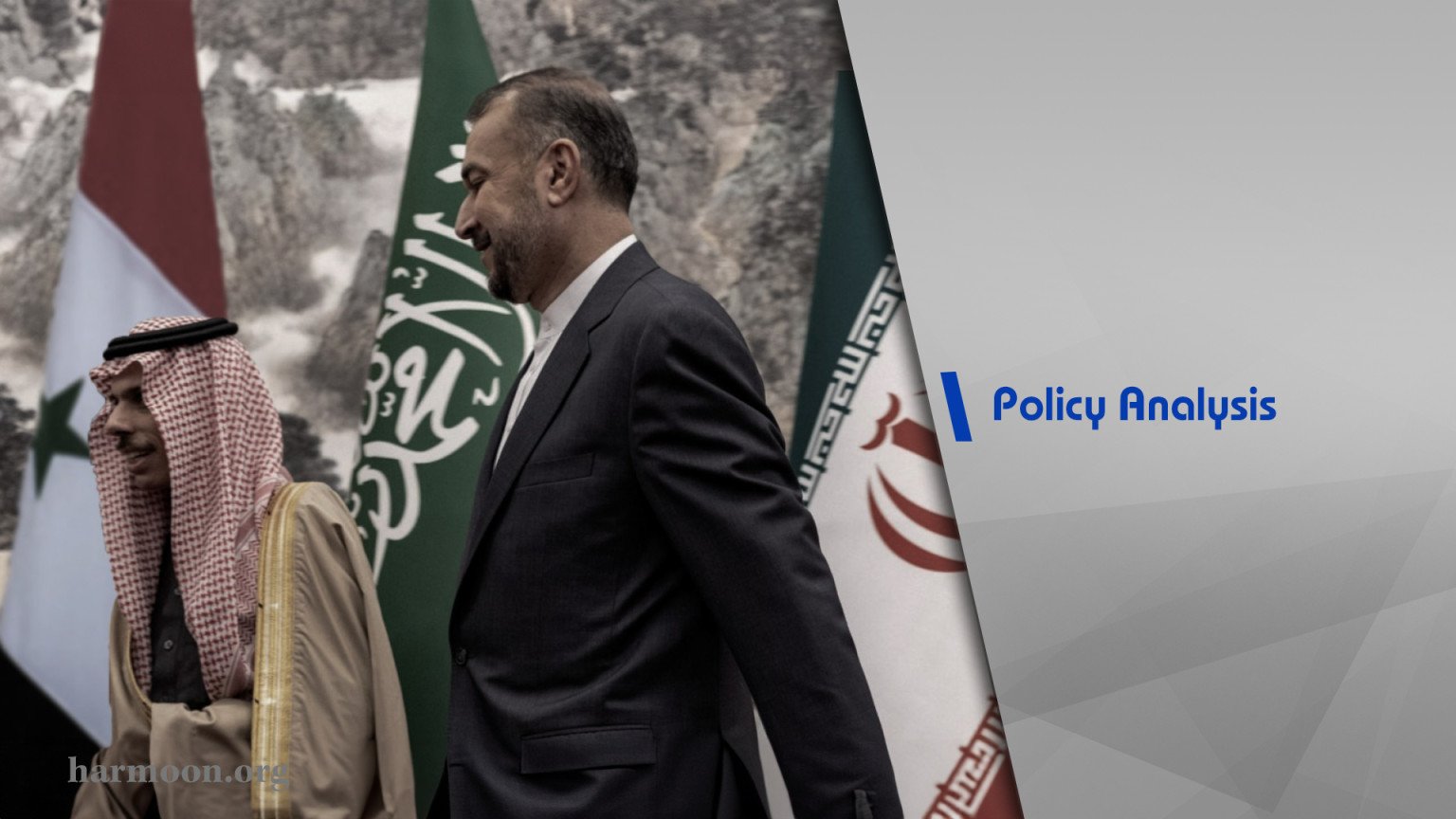
In early March 2023, Saudi Arabia and Iran signed a China brokered agreement to restore diplomatic ties, normalising relations between two long-time rivals. The pragmatic agreement was the culmination of months of backchannel efforts playing out across the Middle East and beyond, brokered by Oman, Iraq, European states and China. The deal set out a process to realign regional politics, to address serious security challenges that had played out in devastating ways across a number of states beset by religious and ethnic divisions.
While seemingly entering a period of normalisation akin to that found during the 1990s, latent structural concerns remain. The diplomatic initiative aimed at improving relations seeks to implement a range of mechanisms designed to mitigate risk, yet there are latent structural grievances that entrenched and exacerbated violence which remain unaddressed.
Ultimately, the agreement serves as a necessary but not sufficient move towards addressing the region’s security challenges.
In this policy brief I reflect on the ways in which Syria is affected by the normalisation agreement. To do this I locate Syria within the broader rivalry between Saudi Arabia and Iran, reflect on diplomatic initiatives, before unpacking the regional complexity which continues to play out across Syria, impacting on peace building and reconstruction efforts.
Syria in the Saudi-Iranian Rivalry
Despite the normalisation agreement, the Saudi-Iranian rivalry remains complex and multifaceted. Forged through the interplay of security concerns and claims to religious legitimacy and viewed through the lens of the ‘sovereign state’, the rivalry’s resonance across the Middle East stems from its impact on religious, political, economic and security concerns.
As I have argued elsewhere, the rivalry between Saudi Arabia and Iran plays out across the region in a centrifugal and intersectional way. States beset by division – in a range of forms – have served as fertile arenas for regional powers with lofty aspirations to assert their claims of greater influence. Saudi Arabia and Iran have sought to cultivate relations with a range of actors across the region, broadly – although not exclusively – through shared sectarian identities, feeding into the creation of a volatile and deeply divided regional security environment.
The rivalry manifests in a number of different arenas yet it is also conditioned by the political machinations of those states. While the rivalry between the Saudis and the Iranians prompted Riyadh and Tehran to become increasingly involved in the domestic affairs of states across the region, the rivalry itself was also shaped by the contingencies of local rivalries. Put another way, in the language of social theory, the rivalry between Saudi Arabia and Iran plays out across different fields, contributing to developments in the domestic field which, in turn, shapes the transnational field which is home to the rivalry between Riyadh and Tehran. As a result, the rivalry is not static or monolithic, but rather is shaped by the contingencies of time and space. The ways in which Riyadh and Tehran played out their rivalry in Syria differs from the ways it played out in Lebanon, Iraq, or elsewhere. The organisation of political, social and economic life and its contestation in Syria conditions the ways in which the rivalry played out.
Since the establishment of the Islamic Republic, Syria has occupied a prominent role in the foreign policy calculations of Saudi Arabia and Iran. Through a combination of the Assad family’s Alawi heritage and Iranian support for regime figures, Syria was the sole Arab supporter of Iran during Tehran’s war with Iraq (1980-1988), much to the chagrin of other Arab states.
In the years following the war, diplomatic initiatives designed to woo Hafez Al-Assad then his son were commonplace amidst efforts to erode Iran’s influence on the region. Tehran’s relationship with Damascus gave it both credibility when speaking about affairs in the Arab world and a key logistical hub to provide support to Hizballah in Lebanon. Iran’s ‘high politics’ approach to Syria was supplemented by a far reaching campaign of cultural diplomacy which left Saudi and other Arab diplomatic efforts facing an uphill task.
With the onset of the Arab Uprisings, Saudi Arabia sensed an opportunity “to win” Syria back to the Arab fold, yet the regime’s brutal response to protesters pushed the Arab League to expel Syria and a number of Arab states to cut diplomatic relations. The years that followed were characterised by a complex and bloody war, with Iran backing the Assad regime alongside Russia and Hizballah, and Saudi Arabia backing certain opposition movements, alongside the US and other Arab states. The emergence of Da’ish added additional complexity and brutality to the conflict, creating an incongruent moment that brought most players together under a shared desire to crush Da’ish, albeit without a shared military strategy.
The intensity of the rivalry between Saudi Arabia and Iran was surpassed by the ferocity of the fighting in Syria in these years. Although it appeared that opposition movements may have toppled the Assad regime, Iranian and later Russian military and logistical support ensured the survival of embattled government forces who would later go on to retake much of the territory lost in the early years of the conflict.
As the war approached its 10th anniversary, rumours began to circulate about the normalisation of relations between Arab states and Syria increased amidst an array of diplomatic initiatives. The goal of such initiatives was the reintegration of Syria into the Arab fold, a strategy achieved through the restoration of consular relations between Saudi Arabia and Syria. For Saudi Foreign Minister Faisal bin Farman Al Saud, a consensus had built across the Arab world that the status quo in Syria was “not tenable”.
Diplomacy and the Future of Syria
While the Saudi-Iran normalisation agreement is undeniably a positive step, it is not a panacea for resolving conflict across the region. Despite the wishes of many, this normalisation agreement will not directly bring about an end to violence in Syria or Yemen. It will, however, play an important role in reducing geopolitical tensions which have played such a prominent role in perpetuating conflict, contributing to other peace building efforts and facilitating the reduction in tensions across the region.
The agreement has the capacity to affect Syria in a number of significant ways. Perhaps most centrally it removes an external dimension to a conflict that has been exacerbated and perpetuated by regional powers. That is not to say that Saudi Arabia and Iran do not have different visions for the future of Syria, but that their burgeoning rapprochement may serve to support the reconstruction of Syria, if not a political resolution.
Peace in Syria can take a range of forms. It may, as appears likely, reflect the status quo of a political landscape dominated by the Assad regime. For Johan Galtung, the founding father of peace studies, peace can be understood in two distinct ways. Building on Isaiah Berlin’s conceptualisation of negative and positive freedom, Galtung posits that peace can also be conceptualised in such a way. Negative peace refers purely to the absence of war, while positive peace points to the removal of structures in society that impact on the ability of people to reach their potential. Leaving philosophical questions about such an approach aside, this distinction between negative and positive peace in the Syrian context offers valuable insight.
It is easy to conceive of the emergence of a negative peace in Syria, one dominated by the Assad regime. Yet cultivating a more positive peace is far trickier, requiring the resolution and transformation of latent structural grievances that have impacted on all aspects of life, cutting across political, social, economic, religious and cultural aspects. It is here where external powers may have a role to play.
Peace talks have sought to bring about an end to the conflict while also working towards more of a positive peace, yet for many who have fought against Assad, such an outcome is not possible under his leadership. It is all but impossible to conceive of the necessary levels of trust between the Syria regime and opposition groups who have been barrel bombed and subjected to chemical weapons attacks over the past decade. Yet trust is a necessary feature of the transition to peace. Finding a resolution to the conflict means creating conditions where each side can trust the other to agree to the terms of any deal. Such levels of trust are difficult to imagine at present, which is again where regional powers may have a role to play. In addition, power dynamics are such that with the Syrian military re-taking territory in accordance with a stated intention to retake “every inch” of Syrian territory, Assad is under little pressure to acquiesce and include opposition figures within any future settlement. Negotiating from a position of strength gives him such a luxury.
Yet peace is but one part of this complex story, with the other being reconstruction. History shows how post-conflict reconstruction takes on political dynamics. In neighbouring Lebanon, following the Israeli Defence Force’s destruction of Dahiyeh during the 2006 war, Saudi Arabia and Iran engaged in economic competition to aid the reconstruction process, with billions of dollars provided to groups across Beirut. Ultimately, this competition helped entrench communal division within Lebanon, highlighting the inertia of the Lebanese state and contributing to the broader reproduction of sectarian difference. In Syria, such competition over reconstruction must be avoided. Reconstruction processes have already begun, despite a technical absence of peace, reflecting the power of the Assad regime.
Regional Complexity
As the past decade has shown, the Syrian case does not play out in a vacuum. Instead, the conflict is shaped by a complex regional and global political environment that continues to exacerbate lines of division. The battle for Syria continues to play out in a range of different ways, also existing as a front in a more global struggle pitting the US against Russia. Pushing this point further, the Syrian conflict is a front within the broader contours of a great game for the soul of global politics.
Arab efforts to normalise relations with Syria predate the Saudi-Iran normalisation agreement, pointing to a long standing desire to re-imaging regional relations, perhaps stemming from economic pressures within the Kingdom and elsewhere, yet a number of issues remain unresolved. One issue is the US, which finds itself in a complex situation having to balance its own interests in the region against a resurgent China, fraying relationships, and the continued involvement of Russia. While Saudi Arabia and Iran have historically found themselves on opposing sides of the US question, the normalisation process raises questions about the future position of the US in the Middle East. In Syria, these ambiguities are especially evident, amidst the following points of tension and uncertainty:
- Saudi-Iranian normalisation
- Saudi-Syrian normalisation
- Iranian-Russian-Syrian collaboration
- Russian-US hostility
- Syrian opposition – US collaboration
- Syrian – Iranian – Hizballah collaboration
- Hizballah – US hostility
The war in Ukraine has exacerbated many of these tensions, whilst also increasing the price of food, leaving people struggling to meet their basic needs. Add Israel into the equation as it seeks to curtail gains made by Iran and Hizballah, and one is left with a combustible mix, with Saudi Arabia and Iran at the centre of much of this.
Yet while this plays out across the realm of high politics, the reverberations are felt most significantly on the ground in Syria. As always, people unable to leave a conflict zone pay the heaviest price. While millions have left their homes, either within Syria or abroad, millions remain, having endured a devastating conflict and a precarious future. Across the past decade, Saudi Arabia, Iran, and many other states have been guilty of manipulating lines of division across Syrian society in pursuit of their own strategic interests. They, and others, must not do so in the future, for the sake of the Syrian people.