



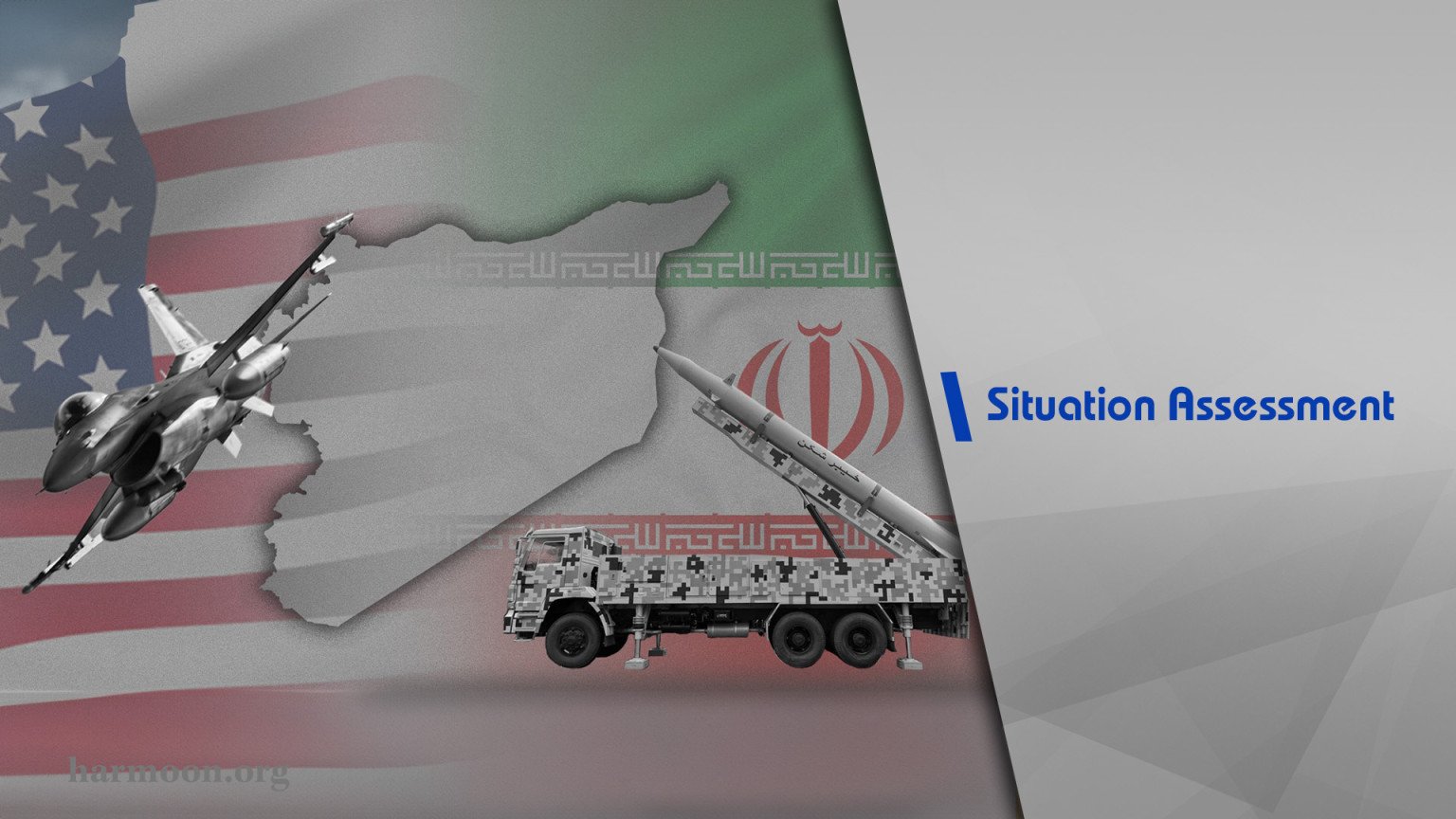
Recently, we observed an escalation by Iran against American forces in multiple locations, where Iranian agents from militias loyal to Tehran targeted several American bases with bombings. In response, the United States directly retaliated by targeting those militias. It is noteworthy that the Iranian escalation appears to be driven more by a desire to convey messages to the opposing party than by a primary intent to inflict significant losses.
The most recent escalation occurred on January 28, 2024, when militias affiliated with Iran carried out a drone bombing on the Burj 22 base near Al-Tanf, situated along the Syrian-Jordanian border. This attack resulted in the loss of three American soldiers and left over 25 others injured.[1] While this development undoubtedly demands a distinct response from the American administration to both avenge its soldiers and safeguard its prestige, expectations suggest that the situation is unlikely to escalate into a prolonged or direct war with Iran.
Syria has emerged as a key theater in this escalation, shaped by the complex dynamics unfolding in the country since 2011. Syria has become divided into spheres of influence, with various powers, including the United States, Russia, Iran, and Turkey, asserting their control. Notably, the US-led international coalition initially displayed little concern about Iranian expansion in Syria. It seemingly overlooked the developments in the region, such as the formation of militias and the movement of equipment and weapons, until these militias gained the capability to launch direct strikes at American bases in the area.
What is the anticipated scenario for this escalation? Will it influence the distribution of control in Syria or impact the potential pathways to its resolution?
1-Causes of Escalation
Since the start of 2021, the Iranian-American escalation has taken on a persistent and escalating nature, marked by periodic attacks on American bases utilizing drones and medium-range missiles. The most significant incident occurred on March 23, 2023,[2] when an attack resulted in the death of an American contractor and injured a number of American soldiers. In response, the U.S. President issued orders to conduct air strikes on locations associated with groups supported by the Iranian Revolutionary Guard in eastern Syria.
Regarding the recent escalation, we can pinpoint the most significant causes behind it:
- Iran aims to actively participate in the unfolding events in the Middle East, particularly following the initiation of Operation Al-Aqsa Flood by Hamas on October 7, 2023. It is striving to preserve the balance of power, secure its position in the region, and maintain influence over key players. By showcasing its capacity to mobilize forces across multiple countries, Iran seeks to safeguard its interests amid concerns that regional developments, post the events in Gaza, may not align favorably with its objectives. There is a fear of potential direct targeting of Iranian interests or its allies in the region.
- Iran aims to secure additional gains and acquire leverage to use during future public negotiations with the United States. It views the current escalation as an opportunity to enhance the conditions for negotiations.
- In light of the the fact that the US is Israel is biggest ally, Iran seeks to convey the impression that it is engaged in a struggle against Israel by targeting American bases. This tactic is employed due to Iran’s inability to directly carry out attacks on Israel. Additionally, Iran is attempting to shift responsibility for Operation Al-Aqsa Flood and continues to do so up to the present moment.
- Iran aims to reinforce the notion that the ongoing conflict in Gaza has the potential to reshape the entire region. It relies on escalation as a means to alter the rules of engagement, intending to send a message to the United States. This message emphasizes Iran’s capability to harm American interests or those of its allies in the region. Iran positions itself as a major player in the Middle East, asserting its involvement in all regional affairs. In furtherance of this strategy, Iran resorted to the direct bombing of residential homes in Erbil, justifying it under the pretext of targeting a supposed spy center. This bombing resulted in the death of children and women. Additionally, Iran extended its actions to opposition-controlled areas in Idlib, employing a long-range missile in the attack.[3]
- Iran aims to capitalize on the perceived lack of seriousness on the part of American administrations to confront its regional projects. Despite occasional American threats, these are often accompanied by signals of reluctance to escalate. American policies, consistent since the Obama administration, align with Iranian objectives. Even though President Trump demonstrated assertiveness, notably through the assassination of Qassem Soleimani, he remained within the broader context of U.S. policies toward Iran since the Iranian Revolution in 1979. The United States, overall, does not desire war with Iran, a fact recognized and exploited by Iran. Iran seeks to leverage the perceived weakness of the Biden administration, particularly with the upcoming U.S. elections at the end of the year. Alistair Burt, former British Minister of State for Middle East and North Africa, said, “There is a distinct resolve to steer clear of anything resembling a war threat. In these circumstances, it is crucial for all parties to engage in open communication and actively work to sidestep potential dangers that could precipitate the onset of perilous conflicts.”[4] This underscores that the Biden administration is not actively seeking to escalate and widen the confrontation with Iran but is instead responding to Iranian escalations. The goal is to prevent militias from further provocations while keeping the door open to negotiations. The administration hopes to achieve containment of Iran’s escalation by possibly committing to common interests with Iran, even as Iran declares its intent to remove the U.S. from Syria and Iraq without seeking coexistence.
- Both the Syrian regime and Iran aim to exploit the uprising within the Syrian tribes against the Syrian Democratic Forces (SDF) in Deir ez-Zor in recent times. Their objective is to exert pressure on the American administration to withdraw from Syria, thereby facilitating Iranian dominance over the Syrian-Iraqi border. This strategic move is particularly focused on securing control over key areas such as the Al-Tanf region and the eastern part of the Euphrates. Simultaneously, the Syrian regime seeks to regain authority over the oil fields in the region.
2- Escalation on Syrian Territory
The escalation on Syrian territory manifested in the following ways:
- Mutual bombings between the two parties were evident in the form of attacks carried out by militias affiliated with Iran, acting under direct orders from the Iranian Revolutionary Guard. These attacks targeted American bases or their allies in both Syria and Iraq, with perpetrators being either Syrian, Iraqi, or others. The frequency of these attacks was in excess of 20 in December 2023, and it continues to rise, as reported by Harmoon Center. In response, the number of American airstrikes on Iranian militia sites in northeastern Syria has also increased. It is noteworthy, however, that a significant portion of these American strikes were retaliatory measures against the escalating Iranian militia attacks, which began to intensify after the events in Gaza.
- Both parties have significantly bolstered their military presence, with the United States reinforcing its positions through the introduction of military equipment and vehicles in key areas such as Deir ez-Zor, Hasakah, and Qamishli. Furthermore, there has been an escalation in live weapons military training, and the estimated number of American forces in the region is approximately 900 fighters. Reactivation of the Al-Baghouz base, along with bases in Raqqa and Hasakah, has taken place, accompanied by the launch of two military balloons. These balloons are deployed in both the Al-Jufra and Al-Omar oil fields.[5] Operating at an altitude of around 2,000 feet, the balloons are equipped with day and night surveillance cameras covering a circular area of 50 square kilometers in diameter. This technology proves to be more cost-effective, efficient, and stable than drones. The primary mission of the first balloon is to monitor the Damascus-Homs-Deir ez-Zor road, Deir ez-Zor military airport, and the region extending from northern Deir ez-Zor to the outskirts of Al-Mayadeen west of the Euphrates. Meanwhile, the second balloon stationed in Al-Omar oil field focuses on monitoring the surrounding area. Simultaneously, Iranian militias are actively reinforcing their positions in the region by deploying additional weapons, equipment, and drones.
Recent operations have revealed a notable distinction in the precision of American and Iranian militia bombings. The American airstrikes are observed to be accurate, employing precise coordinates for targeting. In contrast, the Iranian militia bombings appear random, lacking specific coordinates and targeting open areas near American bases rather than penetrating them. This strategy suggests that Iran may be intentionally avoiding causing direct casualties among American forces, possibly to mitigate the risk of a severe American response or a shift in the rules of engagement. However, it is important to note that while this approach minimizes the likelihood of direct casualties, the potential for American casualties persists, which could trigger a robust response from the American administration.
The most important areas targeted by the bombing
The American bombing campaign has concentrated its efforts on striking targets situated along the Euphrates River, spanning Al-Bukamal and its surrounding areas, Al-Sukkariyya, Al-Mayadeen and its outskirts, particularly in close proximity to the Ain Ali spring, as well as in Boqross. The primary focus of these airstrikes has been mobile vehicles and farms housing weapons depots. Notably, a weapons depot in the village of Al-Sukkariyya was targeted several days ago, with the reverberations of explosions persisting for hours, echoing from dawn until noon, as reported by field monitoring conducted by Harmoon Center. Meanwhile, the targeting of Iranian militia leaders has taken place in Damascus and other regions, facilitated by the involvement of the Israeli Air Force.
The Iranian militia’s bombing campaign has been centered on targeting Al-Omar oil field, the Conoco field,[6] and various bases including Al-Tanf, Al-Shaddadi, Al-Rumaylan, Al-Malikiyya, and others.
Weapons Used
Iran utilizes an array of weaponry, including short-range missiles, Katyusha rockets, mortar shells, rocket launchers, drones, and artillery, among others. On the other hand, the U.S. employs a strategic approach, concentrating on precise strikes targeting weapons depots primarily. These strikes are executed through air operations involving both aircraft and drones.
It seems that the recurrent Israeli assaults on Iranian installations in Syria are being conducted in collaboration with the U.S. The latest incident occurred on January 20, 2024, with an attack on a building in the Mezzeh neighborhood in Damascus. This strike resulted in the killing of five Iranian Revolutionary Guard commanders.[7] Additionally, there have been repeated bombings targeting airports in Aleppo, Damascus, and other locations with a notable Iranian presence.
3- Anticipated Scenarios
In the wake of Operation Al-Aqsa Flood, the unfolding events in Gaza, and the escalating tension between Iran and the United States, the regional landscape has become increasingly ambiguous. Some anticipated the formation of a broad coalition to counter Iran and its allies, possibly led by the United States and Israel, engaging in collaborative military actions against Iran and its bases in the region. However, this scenario appears unlikely in the immediate future. If it were to materialize, it is unquestionable that Syria would become a focal point of conflict, adversely affecting the Syrian regime. The dynamics of influence within Syria would undergo significant changes, potentially culminating in political transformations. In this context, we can anticipate three possible scenarios:
First Scenario
The trajectory of American policy towards Iran is expected to persist. This policy is characterized by flexibility and a deliberate avoidance of direct confrontation. It is conceivable that a new agreement, akin to the previous Iranian nuclear deal, might be negotiated, leveraging Iran’s regional influence within the broader framework of American strategy. If this scenario unfolds, Iran’s role in Syria is likely to intensify, bolstering its positions and negotiation capabilities with key guarantor countries such as Russia and Turkey. Consequently, increased pressure on the Syrian regime can be anticipated, aimed at gaining more influence over critical aspects of the Syrian state. Additionally, there may be an effort, in collaboration with the Syrian regime, to secure control over the entire region east of the Euphrates, including the Al-Tanf area. This strategic move would ensure comprehensive dominance over the Iraqi-Syrian border and facilitate access to the Mediterranean Sea via Iraq and Syria.
Second Scenario
The current pace of escalation is expected to persist, involving Iranian agents targeting American bases, subsequent responses from the United States, and the ongoing non-lethal bombing by both parties. Iran is likely to maintain its denial of involvement, attributing the attacks to the so-called “Islamic Resistance in Iraq” without specifying a particular faction. Following the recent attack on Al-Tanf on January 28, 2024, resulting in the death of three American soldiers, the anticipation is for a more forceful American response, potentially targeting leaders of Iranian militias in Syria or Iraq. However, a comprehensive war with Iran is not foreseen, given President Biden’s electoral considerations, making him cautious in decision-making. The United States will continue to wield influence over the region east of the Euphrates. For Iran, the strategy involves nudging affiliated groups toward a calculated escalation that avoids a direct clash, aiming to control the escalation within the bounds of established rules of engagement and seeking consensus that safeguards its interests. The ongoing American bombing is expected to compel Iranian militias to exercise caution, necessitating nighttime movements in civilian vehicles. If this scenario unfolds, it implies that in the short term, there will be no shift in conflict lines in Syria and no progress toward a political solution.
Third Scenario
This scenario is based on recent news suggesting a potential American desire to withdraw from Syria after more than eight years of presence, ostensibly for combating ISIS. Iraqi Prime Minister Muhammad Shayya’ Al-Sudani has also proposed a bilateral committee to coordinate the end of international coalition forces’ presence in Iraq. While there is speculation that the Americans might withdraw from Syria if they do so from Iraq, the Pentagon has refuted this assumption.[8] Contrary to these withdrawal speculations, the broader context of American policy in the region appears to indicate a desire to reinforce its presence, especially following events in Gaza. There is a substantial American military buildup in the region, including submarines, warships, and aircraft carriers, reflecting a commitment to address threats to global navigation in the Red Sea posed by Houthi militias. Moreover, there seems to be a tacit approval for Israel to escalate actions. Given these circumstances, the resolution of the American withdrawal issue may be deferred until after the upcoming American elections. If a withdrawal occurs, its impact depends on the form it takes. If there is a consensus between the Syrian opposition and the SDF, along with understanding with Turkey, and if control is not handed over to the regime forces or Iranian militias, it might not adversely affect the Syrian opposition. However, if such an agreement is not reached, it could be seen as a victory for Iranian militias and the Assad regime, acknowledging their legitimacy. The SDF might be compelled to negotiate with Russia and the Syrian regime, potentially leading to the regime granting them a modicum of self-government. This outcome may appease Turkey by eliminating the concept of a “Kurdish Canton” east of the Euphrates, but it could also result in increased Russian influence in the region, with a potential rise in ISIS activity in the near term.
By comparing indicators, the second scenario, involving maintaining the status quo with deliberate escalation without reaching a direct state of war, emerges as the preferable option. Both parties appear reluctant to escalate to a direct war, opting instead to engage in proxy conflicts. The level of American patience in this context is no less than that of Iranian “strategic patience.”
[1] “Three American soldiers lost their lives in an assault on a Jordanian base, prompting a threat of retaliation from President Biden.” Al Jazeera, January 28, 2024. Accessed January 29, 2024. https://bit.ly/3Oq4ejt
[2] Andrew J. Tabler, “Wise American strikes on Iranian militias in Syria… so far.” Al Majalla, October 28, 2023. Accessed January 20, 2024. https://bit.ly/48Q0Oij
[3] “Iran launches ballistic missile attacks on sites in Iraq and Syria, prompting condemnation from Washington.” Al Jazeera, January 16, 2024. Accsessed January 27, 2024. https://bit.ly/3UhBsFn
[4] Kim Sengupta, “Iran is wary of a broader war in the Middle East.” Independent Arabia, January 19, 2024. Accessed January 19, 2024. https://bit.ly/49ehPCF
[5] American forces have established a military base at Al-Omar oil field, which holds the distinction of being Syria’s largest oil field both in terms of area and production. Positioned on the eastern bank of the Euphrates, approximately 10 km to the east of Al-Mayadeen city, this strategic location serves as a key operational center for the military.
[6] The correct name of the field is Conoco, not Conico, as is commonly mistaken. It derives its name from the gas plant established by the American company CONOCO in 2004. This field houses a secondary base for American forces situated in the Deir ez-Zor countryside. Notably, Conoco is recognized as one of the largest gas fields in eastern Syria, boasting an estimated daily production of approximately 10 million cubic meters of natural gas.
[7] “Israeli bombing targets a building in the Mezzeh neighborhood in the Syrian capital, Damascus, housing a center for the Iranian Revolutionary Guard.” Euronews, January 20, 2024. Accessed January 27, 2024. https://bit.ly/3vZqKsZ
[8] “The Pentagon denies any plans for the withdrawal of US forces from Iraq.” Anadolu Agency, January 9, 2024. Accessed January 26, 2024. https://bit.ly/3UcMbBb