


I frequently find myself using the phrase s/he talks the talk but doesn’t walk the walk. I believe it to be the case for Europe as well.
Throughout centuries Europe has claimed to be the cradle of modern civilization and it has rigorously pursued a policy of “exporting” its values through different means, including but not limited to colonialism. The EU increasingly assumed this role as it transformed from being an economic community to a political union “based on values”. Europe and the EU continue to frequently criticize countries that have not embraced this set of principles.
Yet, the recent events in Ukraine showed once again that Europe and its values-based approach is applied selectively rather than universally, as it should be.
The War in Syria and the Refugee Crisis
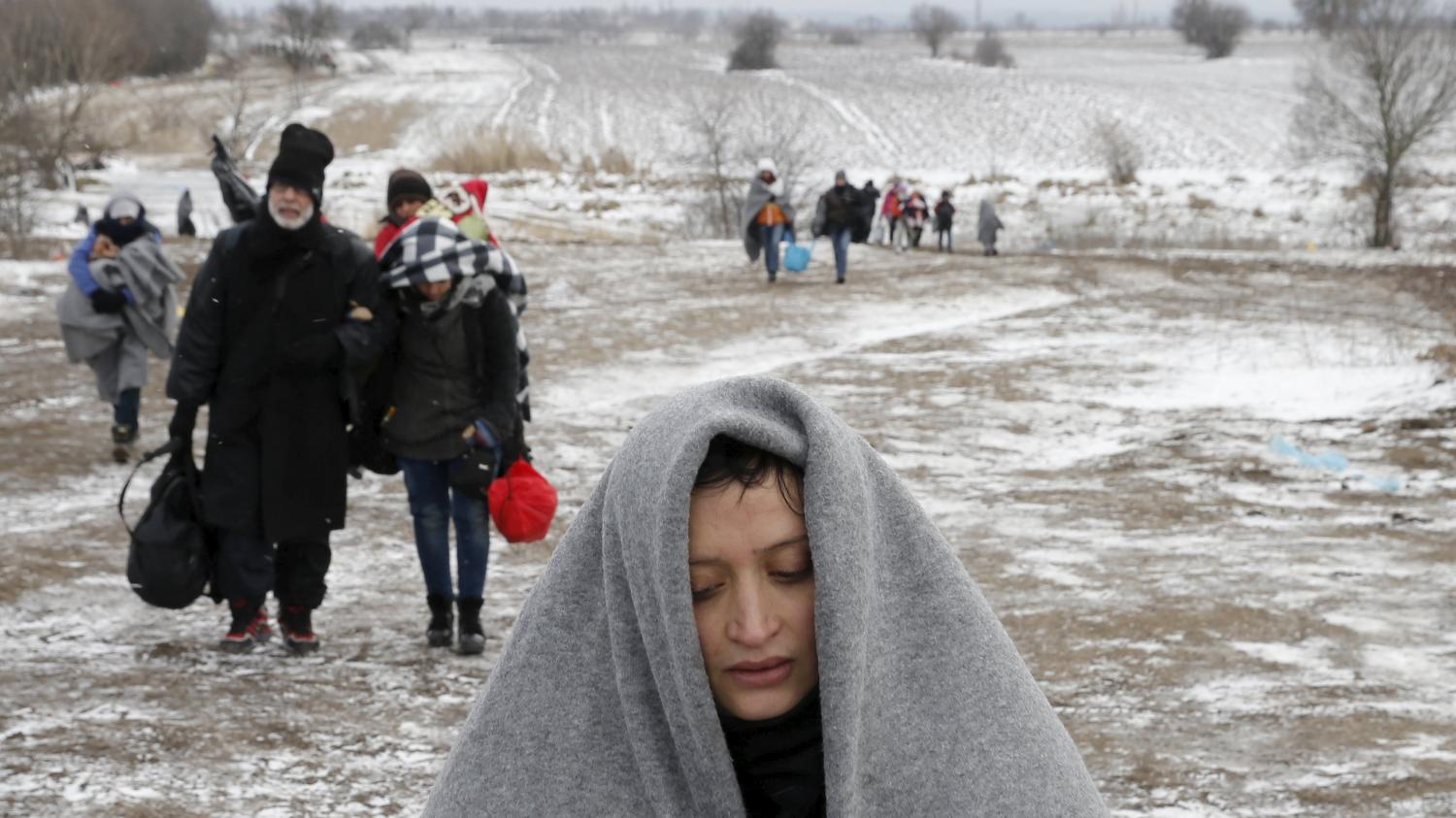
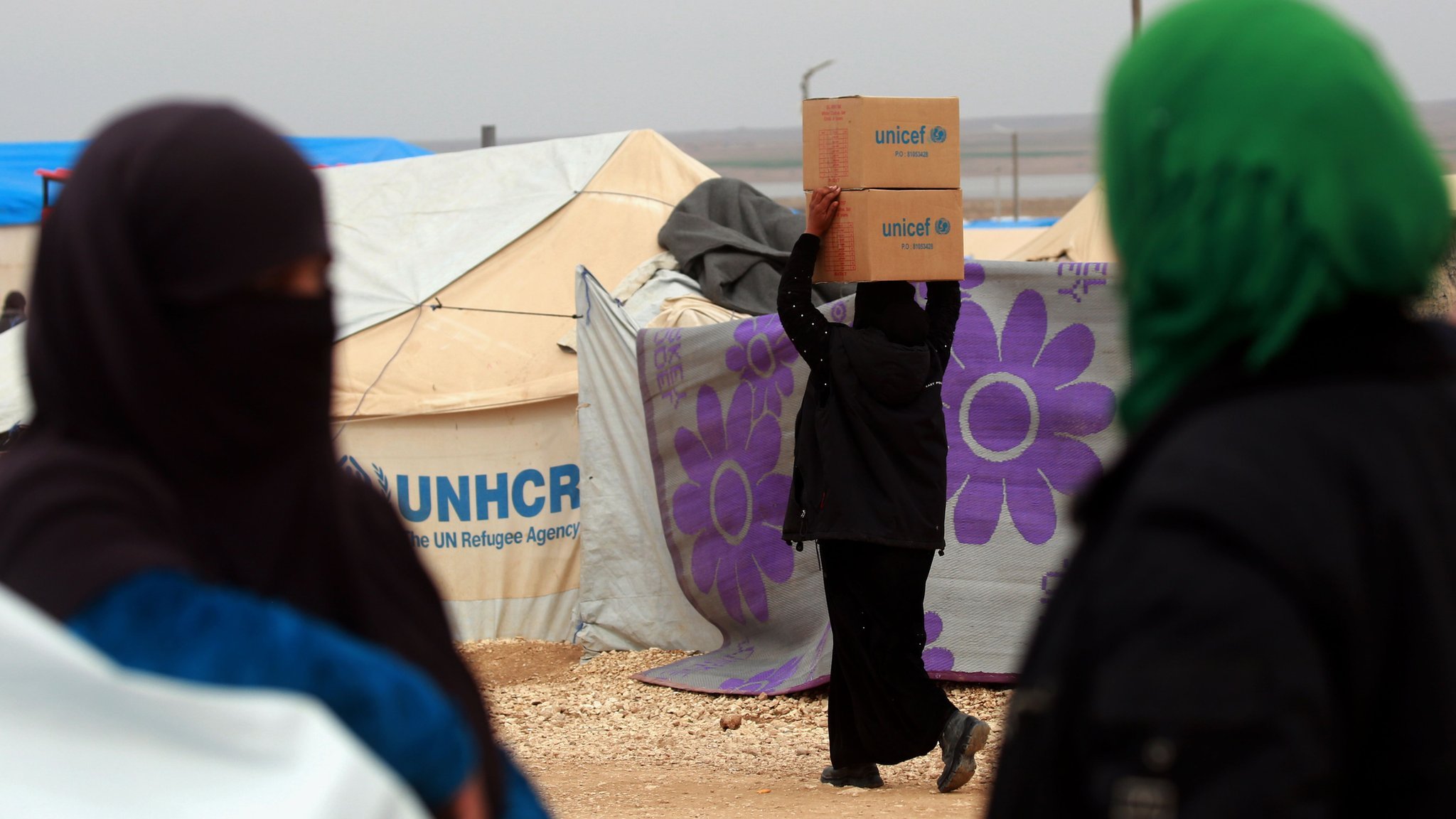
The Syrian civil war started in 2011. Today around 6.6 million Syrians live outside of their country and 6,7 million of them are internally displaced. According to the UNHCR, Syrian refugees have sought asylum in more than 130 countries. Yet, the majority of Syrians live in bordering countries. Türkiye hosts around 3,6 million of them while Lebanon, Jordan, Iraq and Egypt host around 2 million Syrians.
Europe’s “selective” approach to those fleeing war and persecution
According to the most recent data collected by the UNHCR, European countries host over 1 million of the 6.6 million Syrian asylum-seekers and refugees. “Burden” sharing is not equal within Europe. Germany and Sweden host most of the asylum-seekers and refugees, 59% and 11 % consecutively. France, the Netherlands, Austria and Greece host between 2 to 5% of Syrian refugees in Europe. For the other European countries, the rate is below 2%.
In the beginning, Europe was very reluctant to take in the refugees. When nearly a million people were at the borders of the EU in 2015, there were long discussions among the European countries and within the EU. Only after a deal to limit the number of asylum seeker arrivals was struck with Türkiye in 2016 that Syrians were allowed to settle on European soil. According to the agreement, irregular migrants attempting to enter Greece would be returned to Türkiye, and Ankara would take steps to prevent new migratory routes from opening. In exchange, the EU would resettle Syrian refugees coming from Türkiye on a one-to-one basis. The agreement was considered to be a success on the EU’s part. However, what the agreement actually did was to “export” the refugee crisis. It was also heavily criticized by human rights groups.
After several years, some Syrians living in Europe are still facing difficulties. Some of them are not able to work and are stripped from their basic rights, such as the right to education. Moreover, Some still cannot benefit from social services, meaning they also do not receive health care. Furthermore, they are frequently subjected to discrimination and seen as a threat to society. Since the vast majority of Syrians are Muslims, they are feared and sometimes even considered a potential threat to national security.
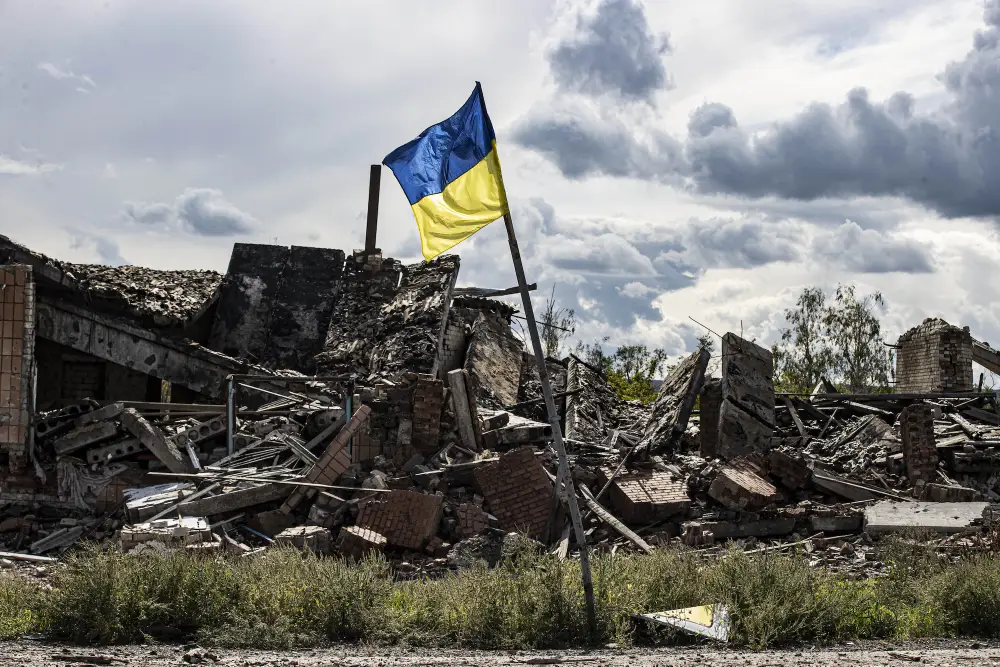
On the other hand, with the crisis in Ukraine, we saw a whole different Europe. A Europe that opened its borders and welcomed more than 2 million Ukrainians in a matter of weeks. Countries such as Poland, Hungary, Slovakia and the Czech Republic which had rejected Syrians, welcomed Ukrainians with open arms.
In addition, thanks to the “Temporary Protection Directive”, the Ukrainians were immediately allowed to live and work in the EU countries and also benefit from social services including health care.
Let’s not forget that these same countries had broken the law when they did not want to host Syrians as a part of burden-sharing within the EU. In its April 2020 ruling, the European Court of Justice declared that “By refusing to comply with the temporary mechanism for the relocation of applicants for international protection, Poland, Hungary and the Czech Republic have failed to fulfill their obligations under European Union law.”
The politicians of these countries had claimed that it was a matter of national security and that hosting Syrians would “change” the demographic structure of their society.
Just a couple of months ago, thousands of people coming from the Middle East were stuck at the Belarus-Polish border. For weeks, the crisis continued. While Belarus used the refugees in reaction to Europe’s support for the Belarussian opposition in the last elections, Poland refused the entry of these people and pushed them back. Poland sealed the border and did not allow media or human rights organizations to enter the area. Around 15 people were killed because of severe weather conditions.
During the first days of the crisis in Ukraine, there were instances in which people, most of them being students, from Africa and Asia were faced with discrimination while trying to enter an EU country. United Nations High Commissioner on Refugees Filippo Grandi at the time confirmed these cases. He also said, “We will continue to intervene, as we have done several times, to try to ensure that everybody is received in the same manner.”
The message sent out from Europe was clear “our doors are only open to Europeans; the rest are just a threat.” Statements made by several European politicians only added insult to injury.
The leader of Spain’s Vox party Santiago Abascal during a speech in the parliament said, “Anyone can tell the difference between them (Ukrainian refugees) and the invasion of young military-aged men of Muslim origin who have launched themselves against European borders in an attempt to destabilize and colonize it.”
Leader of the far-right National Rally party in France, Marine Le Pen’s words were, “Ukraine is a European country, and I think it is natural in terms of regional solidarity to welcome war refugees from European countries.” She continued to say, “the Syrians posed a security threat as they are mainly men arriving in Europe, unlike the Ukrainians, where you see women, children, and the elderly crossing the border.”
What perhaps hurt the most was not the statements of politicians, as each and every one of them has their own political agenda. Still, reporters and anchors in the media talk about blonde and blue-eyed people looking just like themselves as if being an asylum-seeker or refugee was only limited to darker-skinned people. This showed the deeply rooted prejudices and racism most “civilized” westerners had in them.
Europe has easily forgotten its past. Less than a century ago millions of people in the center of Europe had to flee their homes. In these unprecedented times, no one can predict where the next conflict will emerge.
The 20th of June is celebrated as World Refugee Day. According to statistics published this year on World Refugee Day, in 2022 for the first time in history, the number of displaced persons around the world has reached 100 million. EU Commission Vice President Margaritis Schinas speaking to journalists in Istanbul at the end of March said “We will make sure that the protection we have offered [to Ukrainian refugees] becomes a universal principle in the EU. The European Union will always be an asylum destination for those fleeing war or persecution, it cannot be otherwise. That is what defines us as Europeans.” From now on, I hope Europe will walk the walk…

What the writer wanted to show in this article: (that there are double criteria in Europe’s handling of refugees by comparing Europe’s discriminatory handling of Syrian and Ukrainian refugees, which is a clear fact that must be exposed, but unfortunately, when she built her analysis on misinformation, where she stated: (After several years, most Syrians living in Europe are still facing immense difficulties. Most of them are not able to work and are stripped from their basic rights, such as the right to education. Moreover, they cannot benefit from social services, meaning they also do not receive health care.), She demolished the meaning she aimed to.