



We are often led to believe that the fall of a dictator results in the realisation of ideals sought by the masses. But what if this is not true? What if the Baathist regime, in its brutality, was the very condition of possibility for Syrians’ desire for freedom, justice, and dignity, framing the 2011 uprisings? The Baathist regime was seen as an obstacle to achieving these ideals; thus, its removal was considered a prerequisite for a free Syria. However, the regime was not merely a repressive force. It was also the cause of the masses’ desire, the necessary antagonist against which the Syrian people defined their aspirations. Now that it has fallen, the Syrian people are confronted with their revolutionary desires.
The country has undergone significant political transformations that had been anticipated for over a decade. On 27 November 2024, armed groups in the Idlib province, notably led by Hayat Tahrir Al-Sham (HTS), initiated an unexpected and prolonged offensive against the forces of the Baathist regime in western Aleppo. This operation, referred to as ‘Deterrence Aggression,’ was intended as a response to the regime’s aerial bombardments of Idlib. However, it led to an unforeseen collapse of the regime within two weeks, culminating on 8 December. The consequent departure of Assad to Moscow and the subsequent transition of authority to the newly established government in Idlib signified the closure of a pivotal chapter in Syrian history while simultaneously paving the way for a range of potential future scenarios. The regime’s collapse has rekindled aspirations for a more favourable future among those who have suffered from repression, forced displacement, social stigmatisation as refugees, and severe socioeconomic conditions.
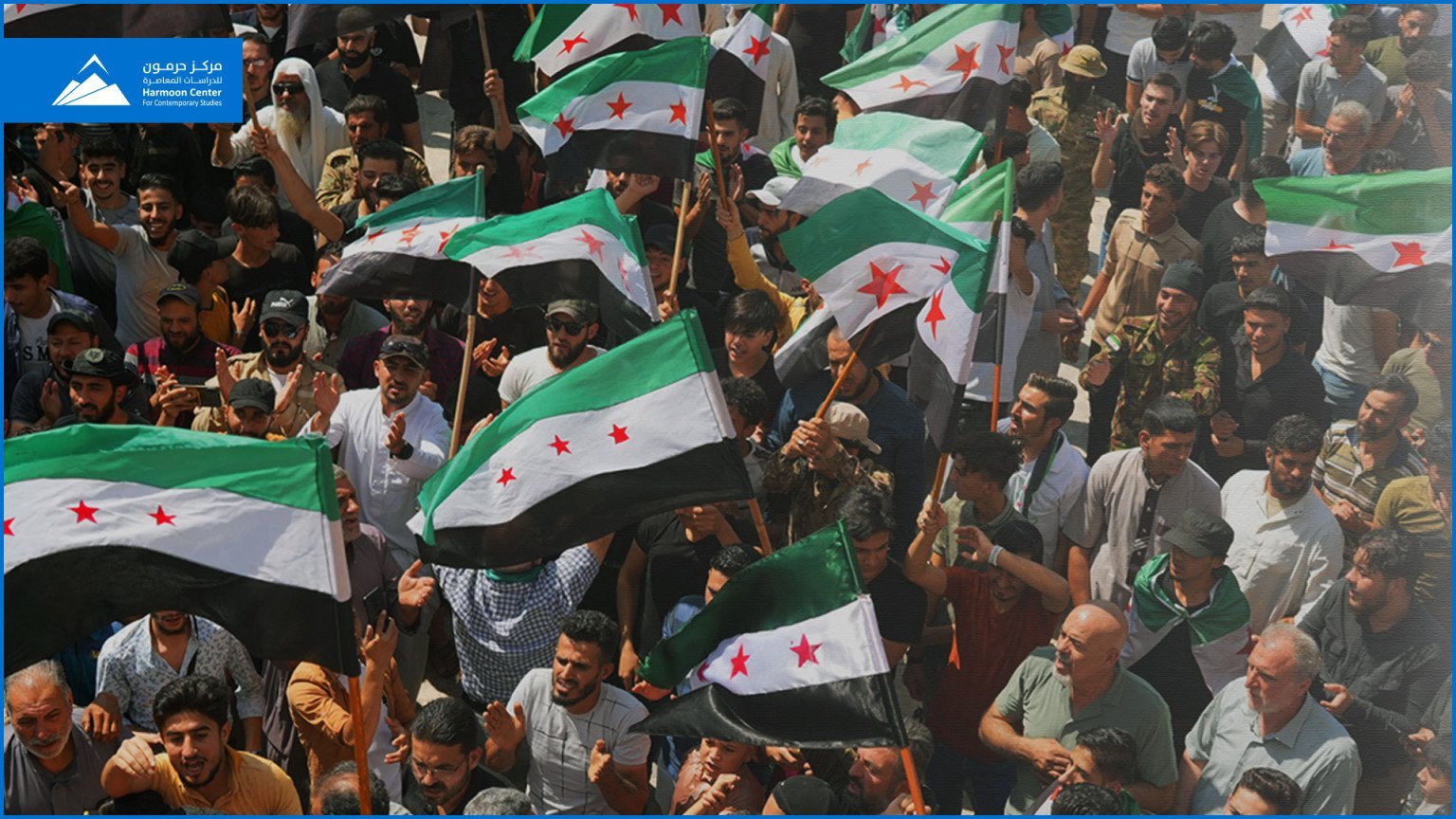
Given the regime’s over 50 years of authoritarian rule and 13 years of conflict, the news of its losses and eventual collapse was enthusiastically welcomed by the masses both domestically and abroad from the very first day of the operation. Reunions, especially for those who had been separated from their homes and loved ones after years of displacement and imprisonment, revealed a cathartic release from the accumulated strain of despair. Footage of individuals returning to the ruins of their houses and hometowns evoked a nostalgia that had only been experienced in imagination for over a decade. However, the regime’s fall is not the end but the beginning of a new chapter. With the regime’s downfall, what becomes of the object of the masses’ desire—freedom, justice, and dignity? Will the masses pursue these ideals, or will they channel their desires into new objects?
The Paradox of the Regime
The opening of the infamous Sednaya prison, situated on the outskirts of Damascus, revealed the enduring terror inflicted by the regime upon Syrians. The prison was characterised by its unforgiving living conditions, extensive torture, and extrajudicial killings. Individuals who had been missing for years were found in the prison, while thousands of those who were incarcerated had disappeared. The revealed documents from the prison disclosed how thousands had been subjected to brutal torture, murdered, and made to vanish. Sednaya embodied the regime’s brutality; its fall symbolised the regime’s collapse, reminiscent of the fall of the Berlin Wall.
The regime perpetuated a systemic cycle of fear and mistrust among the Syrian public to foster a compliant society analogous to the dystopian scenarios depicted in George Orwell’s seminal work 1984. This prevailing atmosphere of dread, which aimed to engender public conformity, prompted scholars to assert that Syrians exhibited compliant behaviour in public, such as ‘acting as if’ according to Lisa Wedeen (1999).
The repressive methods served to instil public apprehension while the regime’s stability and control normalised its inherent brutality. Arbitrary detentions, enforced disappearances, torture, and extrajudicial killings created the illusion of the regime’s might. The extensive public surveillance, bolstered by a network of informants monitoring their respective communities—often for personal gain or under duress—contributed to the development of a paranoid ethos in the country. Individuals identified as threats to the regime faced severe repercussions for endangering state security, ‘khatar ‘alaa amn al-dawla’, underscoring the regime’s reliance on violence.
However, this oppressive presence created a profound sense of lack of freedom, justice, and dignity among the Syrian people. Thus, the regime operated not merely as a political entity but also as a symbolic authority that structured the Syrian public. The repression fostered a void, fuelling the people’s desire for what they collectively lacked.
The desire for and the possibility of access to it galvanised the masses with the ideals of justice, freedom, and dignity, thus, turning desire into demands. The masses challenged the entrenched mechanisms of fear, surveillance, and systemic injustices in spaces where they had historically been anticipated to remain submissive.
The uprisings fostered a political discourse that fundamentally challenged the regime’s pillars while fuelling a desire for a viable alternative. The opposition’s narrative characterised the regime as a significant barrier to fulfilling people’s aspirations. This was, paradoxically, because of the regime’s corrupt and brutal nature, which served as a catalyst for revolutionary ideals. The regime was not only the problem but also the solution that gave the Syrian people a reason to fight for freedom. It functioned as a mediator between the masses and their ambitions, influencing their ideals and desires by imposing access restrictions. While the uprisings were intrinsically linked to the regime’s oppressive measures and systemic corruption, the regime equally underwrote the cultivation of revolutionary ideals among the masses. Its existence, held responsible for the lack of freedom, justice, and dignity, established a context and a meaningful structure wherein these principles were regarded as paramount ideals. However, with the regime’s downfall, the revolution faces the critical test of framing the masses’ desire and upholding the ideals.
The Prominence of Desire
Though often overlooked, desire is a potent political force that shapes ideologies and fuels revolutions. At its heart, desire is not just about wanting something specific like freedom or justice; it’s an underlying yearning for what we feel is missing in our lives. Instead of focusing on a particular object or need, desire is about this sense of lack. According to Jacques Lacan (2001), a key thinker in this area, desire is what shapes our identities and connects us to the authority of society.
Desire is subject to political interpellation when a political discourse harnesses it and converts it into demands. In Syria, the Baathist regime’s long-standing repression instilled a profound sense of lacking freedom, justice, and dignity, which laid the groundwork for the 2011 uprisings at the peak of the Arab Spring, overthrowing regimes across the region.
The desire was not merely a reaction to the regime’s brutality; it was shaped by the regime itself, which served as a kind of mirror, reflecting back to the people what they were denied. The more the regime suppressed these ideals, the more they became objects of intense longing, like a mirage that appears to shimmer just out of reach. In a sense, the regime’s violence reinforced their unattainability, thus enhancing their desirability and transforming them into a potential for access through the removal of the regime.
This dynamic is what Jacques Lacan (2018) calls the object-cause of desire. Unlike the object of desire that can be attained, the cause of desire is always just out of reach, much like the goals of a revolution—something beyond reach yet compelling to pursue. It represents a symbolic marker for what we lack, constantly pushing desire forward by shifting it onto new objects.
The ideals of the revolution, ignited by desire, turned the public sphere into a contest between the masses and the regime, with both sides claiming the symbolic authority of the public. The regime’s repressive policies and violent responses to the uprisings fueled the yearning for freedom, justice, and dignity. The regime’s obstructive role created the impression that its overthrow was essential for attaining these ideals. While practically toppling the regime seemed a pathway to greater freedom, its downfall poses the risk of transforming desire into new lacks. As the desire—the source of emotional and symbolic investment—endures, the Syrian public will confront it in post-Assad Syria following the shift in the political landscape and the discourse.
The opening of Sedneya prison marked the end of the regime’s repression but also revealed a paradox: the oppressor has fallen, yet we are left with a desire for revolutionary ideals. The euphoria of toppling the regime and celebrating the return to the country has already given way to the everyday challenges of providing public services, ensuring security, and rebuilding infrastructure, while the promised ideals remain elusive. Lacan teaches us that seizing power does not extinguish desire; thus, we must be cautious about which objects the discourse will channel it towards. Will Syrians establish a political structure that sustains revolutionary ideals, or will they find themselves in a cycle of shifting desire from one object to another?
References
Lacan, Jacques. Écrits: A Selection. Edited by Alan Sheridan. London: Routledge, 2001.
Lacan, Jacques. The Four Fundamental Concepts of Psychoanalysis. Milton: Routledge, 2018.
Wedeen, Lisa. Ambiguities of Domination: Politics, Rhetoric, and Symbols in Contemporary Syria. Chicago: University of Chicago Press, 1999.