


Introduction
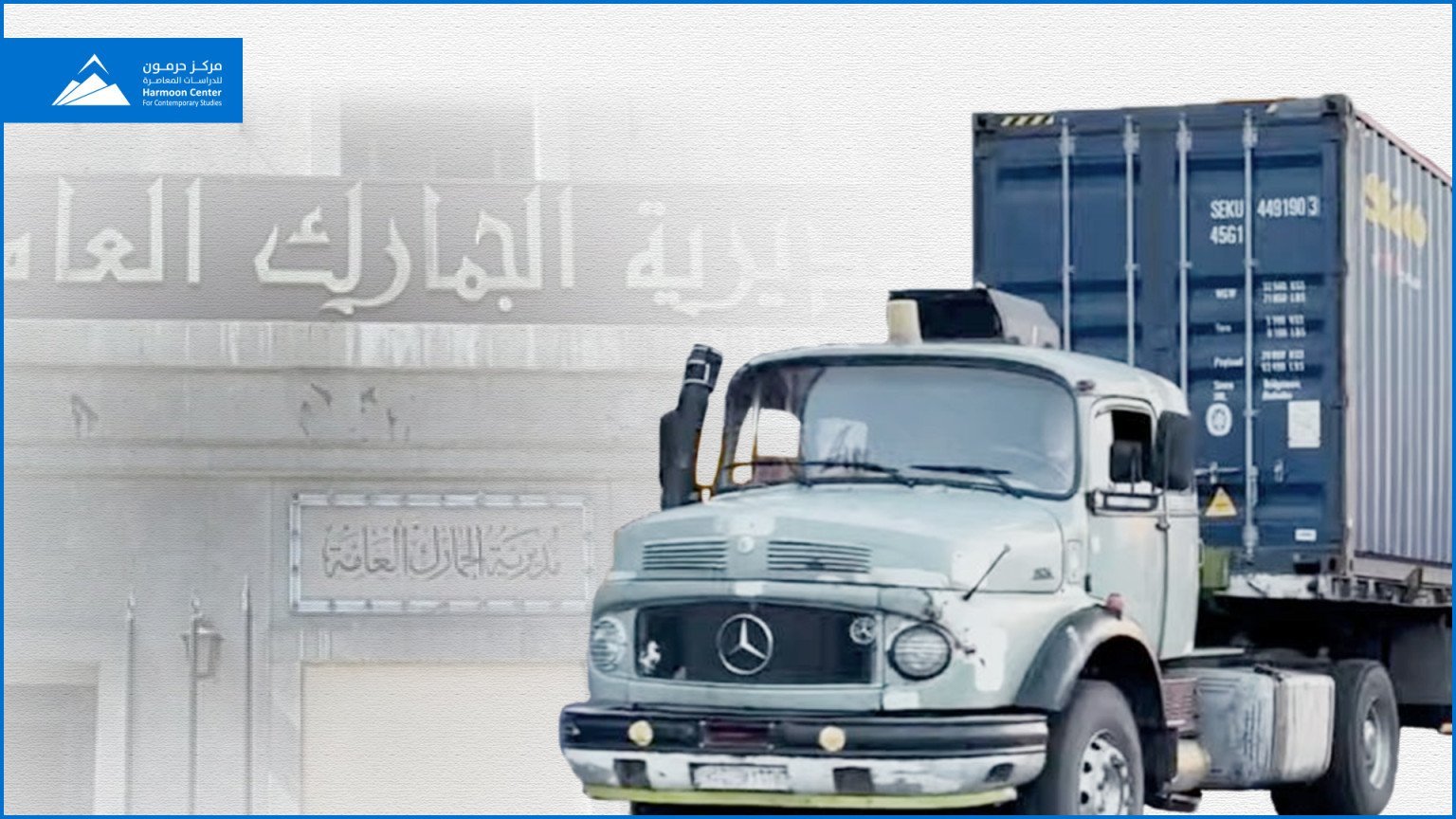
On January 11 2025, Syria’s new caretaker government shook up the country’s customs rules, replacing old tariffs still standing from the Assad era. The unilateral decision by the General Directorate of Customs sparked mixed reactions, with some – most notably Turkish exporters – voicing objections, while other stakeholders welcomed the change. The new tariff covers approximately 6,000 goods and materials—raw, semi-manufactured, and fully manufactured—intended for both import and export. The new levy was announced and implemented with exceptional speed. Developing a new tariff typically requires extensive study, expert analysis and specialized software to ensure proper implementation. This paper examines the factors behind the differing reactions expressed by consumers, producers, economic researchers, and the Turkish government. It also outlines urgent proposals based on Syria’s current economic, industrial, and service conditions.
What is the Point of a Customs Tariff?
Tariffs at the border serve multiple functions within any economic system, with various schools of thought influencing their philosophy and design.
- Financial Incentives: The primary goal is to generate revenue for the public treasury. Ministries of finance often impose high tariffs to maximize income, while importers advocate for lower rates. Excessively high customs duties typically lead to reduced revenue, increased tax evasion, and more cross-border smuggling. In Syria, customs enforcement has long been plagued by widespread corruption.
- Protecting Certain Sectors of the Economy: Customs duties typically exempt production inputs such as equipment, machinery, tools, and raw materials used in national industries. Low tariffs are imposed on semi-manufactured goods, while high duties are applied to imported products that compete with locally manufactured ones to encourage domestic industry. However, excessive tariffs can be counterproductive, by providing disproportionate protection to local manufacturers and avoiding competition – at the expense of consumers. The former regime placed outright bans on the import of many goods similar to locally produced ones, a contentious issue that often created friction between industrialists and merchants. Such policies are typically governed by trade agreements and free trade zones, with the World Trade Organization (WTO) setting regulations to manage protectionist measures.
- Contributing to Social Justice: Tariffs can help promote social equity by lowering duties on essential consumer goods, particularly staple foods such as tea, sugar, oil, rice, bulgur, meat, dairy, and cheese, as well as on common household items and clothing. In this case, tariffs are designed to reduce the cost of living while imposing high tariffs on luxury goods. The former regime applied this approach to an extreme degree. Import duties on cars reached nearly 400%, and car imports were banned from the mid-1960s until the late 1990s, with a brief exception in the late 1970s. In 1983, the government allowed the registration of new cars and imported 25,000 vehicles. However, these restrictions led to widespread reliance on ageing, malfunctioning cars, fueling the expansion of the car repair industry and the importation of scrap vehicles from Europe—particularly Germany—to salvage parts and repair old Syrian cars.
- Protecting Local Communities: Tariffs uphold certain restrictions by prohibiting the import of weapons, limiting the import of military arms to the Ministry of Defense, and requiring special approvals for light and hunting weapons. They also ban the import of drugs, expired materials, and – in some cases – alcoholic beverages, pork, and food products containing blood or pork derivatives. The new Syrian tariff follows this approach, despite the presence of significant groups in Syria that consume alcoholic beverages and pork, thereby violating the principle of fair treatment for all.
It is widely understood that any new customs tariff must be established through thorough study and research, to ensure it can fulfill its intended role. It is too early to assess the impact of the new customs regime on the economy and society, as its effects will take some time to become apparent.
Issuing the New Customs Tariff: A Major Move
All Syrian constitutions past and present affirm that no tax or fee may be levied without a legal basis. The caretaker government does not, in theory, have the executive power to enact or implement laws that have not been officially approved. The issue of customs tariffs is therefore highly significant, with impact across broad national interests. An appropriate system of tariffs must be developed by experts in customs, finance, economics, and sociology. The newly introduced rules should be carefully examined to identify strengths and weaknesses, after which an amended tariff system should be proposed and discussed by relevant stakeholders before being issued and approved.
Some Notes on the New Tariff
The new list includes over 6,000 items, and the new administration of the General Directorate of Customs has also eliminated more than 10 additional fees (outlined in internal circulars to border crossings and ports). Additionally, the previous customs tariff, which was based on a percentage of the price in Syrian pounds, has been replaced with a fixed amount in dollars per unit (NMB, LTR, or KGM). For example, the new tariff charges $50 per ton of petroleum derivatives and $27 per ton of rice.[1] According to estimates from the General Directorate of Customs, the new tariff results in a reduction of customs duties by between 50 to 60% compared to the previous tariff.
The effect of this tariff on production sectors, competition, consumer prices, and fiscal revenues are not yet clear. However, the reaction from Turkish exporters and the Turkish government has been swift. Their objections stem from the fact that the fees imposed by the border crossing administration on goods coming from Turkey to Syria are service fees of limited value, not customs duties.[2] Additionally, these fees were reduced by 30% for goods of Turkish origin, whereas the new tariff applies uniformly at all international crossings to all goods, regardless of their country of origin.
Turkish exporters are losing the competitive edge that once secured their dominance in the Syrian market. Shortly after the new tariff was implemented, they saw a shift in demand toward competing international products. Nihat Özdemir, owner of Limak Holding, a major construction firm, warned that the new customs duties would raise the cost of cement exports to Syria from $27 per ton to $50.
One concerning measure is the failure to impose a tariff on imports of pork and alcoholic beverages, implying that these items should not be imported. Despite this, repeated statements from officials in the current administration emphasize that there will be no discrimination or infringement on the freedom of individuals and groups in their private practices and daily lives. Any decision regarding these issues, they have pledged, will only be made through laws approved by the Syrian people. This contradictory stance has drawn the ire of a number of groups within Syria.
The General Directorate of Customs completed the customs tariff for over 6,000 items in a record time of less than 20 working days. However, several issues require clarification, namely: has the Directorate conducted a thorough study of each item and its role in the national economy, considering factors such as production, consumption patterns, the impact of the tariff on overall costs, the competitiveness of similar domestic products, and its broader economic effects? Have the special circumstances faced by the Syrian economy and its production sectors been taken into account? Crucially, has the impact of reducing the tariff on the public treasury, the national budget, and the state’s current spending obligations been analyzed? The customs tariff warrants particular attention, as imports and exports accounted for over 52% of Syria’s GDP in 2023, despite the significant decline in trade due to the war.[3]
The tariff itself sets a fixed lump sum, though its actual value may fluctuate as prices change and the exchange rate of the currencies used changes. The widespread use of the dollar and discussions around the freedom to exchange it in the local market threaten to dollarize the national economy, potentially leading to price instability. This instability could arise from varying exchange rates, multiple parallel markets (such as dollar and local currency markets, local product markets, and import markets), and shifting valuations. These fluctuations impact production sectors by altering costs and prices, heightening investors’ concerns due to a lack of confidence in the national currency and the instability of constantly changing policies.
Syria’s Exceptional Circumstances
- The war in Syria, now over 14 years long, has caused widespread destruction across all production sectors. As a result, the country’s GDP has plummeted from the equivalent of 61 billion US dollars in 2010 to approximately 8 billion dollars in 2023—meaning the 2023 GDP was only about 13% of the 2010 level[4]. The agricultural sector has seen a significant reduction in cultivation and production, with the sector’s net output in 2021 reaching only 38.5% of 2010 levels.[5] Most oil and gas production is no longer under state control, and industrial production has decreased to just 25% of its 2010 level. This dramatic decline has created a severe inability to meet both production and consumption needs. The situation is further compounded by capital flight and a lack of investment, effects that will likely persist for a considerable time.
- According to estimates by the Central Bank of Syria, Syrian exports fell from approximately $8.8 billion in 2010 to around $1 billion in 2023, while imports decreased from about $17.5 billion in 2010 to roughly $3.2 billion in 2023[6]. These figures highlight a significant decline in production capacity and a large deficit in the balance of payments, with exports covering only about 31% of imports. This indicates a continued depreciation of the national currency, as well as a worryingly limited capacity to absorb and finance imports.
- In 2010, customs revenues accounted for approximately 4.2% of Syria’s total budgetary resources, despite widespread corruption and tax evasion. These revenues could be increased without raising customs tariffs, and instead by curbing corruption and reducing customs exemptions. The additional revenue could be used to support essential goods and services for broader social groups – or to bolster the overall budget. However, corruption and the manipulation of customs classifications often minimize fees, while exemptions granted through the influence of certain officials deprive the budget of significant resources. For comparison, Lebanon’s customs duty revenues in 2010 constituted about 9.86% of its general budget revenues, which were estimated at approximately $5.477 billion.[7] Notably, Syria’s tariff rates were higher than Lebanon’s, and its import volume was greater, yet its customs revenues somehow remained lower. Beyond revenue generation, customs tariffs can also play a strategic role by lowering duties on essential production inputs, thereby reducing production costs and enhancing the competitiveness of domestic industries.
- Customs tariffs play a crucial role in all countries, helping to safeguard domestic production sectors from harmful factors in open markets and international trade.[8] Historically, all advanced industrial nations have implemented protectionist policies for extended periods. Until World War II, such policies were a standard practice among these nations. After the war, driven by the need for economic reconstruction, countries within the United Nations called for agreements on mutual tariff reductions. Negotiations continued until 1946, culminating in the establishment of the General Agreement on Tariffs and Trade (GATT) at the Geneva Conference. Syria became a founding member of GATT in 1947. In the successor organization, the World Trade Organization (WTO), established in 1995, Syria was granted observer status in 2001.
- Syria is a member of the Greater Arab Free Trade Area (GAFTA), which came into effect in 2005, and has a free trade agreement with Turkey, signed in 2005 and implemented in 2007.[9] These agreements require the reduction and eventual elimination of customs duties between member states, limiting their ability to use tariffs as a protective measure. The agreements governing the World Trade Organization (WTO), established in 1994, serve as a reference for these trade pacts. They grant member states the right to temporarily suspend certain provisions or seek protection for economic sectors they believe are adversely affected by the agreement’s implementation. Additionally, member states can request exemptions when facing natural disasters or other crises. The free trade agreement between Syria and Turkey, in Article 3, states that if serious difficulties arise concerning a specific product, the Association Committee may, by mutual agreement, review the implementation schedule. However, any extension beyond the maximum transitional period of 12 years is not permitted.[10] If the committee fails to make a decision within 30 days of Syria’s request, Syria may temporarily suspend the relevant schedule for up to one year. Article 5, titled Structural Adjustment, further allows Syria to take exceptional, time-limited measures outside Article 3 by increasing or re-imposing customs duties during the transitional period of 12 years. Given Syria’s current exceptional circumstances, it has the right to suspend the free trade agreement on certain local industrial and agricultural products for protection. Additionally, Syria may request a review of its new customs tariff on approximately 269 items exported from Turkey to Syria, as indicated by the Turkish Ministry of Foreign Trade.[11] In light of these provisions, Syria has strong legal grounds to invoke its rights under existing agreements—whether with Turkey, GAFTA members, or in accordance with WTO regulations—especially given the country’s current economic challenges and the global trend toward protectionism.
Conclusion
At root, the new tariff should not have been issued before the formation of constitutional authorities. Instead, a temporary list of amendments to the 2018 customs tariff could have been prepared based on interim priorities, with a view to lowering the cost of essential goods, protecting national industries, or achieving other economic objectives. This would allow for a more comprehensive reassessment of the customs tariff as both a tool for economic and social development and a vital source of public revenue.
[1] See statement of the Director of the Nassib Crossing, Khaled Al-Barad, to Al-Araby TV, on January 13, 2025, at: https://www.facebook.com/watch/?v=1636288666961612
[2] Ibid.
[3] “Syria Economic Monitor, Spring 2024: Conflict, Crises, and the Collapse of Household Welfare,” The World Bank, p. 10.
[4] Estimates of the 2023 output, according to the Central Bank (cited in the previous reference) and data from the Central Bureau of Statistics for 2011, are based on net domestic product at factor cost and constant 2000 prices.
[5] Net Domestic Product at Factor Cost by Sector, 1963, 1970–2010 (at constant 2000 prices, in million Syrian pounds) and Net Domestic Product at Factor Cost by Sector, 2000–2021 (Base Year: 2000) (Value: Million S.P.), Central Bureau of Statistics, Damascus.
[6] The World Bank, “Syria Economic Monitor, Spring 2024: Conflict, Crises, and the Collapse of Household Welfare,” p. 10.
[7] “Economic Accounts of Lebanon 2010,” compiled and published under the direction of Robert Kasparian, Lebanese Republic – Presidency of the Council of Ministers, Economic Accounts Mission.
[8] Harmful factors include unfair competition, government support for local products, export subsidies, exchange rate manipulation, and non-tariff restrictions, among others.
[9] The Association Agreement Establishing a Free Trade Area Between the Republic of Turkey and the Syrian Arab Republic, signed on December 22, 2004, in Damascus.
[10] Ibid., pp. 4 & 5.
[11] Turkey Today – By Newsroom Jan 27, 2025 2:35 PM