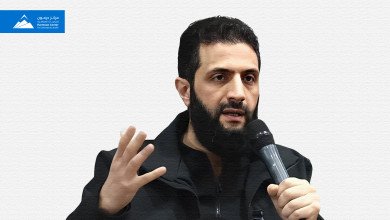




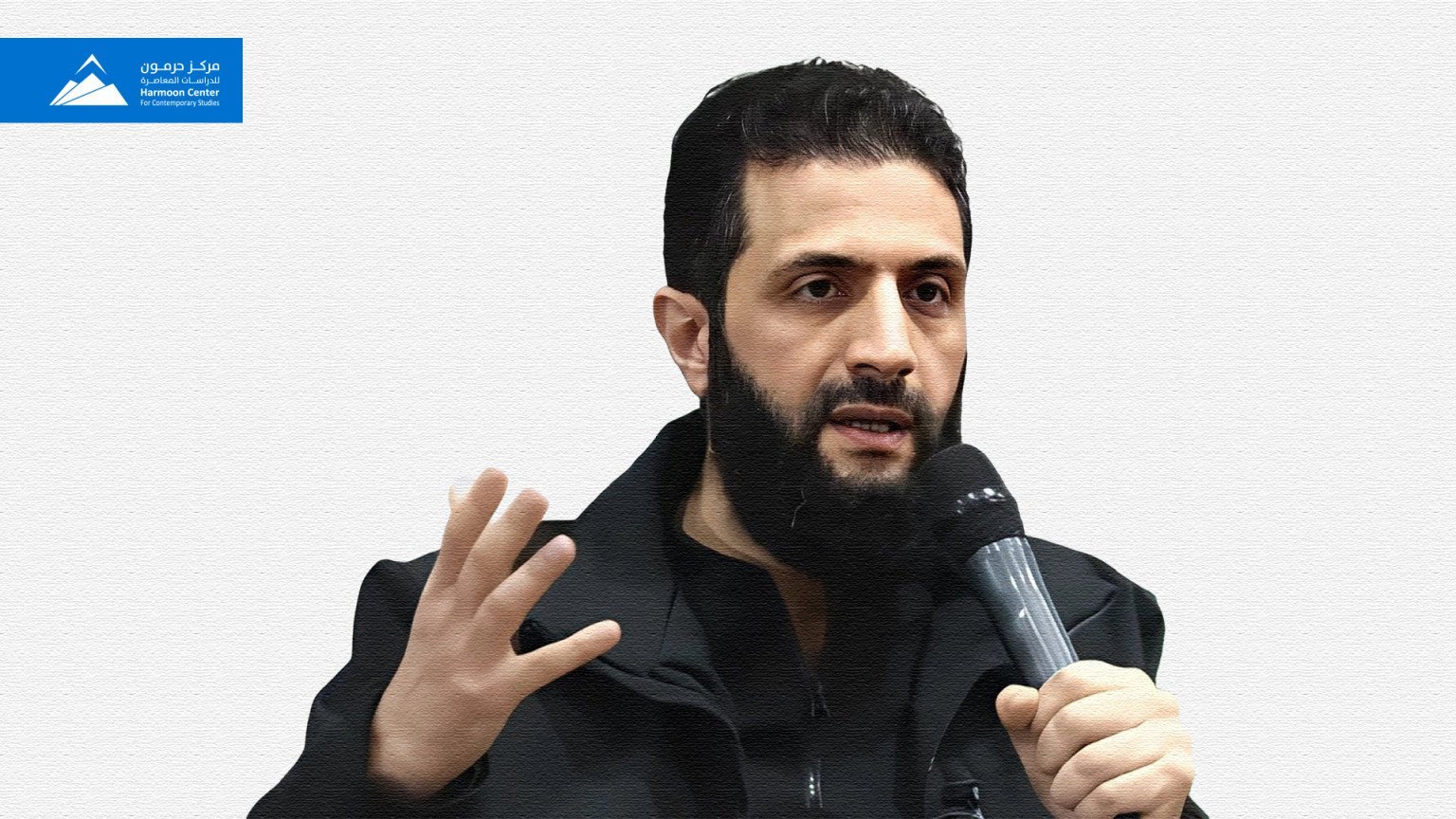
Although I follow the developments in post-Assad Syria daily—almost hour by hour—particularly concerning the performance of the civil, political and military leadership, I find that certain aspects of this leadership’s statements and actions are clear, while others remain ambiguous and convoluted. Yesterday’s BBC interview with Ahmad al-Sharaa, the leader of Hay’at Tahrir al-Sham, clarified some points while leaving others obscure—some hinted at between the lines, and others entirely unaddressed (the unspoken). In this article, I intend to analyze what is articulated and what remains unsaid, noting at the outset that the pleasant surprises far outweigh the unpleasant ones, or at least those that need improvement.
Ahmad al-Sharaa spoke about his comprehensive vision for Syria’s civil transition, emphasizing his intention to call for a Syrian National Conference representing all components of Syrian society—ideological, religious, and ethnic. This conference would result in the establishment of a constitutional committee, followed by elections to form a parliament and elect a president. He described the “New Syria” as a nation that would pose no threat to its neighbors and affirmed that any disputes with neighbors or major powers would be resolved through diplomatic pressure and engagement with the international community. As an example, he cited recent protest letters sent to the United Nations regarding Israeli violations of the 1974 ceasefire line.
When asked about the use of force in Idlib to consolidate Hay’at Tahrir al-Sham’s control, al-Sharaa resorted to legal language, stating that the violence was legitimate because it targeted those who infringed upon public institutions. When questioned about the differences between what the Taliban did in Afghanistan and what Hay’at Tahrir al-Sham has done in Idlib or intends to do in the new Syria, he argued that there are sociological and cultural differences between the two countries. Afghanistan, he explained, is a tribal society, whereas Syria is predominantly urban.
What caught my attention during the interview was al-Sharaa’s humility. On several occasions, he admitted he could not issue definitive judgments on certain matters, saying his personal opinion was irrelevant and that decisions should be left to legal experts, the people, and the constitution. At the same time, he showed nationalist pride, stating twice that his primary concern is to gain the trust and belief of the Syrian people, regardless of whether those outside Syria believe him.
Here, I wish to comment on the glimpses of a future social agenda for Syria revealed in his statements. In his discourse, al-Sharaa never used terms like “Sharia” or “Islamic state.” Instead, he addressed the journalist using a language closer to what the American philosopher John Rawls calls “public reason,” a shared moral and argumentative language that all Syrians—and even a British journalist—could understand. When asked whether the new Syria would respect women’s rights, he evaded the question and expressed disdain for it, reminding the journalist that the priority today is rebuilding Syria for all its components—men and women alike—and restoring citizenship to those who lost it for security reasons, including many Syrian families living abroad.
Nevertheless, his reconciliatory tone toward the West stood out. He refrained from directly criticizing the journalist over double standards, such as the West’s provision of weapons to Genocidal Israel to kill women and children in Gaza. Instead, he opted for Syrian-Syrian comparisons.
When al-Sharaa was asked about social issues and his political vision, he used terms like “constitution,” “law,” “return to the people,” and “the people decide.” These expressions belong to the repertoire of liberal democracy, yet he avoided explicitly using the term “democracy.” It seems clear that al-Sharaa adheres to an Islamic intellectual framework that seeks not to revert to universal commonalities but to employ expressions closer to the Arab-Islamic communicative field—or, as François Burgat puts it, to speak in Islamic lexicon (parler musulman). I agree with Burgat that one should not object to the use of a local lexicon over a universal one. What matters here is the substance, not the terminology.
When asked whether al-Sharaa supports a democratic Syrian state, he rejected the term “democracy,” substituting it with the concept of a “state of law, constitution, and equality among Syrians.” When probed on issues like allowing the sale of alcohol or women’s dress codes, he evaded or sidestepped the questions, insisting that such decisions should be left to legal experts. He should have said that public freedoms are guaranteed, that the state has no right to interfere in people’s religiosity, and that the rest is determined by the law.
The positive takeaway is that al-Sharaa seems to believe in some form of differentiation between the religious and the political. He uses the concept of a civil state, where politics is governed by law, and religious matters are left to preachers. Notably, he avoided employing liberal universal terms such as democracy, citizenship, freedom of expression, freedom of political organization, individual freedoms, or secularism. Perhaps this avoidance stems from his view that (new) liberals often have double standards when employing terms like “democracy” or that other terms like “secularism” have been misused by authoritarian states.
While al-Sharaa’s discourse presents a promising vision of a legal-political system that represents all Syrians, it leaves issues of public morality ambiguous. He seems unaware of how crucial this issue is for large groups of Syrians who historically distrust Islamists due to their ambivalent stance on public morality, in a chilling context of polarization. This distrust is legitimate, given the rhetoric of some radical Islamists who conflate the roles of preacher and politician. There is a significant difference between a preacher advocating for the prohibition of alcohol or the imposition of the hijab and a politician who must account for the diverse conceptions of the good among citizens. What one chooses to eat, drink, wear, or enjoy is part of their personal conception of the good.
Thus, I believe that al-Sharaa’s discourse in this regard was unwise, as it left significant ambiguities. The distinction between the concept of justice, which should unite all Syrians, and the diverse conceptions of the good is of paramount importance. It would have been better for al-Sharaa to clarify his vision for Syria’s future in this context, rather than merely stating that the constitution and law will resolve these matters. This ambiguity has led some skeptics to perceive the military leadership’s recent statement—pledging not to harm any civilian in the public sphere over their attire or behavior (an allusion to not harassing unveiled women)—as a tactical move that does not reflect the new leadership’s genuine vision for Syria.
Despite my critiques of certain aspects of al-Sharaa’s discourse, I believe that, given his humility and rich experience in Idlib, he appears to be a reflective individual capable of adapting his ideas to the context. Reflexivity indeed is a critical and important trait. This trait is also evident in many new Islamic movements that have positively evolved upon being part of the governing body.
What pleased me most was the news that a delegation from Turkey’s ruling Justice and Development Party visited the Syrian government and political leadership. Some of its members remained in Damascus to assist the new regime in benefiting from Turkey’s experience in distinguishing between the religious and the political and ensuring the state’s minimal neutrality regarding the pluralistic and conflicting conceptions of the good in society.
The problem with exclusively using local or Islamic lexicon is that it fails to create a shared intellectual and political space with the global community. Al-Sharaa knows that Syria, rising from its ashes like a phoenix, desperately needs international support for reconstruction. While he employs the concept of solidarity in a global sense, he avoids using other terms from the global vocabulary tied to the Universal Declaration of Human Rights and how humanity has developed some concepts, such as dignity, democracy, human rights, women’s rights, freedom of expression, and freedom of association. This is unfortunate.