


Just Few days ago, Syria has experienced swift and transformative developments, leading to notable shifts in the dynamics of military and political control. These changes hold the potential to disrupt the longstanding political deadlock that has characterized the Syrian conflict for over 13 years, potentially re-centring the crisis within the focus of regional and international discourse. The intricacy of these developments’ stems from the convergence of regional and international interests with local dynamics on the ground. This complexity underscores both the opportunities and challenges inherent in these shifts, which may redefine Syria’s broader geopolitical landscape. However, in the absence of a coherent strategy and genuine political commitment to conflict resolution, there remains a significant risk of exacerbating existing tensions and further complicating the situation.
The regional and international context that created favourable conditions for initiating the 2 military operations
The regional and international circumstances that facilitated the recent developments have been evolving over time. Discussions regarding these developments have been ongoing for weeks and months. A confluence of local and international factors created a conducive environment for their emergence, particularly after the prolonged stagnation in the Syrian situation since 2020. This stagnation has been characterized by the inability of the Astana and Sochi processes, as well as the Constitutional Committee, to achieve any meaningful resolution to the Syrian crisis. Meanwhile, regime forces, Russia, Iranian militias, and the Syrian Democratic Forces (SDF) have continued to target areas controlled by the Syrian National Army (SNA) and Hay’at Tahrir al-Sham (HTS).
The ongoing refugee crisis, coupled with Turkey’s strong desire to expand opposition-held territories to facilitate the return of hundreds of thousands of Syrian refugees to their homes in Aleppo, Hama, and Idlib provinces, has further shaped this dynamic. These factors align with the ambitions of both the SNA and HTS to regain territories they previously controlled but lost to regime forces, supported by Iranian militias and Russian airpower, several years ago.
Furthermore, the dominance of the PYD, a branch of the PKK (designated a terrorist organization by Turkey), in the eastern Euphrates region and its establishment of a semi-autonomous entity perceived as a threat to Turkish national security has heightened Ankara’s concerns. Turkey views the expansion of opposition factions’ control as a strategic tool to pressure Assad’s regime and compel it in a way toward normalization of relations with Turkey. Despite these efforts, Assad has maintained a resolute opposition to normalization for nearly two years, even under a bite of pressure from Putin. This intransigence has strained relations between Moscow and the Syrian regime, as Russia perceives Assad’s growing alignment with Iran—an actor opposed to normalization with Turkey—as exacerbating tensions and demonstrating a lack of flexibility toward any political solution.
On the other hand, the recent operations can be seen because of the broader shifts initiated by Operation Flood of Al-Aqsa and its subsequent regional impact. These changes include efforts by Israel and the United States to curtail Iran’s influence in the region, dismantle Hezbollah’s militia, and deliver significant blows to Iran’s military presence in Syria and Lebanon. These developments have collectively diminished Iran’s ability to exert the same level of influence over the Syrian landscape as it once did.
On the international stage, Russia, a key ally of the Assad regime, remains heavily engaged in its ongoing war in Ukraine, limiting its capacity to fully focus on Syria. Simultaneously, the United States is in a transitional political phase, with an outgoing president constrained in decision-making and an incoming president yet to assume full authority. These overlapping circumstances have created a favourable environment for the current operation, which has been under preparation for several months. Such an opportunity was unlikely to be overlooked by opposition factions or by Turkey, which has emerged as a central actor in the Syrian conflict.
The course of the rapid military operations
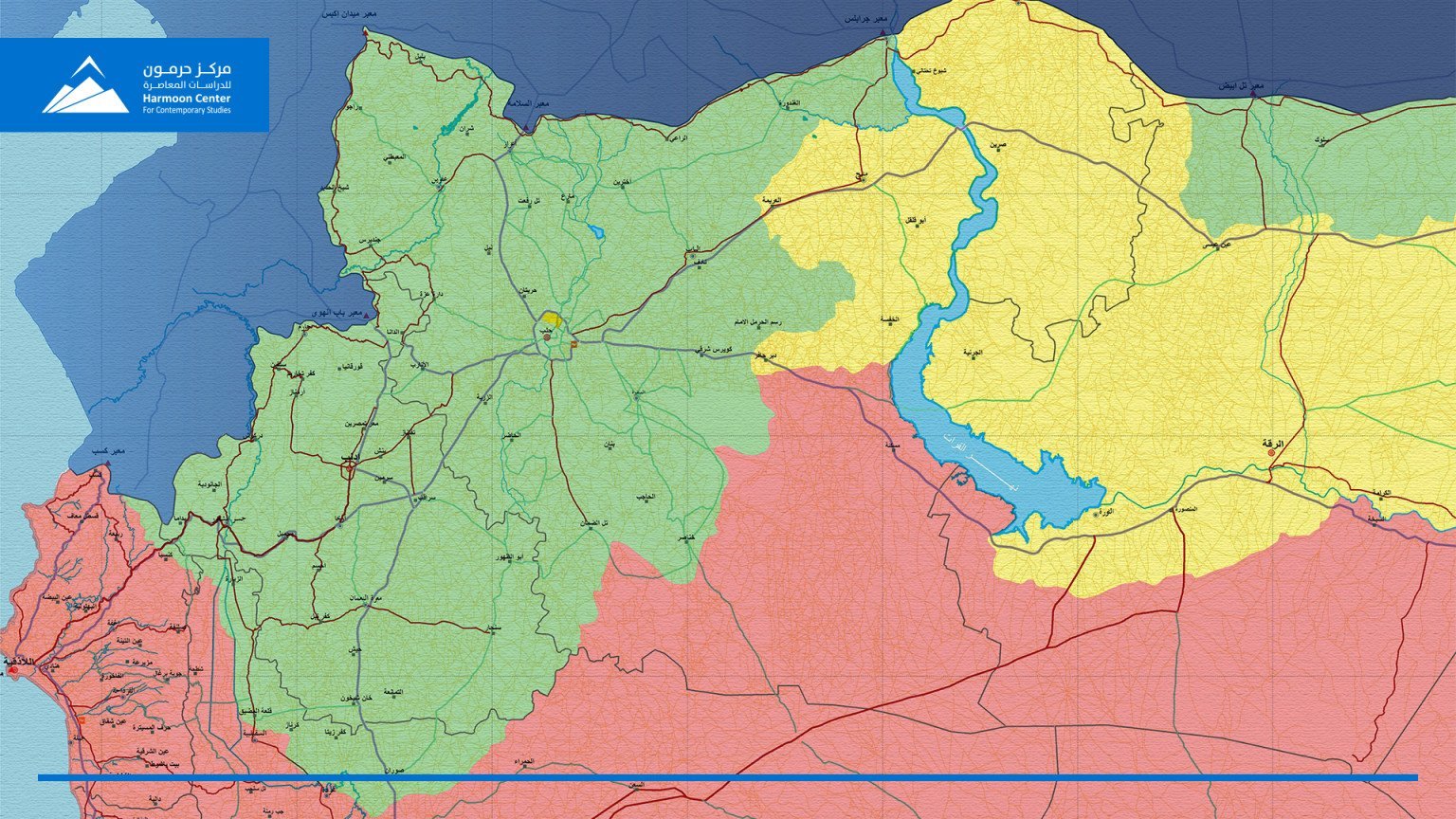
The “Deterrence of Aggression” operations room was launched, led by Hay’at Tahrir al-Sham (HTS), and includes the National Liberation Front, the Nour al-Din al-Zenki Movement, the Army of Izza, and others. Similarly, the ” Dawn of Freedom ” operations room was activated with the participation of several factions from the Syrian National Army, such as the Sultan Suleiman Shah Division, the Sultan Murad Division, the Construction and Liberation Front, and others. The ” Dawn of Freedom ” operation was delayed avoiding clashes with the Syrian Democratic Forces (SDF) and to prevent provoking Russia, despite high readiness on the Tal Rifaat and Manbij fronts. The operations did not start until the SDF took control of large areas after Assad’s forces withdrew from the Eastern Aleppo countryside, reaching Aleppo International Airport. This moves provoked Turkey, which sought to push the National Army factions to advance from Tadef.
The factions’ first target was the city of Aleppo, which they quickly and easily captured, an outcome that no one could have predicted just a week earlier. The operations were marked by speed, as regime forces and Iranian militias withdrew from the city of Aleppo, its western and eastern countryside, and the southern Eastern Idlib countryside. The regime’s forces appeared demoralized, avoiding confrontation, and leaving behind significant amounts of military equipment. It became evident that, after recognizing their vulnerability in these distant areas, the regime opted to withdraw without a fight, retreating to previously established lines north of Hama and fortifying its positions in those areas.

The operations conducted by the factions were marked by a significant qualitative development, reflecting a notable shift in the course of the battles, alongside clear strategic and organizational superiority compared to their performance in previous years. This was in stark contrast to the confusion and retreat experienced by regime forces. The factions effectively capitalized on the collapse within the regime’s ranks, enabling them to make rapid territorial gains. Russia, which withdrew its positions in these areas, did not provide substantial air support to hinder the progress of the advancing opposition factions, despite conducting a few airstrikes that had little impact on the military momentum of the factions.
The opposition factions refrained from attacking the withdrawing Assad forces and Iranian militias, avoiding clashes as long as they retreated without resistance, in adherence to the principle of minimizing bloodshed. For instance, the opposition factions permitted a column of regime forces to withdraw peacefully from the Sheikh Najjar area and facilitated the withdrawal of hundreds of soldiers besieged in the military academy in Aleppo, thereby keeping casualties to a minimum.
The operations enabled the factions of HTS and the National Army to achieve rapid territorial gains, allowing them to seize control of vast areas across the provinces of Aleppo, Hama, and Idlib. These territories include strategic military points and several military and civil airports, such as Kuweires Airport, International Airport, in Aleppo and Abu Duhur Airport In Idlib. The factions also regained the contact lines that had been in place prior to 2017, surpassing them in some areas, and took full control of Aleppo, which they had only partially held on its eastern side before 2017.
Some analysts have suggested that the events of the past five days resemble a pre-arranged scenario, speculating the existence of a Turkish-Russian understanding and tacit American approval of the developments. According to these interpretations, the agreement may have aimed to restore the pre-2017 contact lines established before Russia’s military intervention and the decline of ISIS. Some even argue that President Putin, frustrated by Assad’s deepening ties with Iran, orchestrated these events as a calculated move to compel Assad to reconsider his alliances. The suggestion is that Putin is sending a message to Assad: “You were once positioned along these contact lines. We granted you extensive territory, but now you are being returned to your previous boundaries, with Aleppo no longer under your control, prompting you to reassess your calculations.”

Regional and international reactions
The positions of regional and international actors regarding the recent developments have varied significantly. Turkey has emerged as a key player in the Syrian war, despite analyses suggesting that recent events are the outcome of Turkish-Russian understandings. Turkey has provided substantial political and media support to the factions of the National Army and plays a direct role in their training and advisory operations. Turkish government-affiliated organizations, such as the IHH Humanitarian Relief Foundation and the Turkish Religious Foundation, were among the first to arrive in Aleppo to deliver aid to residents. Turkish experts were also visibly active in Aleppo immediately after its capture by opposition forces.
Iran has expressed significant concern over the developments, describing them as “part of an Israeli plan,” and has made extensive efforts to halt the opposition factions’ advances. Iran’s foreign minister made urgent visits to Damascus and Ankara but appeared to return without tangible outcomes. Attempts by Iran to send reinforcements from Iraq to support Assad were thwarted when an airstrike—allegedly carried out by international coalition aircraft—targeted the convoy. Meanwhile, Iraqi Prime Minister Mohammed al-Sudani, reportedly aligned with U.S. interests, responded to Assad’s request for support by ordering a complete closure of Iraq’s border with Syria to both military and civilian movements.
Russia’s stance appears to reflect tacit approval of the unfolding events. It has refrained from increasing air support for the regime, and its official condemnation of the developments has been muted. Kremlin spokesperson Dmitry Peskov described the attacks as a violation of Syria’s sovereignty and called for a swift response by Syrian authorities to regain control. However, Russian aircraft continue to bomb opposition-held areas in Aleppo and Idlib, signalling a complex and ambiguous position.
The United States, on the other hand, appears to be bolstering the opposition’s standing through diplomatic and media engagement. Washington refused to allow aid to reach the Assad regime via Iraq, even targeting a military convoy heading into Syria. A White House statement attributed responsibility for the recent developments to the Assad regime’s refusal to engage in the political process outlined in UN Security Council Resolution 2254. At the same time, the statement emphasized that HTS which is leading the current offensive, is classified as a terrorist organization.
Israeli Foreign Minister Gideon Sa’ar remarked that “there is no good party” in the rapidly evolving conflict in Syria. Following this, a meeting of the Israeli Ministerial Security Committee was convened, during which the Shin Bet (Shabak) presented a report on the situation. The report reflected Israel’s deep concern over the potential collapse of the Syrian regime at this stage, alongside apprehension about the accelerating military developments on the ground. Israel issued a stern warning to Assad, cautioning him against “playing with fire” by supporting Iran and its proxies in Syria.
Most European statements conveyed concern over the potential escalation of the ongoing battles in Syria. However, these statements stopped short of condemning the operations outright, instead emphasizing the usual calls for respect for human rights and the protection of civilians.
Ahmed Aboul Gheit, Secretary-General of the Arab League, expressed his alarm over the rapid succession of developments in Syria. Similarly, UN Special Envoy for Syria Geir Pedersen stated, “What we are witnessing in Syria today is evidence of the collective failure to achieve what has been clearly required for many years—a genuine political process to implement Security Council Resolution 2254 (2015). Syrian parties and key international actors must urgently engage in serious and substantive negotiations to find a path out of this conflict. Without this, Syria faces the risk of further division, deterioration, and destruction.”
Amid this turmoil, Assad appears conspicuously absent from the scene, as though the events are unfolding in another country. The Syrian regime has limited itself to issuing statements about its purported confrontations with “terrorist groups” and the losses it claims to have inflicted on them. The Syrian presidency released two brief announcements regarding phone calls Bashar al-Assad had with the Iraqi and Emirati presidents, though neither country issued clear statements of support for the regime in its current predicament.
Assad’s concerns appear to be deepening, particularly regarding the possibility of being dragged into the Israeli Iranian confrontation. Once confident of his position, Assad now fears he may ultimately be forced to accept the implementation of Security Council Resolution 2254 (2015)—nine years after its adoption—and the political transition it mandates. His anxiety has likely grown upon observing Hezbollah’s recent capitulation to implementing provisions exceeding those outlined in Resolution 1701 (2006), which took 18 years to enforce. This serves as a stark reminder of how political realities can shift, leaving even seemingly entrenched actors vulnerable to change.
Absence of a representative for the political opposition
The political opposition to Assad’s regime lacks an effective representative capable of asserting influence or articulating a coherent vision. The Syrian National Coalition and its interim government have become largely marginal, with limited resources and capabilities. The various groups opposing Assad, and his regime lack a unified political program to define their goals and identity beyond narrow, often non-nationalistic agendas.
The National Army factions are numerous and fragmented, with no unified leadership or cohesive operational strategy. They also lack a clearly articulated vision for Syria’s future. Meanwhile, democratic forces are scattered, disorganized, and largely absent from the political arena, with no central figure or group to represent their interests or advocate on their behalf.
In this fragmented landscape, three central entities emerge as dominant forces: HTS, PYD, and the Assad regime. These groups possess organized military structures and unified leadership, making them the primary actors that international powers perceive as capable of negotiating Syria’s future. In contrast, democratic forces remain sidelined, with no significant presence at the table where Syria’s fate is being discussed.
Community reactions
The rapid and unexpected control of vast areas in northern Syria, (Aleppo and Idlib) extending close to the city of Hama, elicited a wide range of community reactions. Among large segments of Syrians—particularly those displaced from their homes to the north or those who were seeking refuge in neighbouring or distant countries—it sparked joy and renewed hope. Many within the Syrian elite viewed these developments as a potential revival of the Syrian revolution’s trajectory and a signal that the regime’s end, or at least a political resolution, might be on the horizon.
Conversely, these events also provoked concern and caution in other circles, particularly due to the ideological and rigid nature of HTS and some National Army factions. These groups’ actions—especially HTS’s leadership through the Salvation Government and its assumption of authority in Aleppo—raised alarms among those who found the strict governance model in Idlib or the chaotic administration of opposition-controlled areas unsuitable for a future Syria.
Nevertheless, the conduct of the factions operating under the two operations rooms in the areas they recaptured displayed discipline, an effort to maintain order, protect civilians, and provide services. This approach was particularly evident in Aleppo, Syria’s second-largest city and its economic hub, characterized by its diverse demographic makeup, including Sunni Arabs, Arab Christians, Kurds, Turkmen, Armenians, Syriacs, Shiites, and Alawites. Many of the fighters who entered Aleppo were originally from the city, fostering trust between the factions and local residents. Strict orders were issued to ensure residents’ safety, maintain public services, and reassure Aleppo’s various communities, including the residents of Nubl and Zahraa (Shiite towns).
This disciplined behaviour reflects an awareness among the factions that the international community is closely observing and evaluating their actions in the territories they control. Such scrutiny is particularly significant for HTS leader Abu Muhammad al-Julani, who has been under Western observation for years. Al-Julani’s recent efforts to moderate his group’s approach underscore his recognition of the need for international acceptance to secure his future role in Syria. However, these attempts at moderation conflict with the foundational ideology of HTS, which remains rooted in extremism. Internal dissent has also emerged, with some allied groups and leaders resisting these shifts, prompting al-Julani to marginalize or exclude them.
In regions outside opposition control, the atmosphere is a mix of acceptance, hope, anxiety, caution, and, at times, fear. For example, residents along the Syrian coast express apprehension over the regime’s waning strength, leading some to form local militias, while many Alawite officers have relocated their families from Damascus to the coastal areas. In Damascus itself, there is an air of anticipation, with some residents voicing optimism about potential change to address the deteriorating living conditions, even as life on the surface remains seemingly unchanged.
What generates unease among many Syrians is the pervasive rhetoric of jihad and mujahideen among the opposition factions and the widespread dissemination of religious sermons on social media. These narratives heighten fears, particularly among those concerned about the implications of such ideologies for Syria’s future.
The Challenge of Building a Governance Model
The expansion of opposition factions’ control over new and extensive areas in Syria coincides with a growing loss of confidence among most Syrians in the Assad regime. The regime has demonstrated an inability to provide even the minimum conditions for a dignified life for those residing in areas under its control and has shown no willingness to pursue a political solution. Consequently, many Syrians are yearning for change and see recent developments as potential catalysts for such transformation. This, however, presents a formidable challenge for the opposition factions to establish effective governance in the territories they currently control. These areas will inevitably serve as a litmus test for the governance model they propose for other regions they hope to govern in the future.
A significant concern, albeit unspoken, lies in the absence of a clear, specific, and inclusive national agenda from the opposition factions—one that could gain widespread acceptance among Syrians. Compounding this issue is the governance model established by HTS in Idlib, which is largely deemed unacceptable by the majority of Syrians. Similarly, the administrative experiences of the National Army or the Free Syrian Army have, in the past, failed to produce a viable governance model suitable for a post-conflict Syria.
The management of Aleppo, a city of immense ethnic and religious diversity, thus represents a critical challenge and a significant test for the opposition factions. The manner in which they govern the city will be scrutinized as a prototype for the future governance identity of Syria. HTS and its Salvation Government have already positioned themselves as the de facto rulers of Aleppo, assuming control over key facilities, military schools, and public institutions. The Salvation Government’s issuance of decisions, statements, and even communications, such as sending a message to the Iraqi president, underscores their dominant role, while the interim government associated with the opposition coalition remains notably absent from the scene.
This new phase demands the formulation of a comprehensive national policy, and the establishment of a civil governance model founded on the free will of the population. Such a model must be rooted in free and fair elections, devoid of coercion based on religious, sectarian, ethnic, or ideological grounds. Governance in Aleppo and other opposition-controlled areas must embrace public freedoms—particularly freedoms of expression and organization—and adhere to the principles of equal citizenship.
Overcoming decades of non-national fanaticism fuelled by the regime’s discriminatory policies since 1963, which intensified after 2011 due to the regime’s crimes and the reactionary extremism they provoked, is critical. This extremism has been exacerbated by foreign extremist elements entering Syria, further complicating the socio-political landscape. Establishing an inclusive, rational, and national governance model that transcends these divisions is essential. However, achieving this will require navigating profound challenges while ensuring the participation and trust of all segments of the Syrian population.
Aleppo presents a viable opportunity to establish a governance model that can serve as a prototype for broader application. The process could begin with the formation of a council representing the diverse Aleppo community. This council should include representatives from unions, chambers of commerce and industry, and all components of the population. It must be granted genuine authority over civil affairs, incorporating former state employees into the governance process rather than treating them as adversaries.
Building functional security and judicial institutions is critical, ensuring they are subject to accountability and operate under the principle that no one is above the law. Aleppo has a wealth of skilled professionals and experts capable of contributing to the establishment of a civil administration that genuinely represents its people. Meanwhile, opposition factions can focus on managing military affairs and maintaining security and stability.
The Turkish side can play a valuable role in supporting the establishment of this governance model, which would benefit from strategic cooperation with international actors, particularly European and American stakeholders. The successful implementation of these structures by the opposition could mark a pivotal step toward stabilizing the region, bolstering the legitimacy of opposition authorities in their controlled areas, and securing realistic international recognition of their governance.
Moreover, achieving such recognition could facilitate the exclusion of opposition-controlled areas from international sanctions, thereby significantly improving living standards in these regions. This outcome would represent a critical milestone in demonstrating the viability of alternative governance in post-conflict Syria.
Prospects for the Development of the Situation in Syria
Developments on the ground in Syria are ongoing, making it difficult to articulate a clear vision of where events are headed or how stability might be achieved. Initial indications suggest the possibility of an agreement to return to the pre-2017 contact lines. This scenario appears likely if the fighting halts at the current stage without opposition factions advancing into the city of Hama. Such an outcome could mark the beginning of another period of stagnation lasting several years. Alternatively, it might signal a shift in the conflict dynamics amidst the evolving regional climate, characterized by Iran’s weakening influence and Russia’s preoccupation with the war in Ukraine. These factors could create opportunities for regional and international consensus, paving the way for a political solution rooted in a transition that restores Syria’s unity and ushers in a new future. This scenario gains further plausibility from Russia’s apparent increasing reliance on Turkey in Syria, at the expense of Iran, which seems unwilling to easily cede its position.
Conversely, there are significant regional, international, and domestic concerns about the potential collapse of the regime. Such a collapse, driven by continued military and psychological pressure, could trigger unpredictable political developments. The trajectory of the conflict is likely to become clearer in the coming days. However, the full implications and potential scenarios may not solidify until Donald Trump assumes the U.S. presidency, leaving the situation open to multiple outcomes.