



Content
- Introduction
- Prewar context at domestic, regional and international level
- International response to the war in Bosnia-Herzegovina
- Dayton peace agreement
- Post-Dayton peacebuilding phase
- Muslim-majority states and peace building process
- Lessons learned during peacebuilding process
- The concept and mechanism of transitional justice
- Concluding remarks – challenges, threats and opportunities
Introduction
After the end of the Cold War in early 1990s, federal Yugoslavian authorities permitted a peaceful democratic transition, which led to the establishment of political parties across the six republics, including Bosnia-Herzegovina. These parties exhibited a range of ideological and national orientations.
Elections were held in the six constituent republics, including Bosnia-Herzegovina, in the early 1990s, but not at the federal Yugoslav level. As a result of this democratic process, governments were peacefully changed in Slovenia, Croatia, and Bosnia-Herzegovina, among other republics. The authoritarian communist regimes accepted their electoral defeats and helped facilitate a smooth transition to democracy. This peaceful transition stands in stark contrast to the situation in Syria.
The democratic transition in the six Yugoslav republics introduced more political freedom, a multiparty system, and a free press. However, it also led to a decline in the social cohesion and uniformity that had existed under single-party rule in federal Yugoslavia. This decline was particularly pronounced in Bosnia-Herzegovina, which was more multinational, multireligious, and multi-ethnic than any other Yugoslav republic.
Prewar context at the domestic, regional and international level
Domestic level
At this level of analysis, we explore the key dynamics within the borders of Bosnia-Herzegovina.
Political parties representing three different national groups won the elections. They formed the first multinational governing coalition. However, after defeating their common rival – the former communist party – the parties soon began to pursue conflicting agendas. Despite their initial unity, their different goals created challenges for governance.
Domestically, Bosniaks (Bosnian Muslims) were the largest ethnic group, making up 46% of the population. In 1991, their national aspirations were linked to two main ideas: either a Bosnian state within a reformed Yugoslavia, if it survived, or an independent, multiethnic Bosnian state if Yugoslavia disintegrated.
Other ethnic groups had different agendas. The majority of Bosnian Serbs aligned themselves with Serbia or supported the concept of a Greater Serbia, which would include Yugoslavia minus Slovenia and Croatia. In contrast, Croats generally favored Bosnian independence but had strong ties to Croatia and some even supported the idea of a Greater Croatia.
A referendum on Bosnian independence, requested by the European Union, was organized on March 1, 1992. It had a 63% turnout, with 99.7% voting in favor of independence. However, the Serb national party boycotted the referendum and became increasingly hostile. They formed their own paramilitary forces, paramilitary police, and a nationalist assembly, effectively declaring a state within a state. These domestic tensions played a significant role in the conflict that followed.
Regional level
While the domestic level focuses on political dynamics within Bosnia-Herzegovina, the regional level explores interactions among the six republics of the former Yugoslavia. In 1991, the leaders of these republics, including Bosnia-Herzegovina, engaged in negotiations regarding the future of Yugoslavia, while federal Yugoslavian authorities played a marginal role. Bosnia-Herzegovina was represented by the late President Alija Izetbegović, who presided over the Bosnian presidency. As the most powerful republic, Serbia exerted significant influence over the federal military, largely due to the fact that most of the army’s generals were Serbs. This situation is comparable to Syria, where the military is largely controlled by a single sectarian group that dominates politically. Additionally, Serbia was the most economically and demographically powerful state among the republics.
During the negotiations, three distinct views emerged from the leaders of the six Yugoslav republics. The first view, represented by Serbia and Montenegro, advocated for a more centralized Yugoslav federation under Serb economic, political, and military dominance. The second view, supported by Croatia and Slovenia, called for the dissolution of Yugoslavia and the independence of all six republics. The third view, represented by Bosnia-Herzegovina and Macedonia, sought a compromise in the form of a loose federation or confederation, as championed by Izetbegović and Macedonian President Kiro Gligorov.
However, the positions of the first two factions were more dominant, making a compromise increasingly unfeasible. With no agreement in sight, Slovenia and Croatia declared independence in 1991, leading to a brief war in Slovenia and a more prolonged conflict in Croatia. The majority position in Bosnia-Herzegovina, represented by majority of citizens (including Bosnian Muslims, Bosnian Croats, and some Bosnian Serbs), was to pursue independence if the federal state disintegrates. This was confirmed by the 1992 independence referendum, which saw a 63% turnout, with 99.7% voting in favor of independence. Bosnia-Herzegovina was unwilling to remain within a more powerful and dominant Serbia.
In response, Serbia rejected this position and actively fueled the conflict by supporting Bosnian Serb rebels. As tensions escalated into a full-fledged war and aggression in mid-1992, the situation in Bosnia-Herzegovina attracted the attention of the international community. Questions arose about how European and Euro-Atlantic actors responded to the unfolding crisis.
International level
In contrast to the regional level, this section examines the reactions of key international actors, such as the U.S. and the EU, to the unfolding crisis. There is ongoing debate about how these actors failed to prevent the conflict. This failure is particularly concerning given the geopolitical context of the time.
The liberal world order had just emerged victorious from the Cold War, and the U.S. was at the height of its global influence. Meanwhile, the European Economic Community had transitioned into the European Union. At the same time, Russia was weakened and preoccupied with its own internal challenges.
Moreover, Bosnia-Herzegovina, geographically proximate to European and Euro-Atlantic institutions, seemed well within the sphere of Western influence. Yet, despite these favorable conditions, Serbia was able to pursue an aggressive strategy and initiate a brutal conflict. Many observers find it puzzling how this unfolded.
Some argue that the early 1990s marked a period of reassessment for U.S. foreign policy following the end of the Cold War. Under Presidents George H.W. Bush and Bill Clinton, the U.S. government was hesitant to become deeply involved in the complex ethnic conflict in the Balkans. They feared entanglement in another prolonged and potentially unwinnable military engagement.
Additionally, there was significant concern about maintaining stability in Europe. The U.S. preferred that the EU take the lead in addressing the crisis, seeing it mainly as a European issue. However, the EU appeared too weak and divided to effectively manage such a complex situation. Key member states, particularly Germany, France, and the UK, had differing foreign policy priorities and approaches, which ultimately hindered a unified response.
Others might also contend that Yugoslavia fell into a “gray” geopolitical area, with Southeast Europe holding a similarly ambiguous status for the West. While Central and Eastern Europe were also seen as uncertain zones, they were prioritized higher by the U.S. and the EU due to their proximity to Russia and their historical ties to the Soviet sphere of influence. The U.S. and Western Europe focused on democratizing countries like Poland, Hungary, the Czech Republic, Slovakia, and the Baltic states, which had been under Soviet influence. In contrast, Yugoslavia had never been part of the Soviet orbit, possibly contributing to the initial Western neglect of the Bosnian crisis and allowing the conflict to continue for three devastating years.
How the international community responded to the war in Bosnia-Herzegovina
The international community recognized Bosnia-Herzegovina as an independent state. It became a UN member on May 22, 1992, based on the results of a supervised referendum. The international response to the conflict involved four key actors or groups of actors: the United States, the European Union, the United Nations and Muslim Majority states.
In the early stages of the conflict, the U.S. expressed support for Bosnia-Herzegovina’s independence but was initially reluctant to intervene directly, preferring to rely on European leadership and multilateral efforts through the UN. The U.S. also tolerated military aid from countries like Iran to counterbalance the Serb forces. At the same time, it focused on providing humanitarian aid and supporting UN safe zones through diplomatic means. However, these efforts proved inadequate in preventing the atrocities that occurred. As the conflict escalated, and following the Srebrenica massacre, the U.S. shifted toward a more assertive role, using NATO airstrikes to pressure for peace, ultimately leading to the Dayton Peace Agreement.
The European Union’s response to the conflict in Bosnia-Herzegovina was marked by a lack of consensus among its member states. Major EU countries had differing national interests and historical ties in the region, resulting in a fragmented and incoherent approach to the crisis. For example, France and the UK were more tolerant of Serbia’s aggressive behavior than Germany. The EU initially attempted to mediate the conflict through diplomatic channels and proposed several peace plans, such as the Carrington-Cutileiro Plan and the Vance-Owen Peace Plan. However, these efforts failed to gain the necessary support, leading to further frustration and criticism of the EU’s role in the conflict. The lack of decisive action underscored the EU’s inexperience in managing crises on its doorstep. It also revealed the EU’s dependency on broader international cooperation, particularly from the United States and NATO, to achieve a resolution.
The United Nations imposed an arms embargo on all parties involved in the conflict, a move widely criticized as unjust and detrimental to Bosnia-Herzegovina’s ability to defend itself against aggression. The UN’s Protection Force (UNPROFOR) was also criticized for its limited mandate and effectiveness, particularly its inability to protect civilians in the designated “safe havens.” Although the UN declared several areas, including Srebrenica, as safe havens, it lacked the necessary resources to enforce their protection. Additionally, there was a significant lack of political will to take effective action. As a result, the UN ultimately failed to prevent the genocide that occurred in Srebrenica in July 1995. The Dutch battalion stationed in Srebrenica, part of UNPROFOR, faced severe criticism for its inadequate response to the crisis. Their inability to prevent the massacre became one of the darkest episodes of the war. This situation highlighted the shortcomings of the UN’s peacekeeping efforts in Bosnia-Herzegovina.
Muslim-majority countries showed unprecedented unity in their support for Bosnia-Herzegovina during the war. Leaders voiced strong political support at both bilateral and multilateral forums. For example, Malaysian Prime Minister Mahathir Mohamad severed ties with Belgrade in 1992 and criticized the UN and the West for tolerating injustices against Bosnians. In 1994, Turkish Prime Minister Tansu Çiller and Pakistani Prime Minister Benazir Bhutto visited Sarajevo to show support. Even regional rivals Saudi Arabia and Iran coordinated efforts through the Organization of Islamic Cooperation (OIC). At the 6th Extraordinary Conference of the OIC in December 1992, a call was made for the removal of the UN arms embargo. Saudi Foreign Minister Saud Al Faisal argued that the embargo only disadvantaged Bosnia-Herzegovina, which was the victim of aggression.
In conclusion, the international response to the Bosnian conflict intensified as war crimes escalated, particularly following the genocide in Srebrenica in July 1995. The increasing severity of the situation prompted a shift toward more direct involvement by the United States, including military intervention. Under the Clinton administration, there was a strategic push to achieve peace in the region. This push was partly motivated by the desire to demonstrate foreign policy success before the 1996 presidential election. It culminated in the Dayton peace negotiations, which effectively ended the conflict and established a new political framework for Bosnia-Herzegovina in late 1995.[2]
Dayton peace agreement
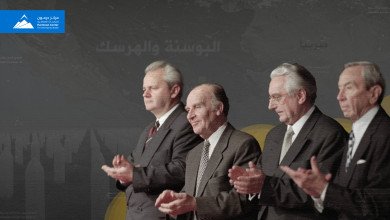
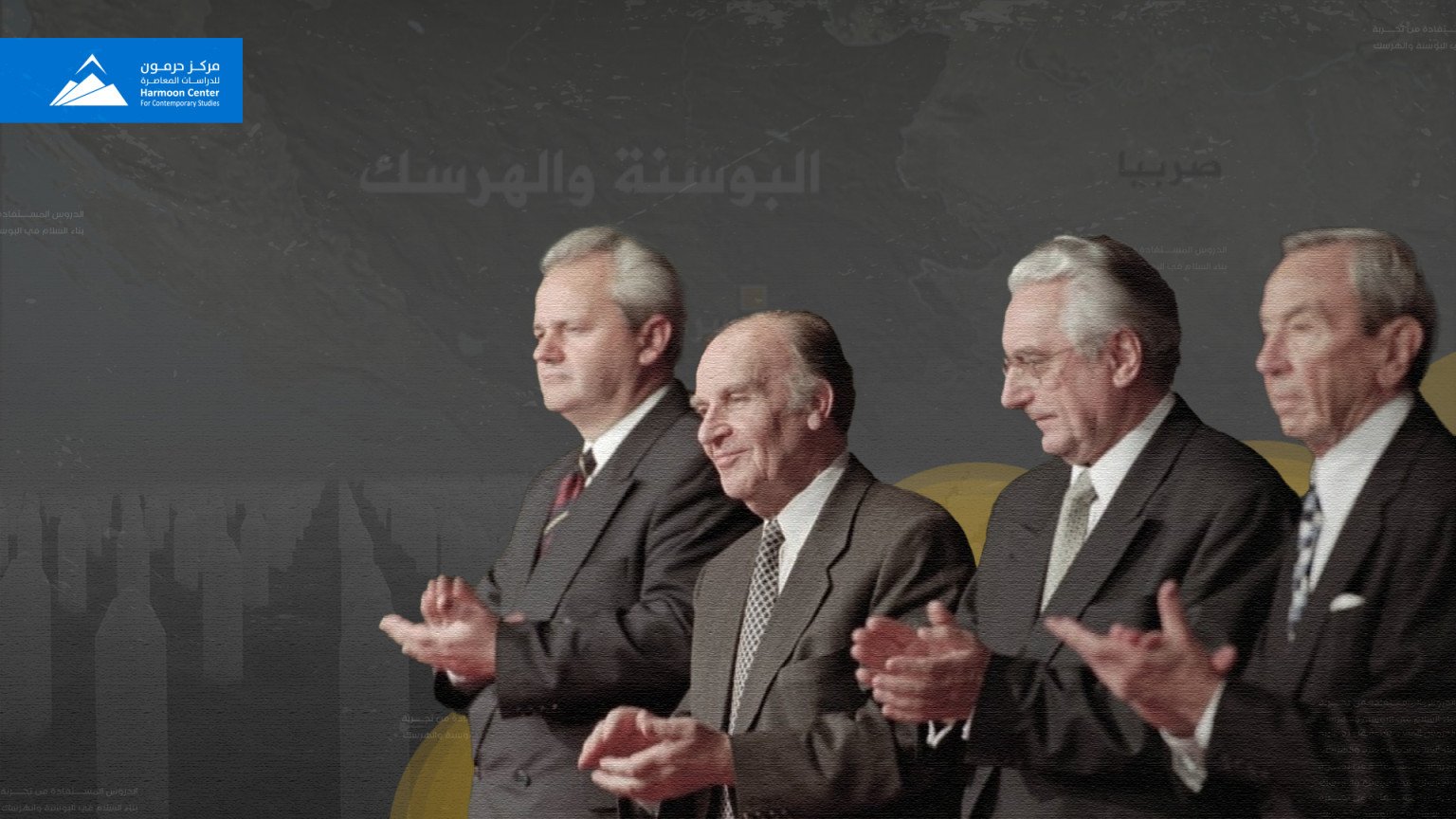
The Dayton Peace Agreement, formally known as the General Framework Agreement for Peace in Bosnia-Herzegovina, was a landmark accord signed on December 14, 1995. It involved Croatia, Bosnia-Herzegovina, and Serbia, with significant participation from the United States, the European Union, and Russia.
The choice of Dayton as the negotiation venue was influenced by the need for a neutral and secure location that could facilitate complex discussions among the conflicting parties. The pre-negotiation phase involved intricate deliberations on key issues such as internal state division and the naming of entities within Bosnia-Herzegovina.
During the negotiation phase, crucial topics included the establishment of a constitutional order, the delineation of maps, the status of Sarajevo, and the creation of the Brčko District. Richard Holbrooke, the U.S. Assistant Secretary of State, played a pivotal role as a principal negotiator rather than a mediator, leveraging intense diplomacy to bring the parties to an agreement.
The agreement consists of 11 Annexes. It is assumed that any serious negotiation and peace agreement between various parties in Syria will have to include similar annexes.

The international community played a crucial role in supporting and implementing the Dayton Agreement, overseeing the deployment of peacekeeping forces and monitoring compliance.
Evaluations of the Dayton Agreement reveal both its strengths and weaknesses. While the agreement ended the conflict and established peace in the region, it did not fully address several long-standing issues. These included: discrimination related to voting rights, the balance between individual and collective rights, and ongoing political instability. Although the agreement provided a framework for governance and reconciliation, significant challenges remain in achieving long-term stability within Bosnia-Herzegovina and in integrating the state into EU structures.
Post-Dayton peacebuilding phase
The peace-building process in Bosnia-Herzegovina has been relatively successful from 1995 to 2005. During this initial post-Dayton phase, peace was not merely defined as the absence of conflict but was characterized by significant efforts in legal, political, and institutional transformations essential for the state’s recovery from the devastation of war. These efforts included rebuilding institutions, fostering democratic processes, and establishing the rule of law, which collectively contributed to a period of relative stability and progress.
However, since 2006, the peacebuilding process in Bosnia-Herzegovina has gradually deteriorated. Many intellectuals, scholars, and policy experts have expressed concerns that the country is slowing down, if not failing, in its post-war recovery. This period has been marked by stagnation and, in some cases, regression, with some political parties within Bosnia-Herzegovina openly opposing the achievements made since the signing of the Dayton Peace Agreement. The central question is: why did these two phases produce such different outcomes in Bosnia-Herzegovina?
Throughout the initial post-Dayton phase, the NATO, EU and other friendly countries have offered system-wide benefits and patiently put in place new structures and policies in areas of security, economy, judiciary, so the country can move forward in the peace process. They largely followed the dictates of liberal notions to strengthen the rule of law, democracy, and institutions. What also made two converging factors of post-war recovery in Bosnia-Herzegovina more appealing rests on an enduring combination of their hard and soft power. More about specific success stories in the section under title: Lessons learned in Bosnia-Herzegovina during peace building process.
Conversely, the subsequent deadlock reflects a complex interplay of external geopolitical shifts. As the rules-based order within the European and Euro-Atlantic communities began to erode, the peace process in Bosnia-Herzegovina correspondingly experienced a reversal. The weakening of this order was compounded by Russia’s shift in European geopolitics and its increasing illiberal tendencies, which further stalled progress in Bosnia-Herzegovina. Russia’s efforts to project its power in Bosnia-Herzegovina have often been at odds with the interests of the Euro-Atlantic alliance, creating a complex and challenging dynamic for the country.
The agreement, which ended the bloody conflict in 1995 and maintained the country’s territorial integrity for over two decades, now faces serious challenges due to the conflicting external pressures. Understanding this interplay between competing geopolitical forces is essential to addressing the current issues in Bosnia-Herzegovina and determining strategies for future progress.
Muslim-majority states and peace building process
In the early post-Dayton period, key Muslim-majority states continued their bilateral and multilateral support in different capacities. They offered their national troops as peacekeepers, attended donor conferences, financially supported reconstruction and renovation, and offered various aid programs for refugees and others in need. Some specific examples: Turkey actively participated in all three peacebuilding missions in Bosnia-Herzegovina, from IFOR (1995-97), to SFOR (1997-2004) and EUFOR (2004-present). According to the Bosnia-Herzegovina Foreign Ministry, Malaysia was the first country to implement fully the assistance promised to Bosnia-Herzegovina at the Second and Third Donors’ Conferences. The High Saudi Committee for Aid to Bosnia-Herzegovina, allegedly the largest single Muslim donor to the country, invested over USD 560 million in its humanitarian operations from 1992 to 2011.
While Bosnia-Herzegovina’s foreign policy in the post-Dayton period primarily focused on European and Euro-Atlantic integration, its scope and substance were relatively limited concerning Muslim-majority nations. However, wartime alliances, personal connections, and strong networks continued to provide opportunities for developing comprehensive relations with the Muslim world.
Lessons learned during peacebuilding process
There are several important lessons learned from the peacebuilding process.
First, two strong UN-mandated and NATO-led missions in Bosnia-Herzegovina – Implementation Force (IFOR) and Stabilization Force (SFOR) – not only deterred threats to peace and security in Bosnia-Herzegovina from late 1995 to 2004, but also facilitated refugee return, trained and restructured the country’s armed forces, and supported civil authorities. For example, key indicators of IFOR’s success included the first postwar national elections and the safe return of over 230,000 displaced persons and refugees. By the end of the SFOR mission in 2004, a single Ministry of Defense, single chain of command, and integrated armed forces of Bosnia-Herzegovina were established from three opposing forces. This was a clear indication of a steady success of the military implementation of the peace process which includes disarmament, necessary reduction of local forces, their professional training, and so on.
Second, strong regional integrations were critical. The EU offered a compelling membership perspective to the countries of Southeast Europe, including Bosnia-Herzegovina, complementing the military missions. This perspective was highlighted through the Stability Pact for Southeast Europe, launched in June 1999, and the Stabilization and Association Process (SAP), also launched in June 1999 and then strengthened at the Thessaloniki EU Summit in June 2003. The EU roadmap highlighted generally the process of change that included adaptation to various EU standards largely in areas of democracy, rule of law… Through EU leverage, significant reforms were initiated in key sectors in Bosnia-Herzegovina, including the judiciary, economy, border security, intelligence, public broadcasting, among others. These reforms resulted in the formation of new state institutions that increased stability and strengthen rule of law, transparency, and a free market. Additionally, the state government strengthened from 3 ministries in 1996 to the more functional cabinet of 10 ministries in 2003.
Third, in the initial post-conflict stage, under a strong international pressure, there were some notable reconciliatory efforts. In 2004, Dragan Čavić, then President of the Bosnian Serb-majority entity, publicly apologized for the Srebrenica massacre, referring to it as “a black page in Serbian history.” Similarly, in 2006, Milorad Dodik, who was a Serb member of Bosnia-Herzegovina’s tripartite presidency, acknowledged the genocide in Srebrenica and criticized indicted war criminals such as Radovan Karadžić and Ratko Mladić.
Fourth, by 2004, approximately half of Bosnia-Herzegovina’s 500,000 destroyed homes had been rebuilt, and around 200,000 disputed properties had been returned to those who had been forced to flee the war. This was a remarkable achievement given the lawless conditions at the outset of the rebuilding process. The progress in Bosnia-Herzegovina was so notable that different commentators, including authors of this analysis, celebrated the country’s successful transition from the Dayton phase to the Brussels phase. Prominent institutions like the Brookings Institution in the U.S. also viewed the lessons learned from Bosnia-Herzegovina as a model for application in other war-torn countries, such as Iraq.
Fifth, external realities were important – The post-war recovery in Bosnia-Herzegovina overlapped with the historic EU and NATO expansions toward Central and Eastern Europe from the late 1990s to 2004. During this period, Russia also played a constructive partner. Russia was an active member of NATO’s partnership for peace. In 1997, NATO leaders and President Boris Yeltsin signed the NATO-Russia Founding Act, committing to “build together a lasting and inclusive peace in the Euro-Atlantic area on the principles of democracy and cooperative security.” This environment of liberal unipolarity within Europe, combined with enthusiasm for integration, helped motivate local Bosnian constituencies and various ethnic groups to accept the conditions for peace outlined in the agreement.
Sixth, over the past 15 years, international peacebuilding efforts in Bosnia-Herzegovina have gradually reversed, and signs of renewed instability have begun to emerge. Richard Holbrooke, one of the main architects of the Dayton Accords, and Lord Paddy Ashdown, the fourth High Representative for Bosnia-Herzegovina, wrote a joint editorial in 2008 warning that Bosnia was “sleepwalking” into another crisis. They urgently appealed to Brussels and Washington to take immediate action to address the country’s worsening situation.
Indeed, Bosnia-Herzegovina has been in a state of peaceful deadlock for over a decade. While the causes of slower reintegration since 2006 can be analyzed domestically, the nature of many interrelated factors within the state alone cannot fully explain this particular stalemate. Domestic issues such as interethnic divisions, religious differences, internal political struggles, poverty, and corruption have persisted throughout both phases of Bosnia-Herzegovina’s post-war recovery. In the case of Bosnia-Herzegovina, it was largely the nature of the external environment outside the national borders that has shifted and became more unfavorable in the post-2005 period. Instead of being rapid, these changes were slower but constantly adding up.
Seventh, the EU passed through a constitutional crisis that undermined its credibility as a transformation power in Bosnia-Herzegovina. The rejection of the treaty establishing a European constitution by French and Dutch voters in 2005 has thrown the EU into a deep crisis. New enlargement enthusiasm has also vaned and states in the EU-led SAP process, including Bosnia-Herzegovina, were largely left on their own. So far, only Croatia has managed to reach full membership status from the group of 7 Western Balkan states.
Eighth, in 2004, the NATO-led peacekeeping mission SFOR was replaced by a significantly weaker EU-led mission, Althea. Today, with only about 1,000 EU peacekeepers in Bosnia-Herzegovina, there is limited capacity to guarantee the country’s stability or fully implement the Dayton Accords. Meanwhile, the U.S. has shifted its focus from Bosnia-Herzegovina to Kosovo at the regional level, and has faced serious security challenges in other troubled areas such as Iraq and Afghanistan. Additionally, U.S. foreign policy pivoted to East Asia from 2011 onwards, aiming to prevent China from becoming a peer competitor. At the same time, Russia’s made U-turn in European geopolitics.
Nineth, Russia has increasingly sought to replace the existing European order, particularly the one extending beyond the Iron Curtain, with regimes that align more closely with its own less democratic image. It aimed to supplant the hierarchical order in Europe with a new, multipolar structure that is, in practice, more anarchic than the liberal, institutional, and rules-based order it seeks to replace. Thus far, Kremlin efforts to impose its illiberal and structural order in Europe and the Balkans have contributed to greater division and instability among young democracies and vulnerable countries on Europe’s periphery, such as Bosnia – Herzegovina.
Tenth, this analysis suggests that strong American leadership in Europe and an effective EU agenda in the Balkans have been crucial factors for stability in Bosnia- Herzegovina. In other words, their withdrawal could trigger a rapid change that might lead to the conflict. If they were to leave Bosnia-Herzegovina altogether – though this is less likely – extra-regional actors would likely step in to fill the vacuum, leading to a reconfiguration of power relations and the emergence of new visions for both Bosnia-Herzegovina and Southeastern Europe.
The concept and mechanism of transitional justice
Serious violations of international human rights and humanitarian law were committed during the armed conflict that affected Bosnia-Herzegovina from 1992 to 1995. It is estimated that more than 100,000 people were killed in the conflict, more than two million were displaced, and tens of thousands went missing/disappeared.
In any post-conflict society, parties typically adopt one of two general approaches to reconciliation: seeking justice through punishment (transitional justice) or fostering forgiveness and reconciliation (truth commissions). Lessons in transitional justice and justice-seeking approaches can be drawn from post-conflict cases such as those in the former Yugoslavia (particularly Bosnia – Herzegovina) and Rwanda. Meanwhile, examples of pursuing forgiveness and reconciliation through truth commissions can be found in post-apartheid South Africa, Peru, Timor-Leste, and Sierra Leone. Some post-conflict countries, such as Germany and Chile, have developed strong experience in applying both approaches. Post-conflict Syria should consider drawing on lessons from both strategies to address its unique needs for justice and reconciliation.
Bosnia-Herzegovina’s experience with transitional justice offers several critical lessons for post-conflict societies.
First, in the immediate post–conflict period in Bosnia-Herzegovina, the international community supported the government to adopt legal and institutional reforms aimed at rebuilding governance and the rule of law and to address the legacy of the conflict through the prosecution of war crimes, the search of missing persons, reparations and property restitution. Due to the extent and nature of the crimes committed during the conflict, a strong focus was placed on prosecuting and sanctioning war crimes, led by the work of the International Criminal Tribunal for the former Yugoslavia and capacity building efforts directed at national courts and prosecutorial offices.
Second, the International Criminal Tribunal for the former Yugoslavia was established on May 25, 1993, by UN Security Council Resolution 827. It was set up while the Yugoslav Wars, including the conflict in Bosnia-Herzegovina, were still ongoing. Its primary aim was to establish individual criminal responsibility for atrocities committed during the conflicts in the former Yugoslavia from 1991 to 2001, including acts of “ethnic cleansing.” After 24 years of operation, the Tribunal formally closed in December 2017.
Third, international justice mechanisms are crucial but not sufficient: The establishment of the International Criminal Tribunal for the former Yugoslavia was a significant step in prosecuting war crimes and crimes against humanity. The Tribunal indicted a total of 161 individuals from various ethnic groups for war crimes committed during the conflicts in the Balkans in the 1990s. These indictments covered a wide range of crimes, including genocide, crimes against humanity, violations of the laws or customs of war, and grave breaches of the Geneva Conventions. The Tribunal’s work resulted in 93 convictions, 18 acquittals, and 13 referrals to national courts. Additionally, indictments were withdrawn or the accused died in 37 cases. The majority of those convicted were Serb political and military leaders, reflecting the court’s mandate to prosecute the most serious crimes committed during the wars, which included genocide. However, while the Tribunal delivered numerous verdicts and established legal precedents, it also highlighted the limitations of international justice.
Fourth, domestic courts and legal reforms are essential: As part of the Tribunal’s Completion Strategy, a special prosecutor’s office and a War Crimes Chamber were established within the Court of Bosnia-Herzegovina to handle serious international crimes. The 2003 Criminal Code of Bosnia-Herzegovina criminalized crimes against humanity and aligned definitions of international crimes with global standards. Some local courts continued to apply the outdated Criminal Code of the former Socialist Federal Republic of Yugoslavia, which does not recognize certain crimes such as crimes against humanity, sexual slavery, and enforced pregnancy.
To address a growing backlog of cases, the National War Crimes Prosecution Strategy was adopted in 2008, followed by a revised version in 2020. These strategies aimed to improve case prioritization, enhance judicial and police capacities, and ensure better protection for witnesses and victims. Still, concerns remain regarding the lack of experience and training in local courts, although international actors like the International Residual Mechanism for Criminal Tribunals and OSCE have provided some training support.
Fifth, civil society organizations have been pivotal in advocating for justice and supporting victims in Bosnia-Herzegovina. Groups like Mothers of Srebrenica have tirelessly campaigned for accountability, recognition of atrocities, and the rights of survivors and families of victims. Additionally, memory projects like the Srebrenica Genocide Memorial have played a crucial role in fostering a culture of remembrance, ensuring that the events of the past are not forgotten, and promoting public awareness about the consequences of conflict and genocide.
Sixth, the armed conflict was characterized by massive disappearances, with an estimated 31,500 missing persons. With support from international actors like the International Commission on Missing Persons, the International Committee of the Red Cross, and the International Residual Mechanism for Criminal Tribunals, Bosnia-Herzegovina established an institutional and legal framework for the search for missing persons.
The 2004 Law on Missing Persons guarantees the right to know the fate of the missing. It also mandates the creation of the Missing Persons Institute, a Central Records on Missing Persons, and a Fund for the Families of the Missing. Established in 2005, the Missing Persons Institute is tasked with searching for and identifying missing persons and maintaining a comprehensive register.
In 2011, a unified database was completed to consolidate records from various government levels and international organizations, ensuring transparency and preventing politicization. In 2014, Bosnia-Herzegovina signed a regional cooperation agreement with Serbia, Montenegro and Croatia to facilitate the search of missing persons. Nonetheless, associations of families of disappeared consider that the agreement did not yield the expected outcomes in terms of effective sharing of information across borders.
Seventh, legal justice alone seemed to be insufficient for long-term reconciliation. Bosnia-Herzegovina’s experience shows the need for a broader approach that in addition to justice seeking includes also stronger reconciliation, forgiveness and truth-seeking actions and activities. It is because Bosnia-Herzegovina’s experience illustrates the risks associated with denial and revisionism.
The glorification of war criminals and attempts to rewrite history threaten reconciliation and undermine peace efforts. Recent statements by parties whose members were indicted for war crimes have demonstrated a troubling reversal in attitudes. In Bosnia-Herzegovina’s entity of Republika Srpska, individuals indicted for war crimes are praised by the public and political leaders. Efforts are underway to portray them as heroes in history textbooks used in the entity’s education system. In response, the Office of the High Representative, responsible for overseeing the implementation of the peace agreement, imposed a law criminalizing any denial of genocide and war crimes.
Eighth, transitional justice is not a one-time event but a continuous process that requires vigilance, adaptation, and sustained commitment from both local and international actors. Bosnia-Herzegovina’s evolving political and social landscape shows that the work of justice and reconciliation is ongoing and must respond to new challenges as they arise.
Concluding remarks – challenges, threats and opportunities
In August 2008, Russia’s military intervention in Georgia restored the Kremlin’s geopolitical relevance in the European neighborhood. Georgia was divided between Russian-backed self-proclaimed republics of South Ossetia and Abkhazia on one hand and the rest of Georgia on the other. Ukraine was forcefully divided along similar geostrategic and domestic lines between Kyiv’s Euro-Atlantic aspirations and secessionist tendencies by a pro-Russian minority in the east.
In recent years, Russia has also become visible in the Balkans that is deep inside NATO eastern borders. Russia donated and supplied weapons to Serbia and conducted a joint military exercise in 2019 and 2021 in that state; Kremlin also built partnerships with local power holders in Bosnian entity Republic of Srpska and openly destabilized the country’s long-established vision for security through Euro-Atlantic integration.
In this context, our proposition that secessionist parties in Bosnia-Herzegovina would have obstructed institutional and rules-based post-war recovery, had it not been for the euphoria surrounding Euro-Atlantic integration, is supported by historical evidence. For instance, Bosnia-Herzegovina’s Serb leader Milorad Dodik, who played a constructive role in the early phase and was instrumental in many positive reforms in the country, has since shifted his stance. He began regular consultations with Vladimir Putin and expressed his support for Moscow during a critical period. In his second consecutive meeting with the Russian president amid the events in Ukraine in 2014, Dodik publicly declared his sympathy for Russia in a statement quoted by the Kremlin: “Naturally, there is no question that we support Russia. We may be a small and modest community, but our voice is loud.”
As Dodik’s confidence grew with Russia’s subversion, so did his demands to reverse key reforms made after the Dayton accords. This included successful changes in defense, security, justice, intelligence, and other reforms from the early 2000s. Thus, he threatened to withdraw soldiers out of the country’s unified military, he vowed to demolish mutually agreed and legally binding dynamics for achieving collective security within NATO.
Bosnian Serb Entity ignored the EU and held an unconstitutional referendum in 2016, thereby violating a final and binding decision of the Bosnia-Herzegovina’s Constitutional Court. The crisis in the state continued in 2020 when Milorad Dodik called the Constitutional Court, composed of nine judges – two Bosnian Serbs, two Bosnian Croats, two Bosniaks and three international – an occupation court. Addressing RS national assembly five days later, he provokingly declared: “goodbye Bosnia-Herzegovina, welcome RSexit”. These tendencies, coupled with Russia’s disruption efforts, have made the complex multinational state of Bosnia-Herzegovina impossible to govern efficiently.
Nevertheless, the real threats to the hard-won peace in Bosnia-Herzegovina should not lead to the conclusion that the region is inevitably destined for instability and conflict. Despite various shortcomings, the U.S. and EU remain key factors in maintaining stability in Bosnia-Herzegovina. With the ongoing war in Ukraine, they are paying increased attention to the Balkan region in general and Bosnia-Herzegovina and Kosovo in particular.
Bosnia-Herzegovina’s recent status as an official candidate that is to start accession negotiation for the EU membership reflects this renewed attention. Additionally, EUFOR has bolstered its troop presence and visibility in the country, while the U.S. military has conducted joint operations with the Bosnian armed forces to deter secessionist movements.
While the liberal, institutional, and rules-based Euro-Atlantic order faces current challenges and limitations, it remains far more robust than any illiberal alternatives proposed by Russia. Within this framework, Bosnia-Herzegovina retains a genuine opportunity to sustain peace and achieve its aspirations of becoming a fully integrated member of the European community.
[1] The author of this report draws on a range of sources, his own journal articles and books on the subject, as well as reports from relevant international organizations involved in the peace process in Bosnia and Herzegovina. (1) Hadžikadunić, Emir. Od Dejtona do Brisela (From Dayton to Brussels). Center for Interdisciplinary Postgraduate Studies / CIPS, Sarajevo Bosnia-Herzegovina, 2005. Available at: htps://stratis.ba/wp-content/uploads/2015/05/1-Od_Dejtona_do_Brisela.pdf, (2) Hadzikadunic, Emir. “Peacebuilding Process in Bosnia and Herzegovina – The Initial Success that has been reversed.” In The Western Balkans – Cooperation, Geopolitics, and Economic Transitions and Relations, edited by Muhidin Mulalić, Emel Topcu, Jahja Muhasilović, International University of Sarajevo, 2022., (3) Hadžikadunić, Emir. “Bosnia and Herzegovina and the Muslim World – Trends and Opportunities.” CONTEXT: The Journal of Interdisciplinary Studies – Center for Advanced Studies). Vol. 9, No. 2, (2022): 7-31 https://doi.org/10.55425/23036966.2022.9.2.7., (4) Related reports from relevant international organizations, including observations from the Office of High Representative in Bosnia and Herzegovina, Mr. Fabián Salvioli, the Special Rapporteur on the Promotion of Truth, Justice, Reparation and Guarantees of Non-Recurrence, https://www.ohchr.org/en/statements/2021/12/preliminary-observations-official-visit-bosnia-and-herzegovina
[2] The Washington Agreement, signed in March 1994, was a crucial step towards peace in Bosnia-Herzegovina, serving as a significant precursor to the Dayton Peace Agreement. Brokered by the United States, it ended the hostilities between Bosnian Croats and Bosniaks, who had been in conflict since 1993, and established the Federation of Bosnia-Herzegovina as a political entity. This agreement facilitated cooperation between Bosnian Croats and Bosniaks against the Bosnian Serbs and set the stage for the broader peace negotiations at Dayton in 1995, which ultimately led to the inclusion of all three constituent peoples in the country’s new political framework.