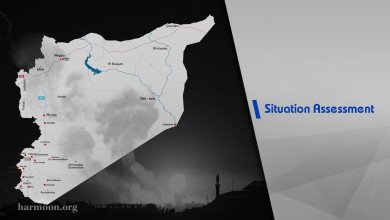




The Syrian Jazira region, commonly referred to as east of the Euphrates in recent times, has become a focal point of contention. The area is currently under the control of the Syrian Democratic Forces (SDF), an entity affiliated with the Kurdistan Workers’ Party (PKK). It is worth noting that Turkey and the United States classify the PKK as a terrorist organization. This situation has emerged as one of the most contentious issues in contemporary American-Turkish relations, as well as in Turkey’s interactions with key players in the Syrian conflict, including Russia, Iran, and the Syrian regime.
Turkey has recently intensified its attacks, targeting leaders and positions of the SDF and PKK forces in the region. This escalation follows three prior military operations in Syrian territory. Operation Euphrates Shield in 2017 targeted both ISIS and the SDF. Subsequently, Operation Olive Branch in 2018 and Operation Peace Spring in 2019 focused on SDF forces, carried out in collaboration with Syrian opposition forces. Mazloum Abdi, the SDF Commander-in-Chief, acknowledged the PKK’s role in supporting them during the war against ISIS. However, he indicated that this support was no longer present in the current areas.[1] Notably, these Turkish military operations were executed in coordination with the United States, the primary external actor in the Syrian Jazira region. Additionally, agreements were reached with Russia and Iran, who are allies of the Syrian regime.
What are the reasons for this recent escalation? How could things develop in that region in 2024? What is the expected Turkish strategy?
In 2023, Turkey escalated its operations on multiple occasions, prompted by terrorist attacks that the PKK either admitted to or was accused of carrying out. Following the September 2023 attack on the Turkish Ministry of the Interior in Ankara, Turkey launched numerous attacks on sites affiliated with the SDF and the PKK. Hakan Fidan, the Turkish Foreign Minister, declared in the aftermath of the Ankara attack that “all infrastructure, superstructure, and energy facilities belonging to the PKK terrorist organization in Syria and Iraq are legitimate targets for the Turkish security, military, and intelligence forces.”[2] Subsequently, the focus shifted from targeting SDF forces to a broader range of objectives, including oil fields, power lines, infrastructure facilities, SDF military and security headquarters, ammunition depots, supply centers, and more. The targeting strategy also encompassed direct attacks on military forces.
On December 23, 2023, Turkey launched its most recent escalation, following an attack by the PKK in northern Iraq which had resulted in the loss of 12 Turkish soldiers’ lives.[3] Additionally, this escalation coincided with the issuance of a new “social contract” by the SDF. In this document, the SDF employed the term “territory” to delineate the areas under its control. This development holds significant implications for shaping Turkey’s strategy in the upcoming period concerning its interactions with the SDF.
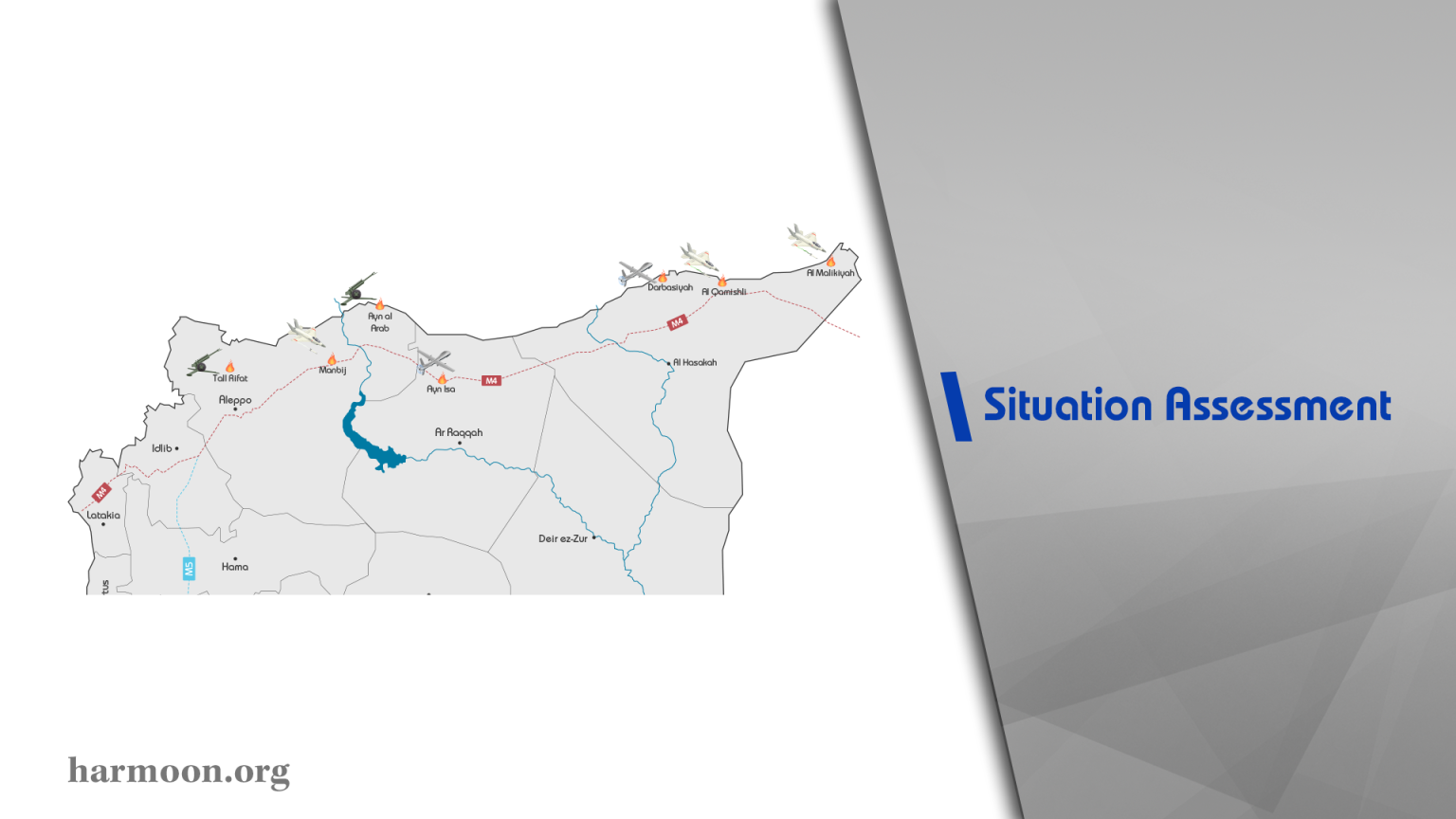
In the recent period, the Turkish attacks have notably expanded geographically, targeting sites in Hasakah, Raqqa, Ain Al-Arab, as well as areas in Manbij and Tal Rifaat. Simultaneously, there has been an increased pace of targeting in northern Iraq. Turkey perceives all these regions as being under the influence of the PKK, making no distinction between them. Moreover, there is an uptick in the targeting of infrastructure facilities owned by the SDF, particularly oil fields. Previously, Turkey refrained from bombing these areas due to the presence of American forces in some locations. Now, however, there is a shift, with a focus on equipment and military headquarters. The use of military aircraft in bombing Syrian territories has risen, as well as in northern Iraq, alongside an increased deployment of drones and artillery.

The majority of Turkish military operations were concentrated within 30-35 km inside Syrian territory. In Raqqa and Deir ez-Zor, the emphasis shifted towards intelligence operations, assassinations, and the establishment of networks in those regions. Recent assassinations in these areas pose challenges in attributing responsibility due to clashes among Arab tribes, the presence of the SDF, and the ongoing activities of ISIS. Nevertheless, the Turkish side has claimed involvement in certain operations. Turkish intelligence reported the killing of Bahoz Afrin, or Mutlu Kacar (known by the nom de guerre Karker Andok), identifying him as responsible for the Ain al-Arab region within PYD units.[4] In November 2023, Turkey announced the elimination of Fahrettin Tolun (Hayri Serhat), the official responsible for supplying heavy weapons to the PYD, in Rumailan, Hasakah.[5] Additionally, the assassination of Remziye (aka Zülfiye Binbir), the financial official in the PKK, took place in Rumailan in October 2023.[6]

Regarding the SDF’s response to these operations, it primarily involved targeting civilians in areas under the administration of Turkey in northern Syria. One notable incident was a massacre in the city of al-Bab, where 13 civilians lost their lives, and 35 others sustained injuries. The attack was carried out by both SDF and Syrian regime forces.[7]
Turkey’s Goals of Escalation
The recent escalation by Turkey appears to be driven by a desire to retaliate for terrorist attacks within its borders or against its soldiers in Syria, Iraq, or within Turkish territory. This retaliation is manifested through targeted operations against key figures in the PKK. Additionally, Turkey aims to disrupt or sever supply routes between regions under SDF control, impede the SDF’s efforts to solidify its presence in those areas, and prevent the establishment of Kurdish autonomy akin to northern Iraq. The latter is perceived as a potential threat to Turkish national security.
In this context, Turkey relies on Article 51 of the United Nations Charter, falling under Chapter Seven, which affirms the inherent right of states to self-defense in response to peace-threatenening acts. This article served as the basis for the formation of the international coalition against ISIS, as the organization posed a direct threat to numerous countries. Turkey similarly justified its prior military operations in Syria, with tacit approval and understanding from countries actively involved in Syrian affairs.
In the long term, Turkey’s objective appears to be compelling the SDF to withdraw from the region, maintaining a distance of 30 km inside the Syrian border, as well as evacuating the Manbij and Tal Rifaat areas. This aligns with the understandings reached to halt Operation Peace Spring in 2019, though these agreements were not implemented. Turkey aims to halt U.S. support for the SDF, leading to its dismantlement, and seeks the extradition of certain PKK-affiliated leaders. In recent times, Turkey has attempted to make gains in this realm by threatening a potential fourth military operation in the region. However, various factors, including regional and international developments, the 2023 presidential elections, Turkey’s economic crisis, and the apprehension of a new wave of refugees, have hindered the execution of this operation. After hinting at the possibility of restoring relations with the Syrian regime, Turkey seems open to the return of the regime’s security institutions to the region. This collaboration would involve the Syrian side of the border, potentially ending the establishment of the “canton” that the PYD/PKK seeks to create in northeastern Syria.
Despite the continued escalation in attacks, Turkish policy finds itself constrained by the red lines set by both the United States and Russia. This trend is anticipated to persist. The desired zone of influence for Turkey, with a depth of 30 km, falls short of fully addressing internal Turkish security concerns. Smuggling operations extend across the Iraqi and Iranian borders, and training activities occur within Iranian and Iraqi territories, not confined solely to Syrian territory.
Turkey failed to capitalize on the ongoing conflict between the Arab tribes and the SDF due to its failure to establish robust and secure relationships with the notable figures and sheikhs of the tribes in those regions. The Tribal Council established by Turkey still lacks significant influence in those areas.
The American Position
Since the establishment of the international coalition to combat ISIS in 2013 and the formation of an alliance with the Kurdish People’s Protection Units (PYD), rules of engagement have been defined with Turkey in that region. The United States affirms its commitment to these rules of engagement and the coalition’s partnership with the SDF in the fight against ISIS. However, the coalition does not involve itself in the conflict between Turkey and the SDF, ensuring the safety of American forces in Syria. Turkey has refrained from bombing areas or facilities where American forces are present. In an incident on October 5, 2023, when a Turkish drone exceeded prescribed limits and posed a threat to American soldiers, U.S. forces shot down the drone.[8] Following a threat from Turkey to launch a fourth military operation in the region, the Biden administration objected, leading to the postponement of that operation until now.
On the flip side, there appears to be an American perspective on the recent Turkish bombings, especially following the terrorist incidents within Turkey. Various negotiation topics are on the table between Turkey and the United States, such as Sweden’s potential NATO membership, the Gaza and Ukrainian conflicts, among others. Despite the pressure from the SDF, the United States is expected to adopt a resolute stance. Surprisingly, America has not taken strong and unequivocal positions on these bombings. Instead, it has issued statements expressing concerns about potential exploitation by ISIS, highlighting potential impacts on anti-ISIS operations. The responses have ranged from messages of condolence to protests, citing the endangerment of American soldiers’ lives.
The Turkish military operations have become a source of contention among the leadership of the SDF, the international coalition, and the United States. The SDF is apprehensive, perceiving these operations as tacitly approved, and fearing a repeat of the Taliban’s scenario in Afghanistan. The sustained silence from the American side raises concerns for the SDF’s relationship with the coalition. Particularly noteworthy is the emergence of a movement within the SDF and the PKK questioning the American stance, advocating for renewed dialogue with Russia, Iran, and the Syrian regime. In response to these dynamics, the SDF has taken proactive measures by engaging a public relations company in Washington. The objective is to establish a lobby that can advocate and garner support for the SDF within the US capital.[9]
The Position of the Syrian Regime and Its Allies
The Syrian regime has refrained from clearly expressing its position on the escalating situation, appearing powerless to alter the unfolding events. Instead, it is Russia and Iran that have taken the forefront. Russia, exhibiting an understanding of Turkish strikes, did not oppose prior Turkish-Syrian military operations conducted in agreement with Moscow. Russia has attempted to broker solutions favorable to Turkey, proposing that the SDF withdraw 30 km south of the Turkish-Syrian border. In this scenario, Russian suggestions involve allowing Syrian regime forces to enter these areas. The rationale behind these proposals is a perceived common interest shared by both Turkey and Syria in combating the SDF. Turkey views the SDF as a threat to its national security, while the Syrian regime sees them as controllers of valuable oil resources and wealth. Additionally, the issue of sovereignty is crucial, as approximately 23% of Syria’s territory is under the control of the SDF/PKK. Turkey does not object to the return of the regime’s security institutions to these areas. Despite these proposals, the SDF has not yet accepted them. The hesitancy arises from the conditions that acceptance would entail, including withdrawal from certain areas, relinquishing control, and being pushed southward into regions with a predominantly Arab population.
Russia might not oppose a potential new Turkish military operation if it is coordinated and agreed upon with Moscow. This is particularly significant as Russia aims to exert pressure on the American side. Moscow has already achieved success in facilitating the entry of regime forces into northeastern Syria, a development coordinated with Turkey. Turkey, in turn, recognizes that its presence in Syria is intricately tied to understandings with Russia and the United States—two pivotal actors in the Syrian context—rather than relying on agreements with the Syrian regime.
As far as Iran is concerned, it aligns with Turkish security concerns and views the SDF as an instrument wielded by the United States. Simultaneously, Iran maintains positive relations with both the SDF and the PKK. This was underscored by former Turkish Interior Minister Süleyman Soylu when he cited the existence of PKK training camps within Iranian territories.[10]
What is Next?
Recognizing the increased influence resulting from its military presence in Syrian territory, Turkey is determined to uphold this strategic positioning. Simultaneously, it plans to persist in the targeted elimination of PKK leaders in Syria and Iraq. This involves the utilization of limited bombing using diverse weapons, including military aircraft and drones. Additionally, Turkey aims to impact the SDF comprehensively by directing attention to vital installations, notably oil fields. The overarching objective is to weaken the SDF across military, economic, and social dimensions through these focused actions.
Turkey remains persistent in its threats to initiate a ground military operation and will actively engage in negotiations with both Russia and the United States on this matter. However, the likelihood of launching a fourth ground military operation, specifically targeting the border strip between Jarabulus and Tal Abyad (Ayn al-Arab area), as well as Manbij and Tal Rifaat, is currently distant. These areas are crucial for the SDF in launching strikes on regions controlled by Turkey, particularly after every Turkish bombardment. The prospect of such an operation is contingent upon international circumstances and the stance taken by the United States. Consequently, Turkey will continue to defer any decisive action until developments on the global stage align in a manner that allows Turkey to leverage them to its advantage. Alternatively, it might postpone any significant action until after the local elections scheduled for March 2024 in Turkey. As an initial step, Turkey may consider accepting control over one of the three regions—Manbij, Tal Rifaat, or Ain al-Arab—depending on the unfolding circumstances and strategic considerations.
On another front, the SDF will persist in leveraging the fight against ISIS as a crucial card, cautioning that any Turkish military operation in the region will impact these efforts. The SDF aims to capitalize on the ongoing rivalry between the United States and Russia to sustain its presence. However, the decisive and influential stance of the United States remains paramount in determining the fate of the SDF and the region. Under the Biden administration, the U.S. position seeks to strike a balance in relations with both the SDF and Turkey, with potential shifts expected when a new American administration takes charge. The SDF, responding to American pressure, will continue to make formal changes in its administrative structure or leadership, signaling a perceived distancing from PKK interference. Furthermore, the SDF will intensify efforts to discredit any actions by Arabs in those areas, alleging loyalty to the regime or, at times, connections to Iran, or even accusations of affiliation with ISIS.
A significant shift does not seem likely in the first half of 2024, given several factors. These include the impending local Turkish elections, the ongoing developments in Gaza, the stable stance of the United States, and the absence of anticipated changes in its relationship with the SDF, the Syrian regime, or Russia in the immediate future.
[1] See Al-Hadath’s exclusive interview with SDF Commander Mazloum Abdi, January 16, 2023, at: https://bit.ly/48LRivU
[2] “Fidan: The perpetrators of the Ankara terrorist attack came from Syria and trained there.” Anadolu Agency, October 4, 2023: https://2u.pw/nQNNO3N
[3] See Anadolu Agency, December 22, 2023: https://2u.pw/jBn1y94 and December 23, 2023: https://2u.pw/bPQYm7b
[4] “Turkish intelligence neutralizes a prominent PKK terrorist in Syria.” Anadolu Agency, December 24, 2023. https://2u.pw/f4xz4fA
[5] “Turkey announces the ‘neutralization’ of a PKK leader east of Hasakah.” Enab Baladi website, November 23, 2023. https://2u.pw/wRkf5eZ
[6] Anadolu Agency website. September 7, 2023. https://2u.pw/K7FGQGc
[7] “A massacre by SDF and regime missile strikes on the city of al-Bab, east of Aleppo.” Syria TV website, August 19, 2023. https://2u.pw/XXxGTdk
[8] “The United States: We regret shooting down a Turkish drone, but it is a necessary measure to protect our forces in Syria.” Syria TV website, October 5, 2023. https://2u.pw/JhupFe0
[9] “SDF engages a public relations company to obtain American legitimacy.” Al-Modon website, December 25, 2023. https://2u.pw/GSXH2zw
[10] “Turkish Interior Minister announced that the PKK relocated it’s [sic] main base from Qandil, Iraq to Maku, Iran.” May 26, 2023. https://x.com/OmerOzkizilcik/status/1662001986718298112?s=20