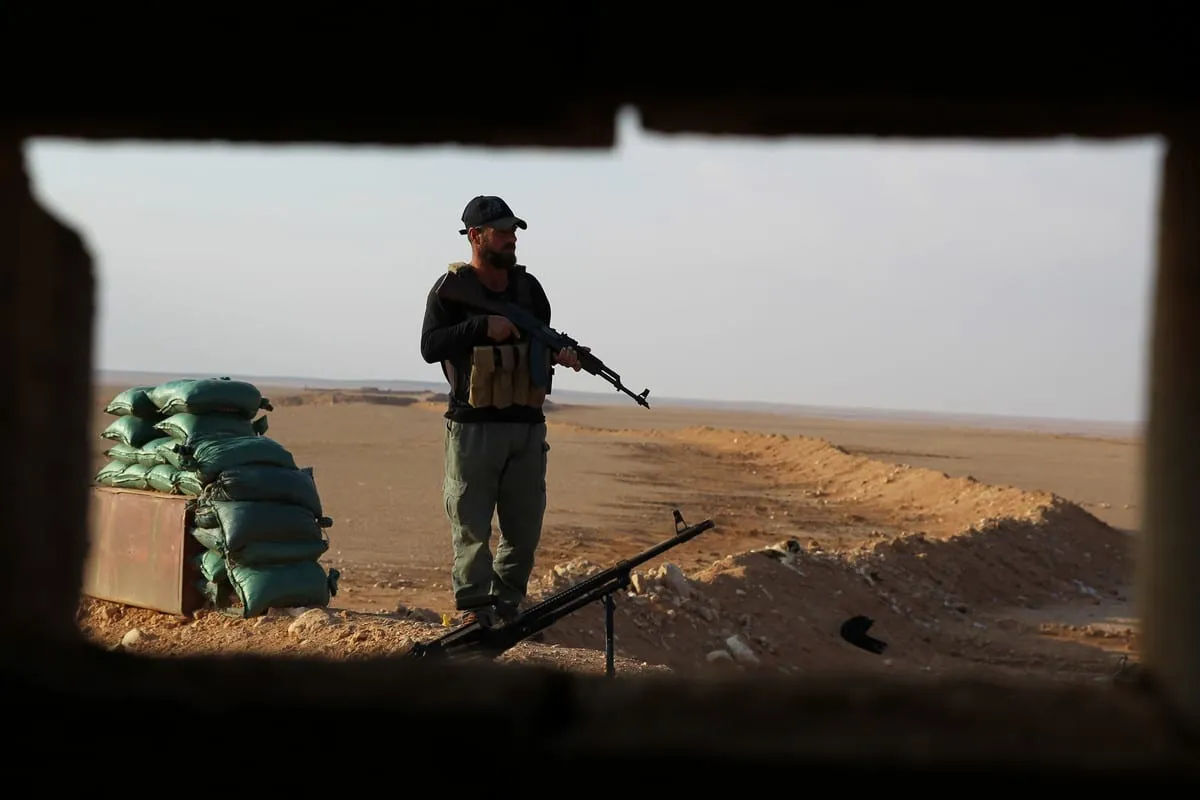




Some years ago, I found myself wandering around an abandoned YPG training camp in northern Syria. It was October 2019 and just a few days before the launch of Operation Peace Spring, Turkiye’s military advance into YGP-held territories. The camp, located in the Afrin region, had been hit by a Turkish airstrike. What we discovered was jaw-dropping: room upon room brimming from floor to ceiling with all manner of ammunition and weaponry; eight-foot-deep tunnels zig-zagging and weaving across the complex; abandoned cars; strewn items of clothing and much more. Most tellingly, we came across an entire section of the camp dedicated to the PKK and its detained leader, Abdullah Ocalan. A number of PKK flags lay on the ground and Ocalan posters adorned several walls and tree trunks. If there were ever any doubts in my mind about the deep ties between the PKK and the YPG, they were banished in an instant. Not that anyone would doubt it. The ideological links between the two Kurdish separatist groups are well documented, as is the fact that they have long exchanged fighters and arms. It is little wonder, therefore, that Turkiye, which sees the YGP as the Syrian branch of the PKK, treats the group with more than a degree of hostility.
For those who need reminding, the PKK is a designated terrorist organization not just by Turkiye, but also by the US and the EU. Its insurgency against the Turkish state has been going on for more than four decades and has claimed the lives of around 40 thousand people, many of them women and children. More recently, in 2016, at a time when I was living in Istanbul, the group carried out several attacks, killing dozens of people. I can therefore personally testify to the terror and panic that permeated the country in its aftermath. It is something that will remain with me for a long time.
It is also no secret that the PKK is openly active in a number of European countries, including Germany, Denmark and the UK, where it holds demonstrations where protestors are often seen carrying Ocalan banners in full view of the police. It also raises funds, and trains and recruits fighters across the continent. This begs the question, would any other terrorist organization, ISIS for example, ever get away with doing the same?
On the wider issue of Kurdish nationalism, it should, of course, be acknowledged that the historic struggle of the Kurdish people is one tinged with violence and oppression. But in Turkiye at least, many Kurds identify themselves as Turkish first and foremost, have assimilated into mainstream society and are represented in most of the major political parties, some in very senior positions. I met many Kurds during my six years in the country, some of whom became good friends. Most told me they knew of at least one person who had been exhorted by the PKK or whose child had been forcibly taken away to join their fighters. They all told me they believed the PKK to be a terrorist organization. This may possibly explain why, despite Kurds making up around 25 percent of the Turkish population, no more than around 10 percent vote for the HDP – the political wing of the PKK. On the basis of this alone, it seems any ambitions for autonomy hold little sway. When your own people do not want something you claim to be fighting for, it would appear you don’t have a leg to stand on.
In the same vein, the YGP is a mere coterie of Syria’s Kurds, most of whom live in their own statelet in the north of the country; an area the YPG expanded substantially – at least for a while – during the Syrian war. To be clear, the YGP has not carried out any attacks on Turkish soil, but pronouncements that the group is not belligerent towards the Turkish state appear to be without foundation.
Thus, the financial and military support of the YPG by the US in the fight against ISIS is seen by many as a cavalier dismissal of the security concerns of a NATO ally. The fact that the US tried to couch its decision by including a smattering of Arab groups with no discernible record of armed conflict and naming this hotchpotch coalition the Syrian Democratic Forces (SDF) was fooling no one, not even the upper echelons of the US administration. In fact, at the time of Turkiye’s 2018 Operation Olive Branch, which directly targeted YPG fighters as well as ISIS – and which I covered as a television correspondent – the US openly acknowledged Turkiye’s security concerns. Around that time, US forces even conducted joint patrols near the border alongside Turkish soldiers.
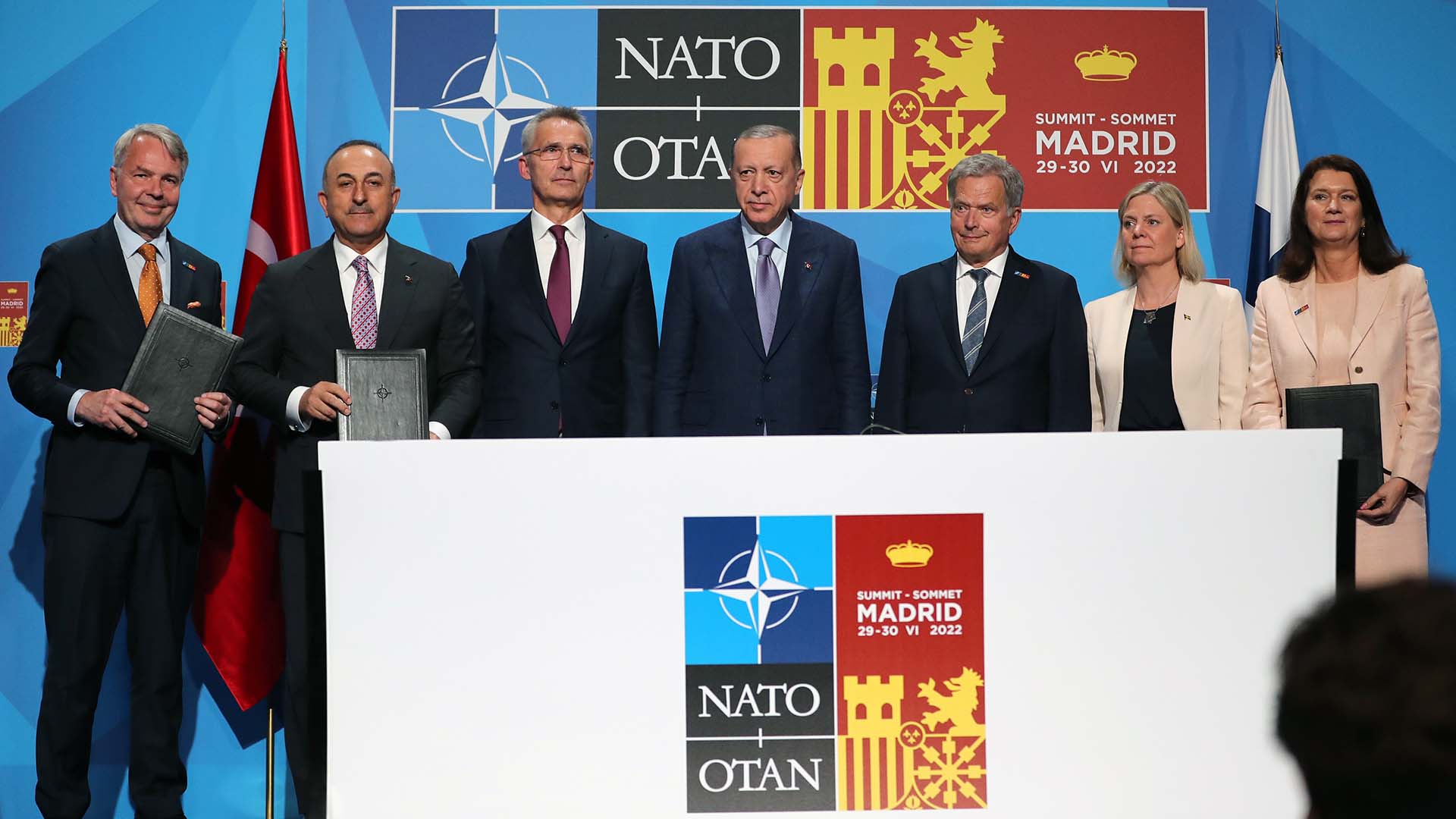
That is why, while it is easy – and understandable – to regard Turkiye’s initial veto of Finland and Sweden’s entry into NATO as a deliberate attempt to sabotage the process at a time when the Russian threat to Europe is arguably higher than it has ever been, President Recep Tayyip Erdogan’s actions need to be seen within the context of the above. Erdogan’s actions, brought on by his frustration with what he sees as these countries’ willingness to host Kurdish ‘terrorists’, as well as those connected to the FETO group, may seem inappropriate, given the timing, but to label him as opportunistic is a step too far. Let’s not forget that Turkiye has consistently pledged its support for Ukraine, has supplied Bayraktar TB2 drones to the country and has brokered a grain export deal.
That is not to dismiss the gravity of the criticisms against Erdogan: the allegations that he used the NATO issue to bolster his popularity at home at a time when his country’s economy is tanking; that an election is looming. Yet, these concerns do not detract from the fact that the issue of the PKK, and by extension the YPG, have been ignored by the wider world.
Erdogan may now feel that he has finally received the assurance he has been seeking for a long time, but one could argue that had Europe or US shown any tangible regard for Turkiye’s security concerns at any point in history, he would not have been pushed to this point.
What I witnessed in the YPG camp is a matter of record. That is why I believe that rather than label Turkiye as the spanner in the works on the issue of NATO expansion, it is important to at least try to understand its motives and maybe start addressing them. Only then can the alliance move towards a productive future relationship that will ensure the security of Europe, Turkiye and perhaps even further afield.